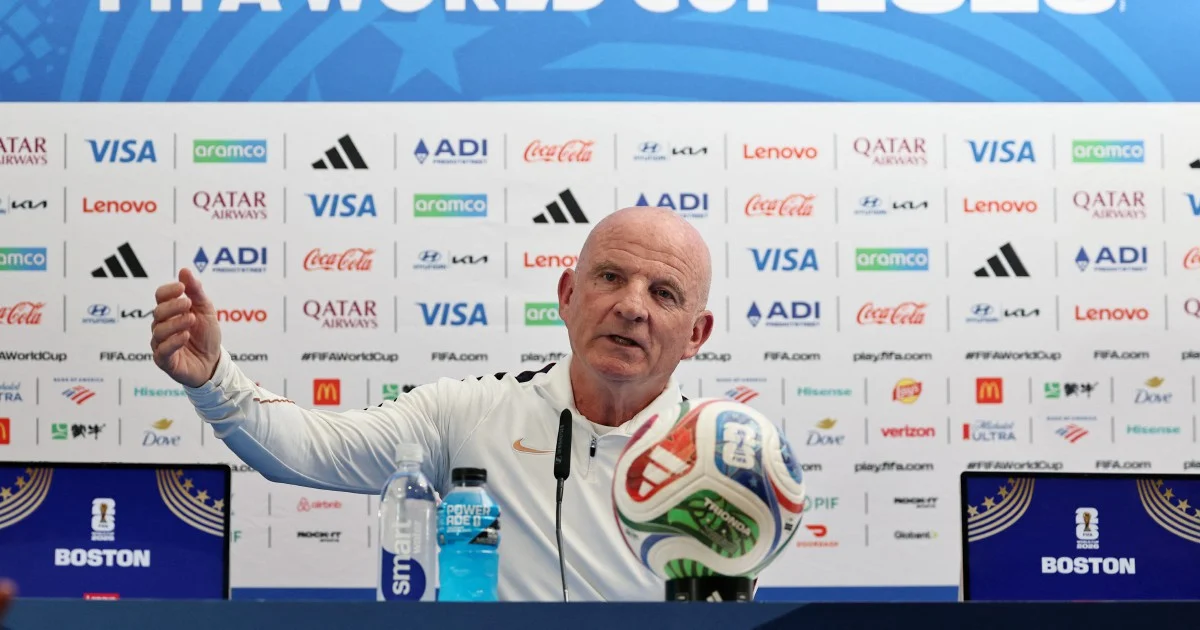
France are prioritizing a first-place finish in their World Cup Group I when they face Norway on Friday, motivated not only by competitive pride but by significant logistical advantages that geographical positioning in the tournament bracket offers. Assistant coach Guy Stephan articulated the squad's strategic thinking during a pre-match press conference in Boston on Thursday, stepping into the role vacated by World Cup-winning manager Didier Deschamps, who has returned to France following his mother's funeral.
The two-time World Cup champions have already secured their passage to the knockout rounds after winning both opening matches, accumulating six points from their initial fixtures. However, Stephan emphasized that topping the group remains a critical objective for the entire coaching staff and squad, with considerations extending far beyond the immediate contest. The distinction between first and second place carries substantial implications for the team's subsequent trajectory through the tournament, particularly regarding the distances they will be required to travel and the environmental conditions they will face.
Should France finish atop their group, they would maintain their base operations in the Northeastern United States, specifically in the Boston area, through to the quarter-final stages. This geographical advantage means the team avoids the exhausting prospect of repeated cross-country journeys that would accompany a second-place finish. Teams finishing second in their groups face the prospect of traveling extensively between Dallas, Miami, and Atlanta—cities spread across the southern and central portions of the United States, separated by thousands of kilometers. These logistical demands accumulate fatigue among players already navigating the compressed schedule of international football at the highest level.
Beyond the question of travel distances lies another dimension that Stephan highlighted: temperature variations across different American regions. The climate differential between the Northeastern coastal states and the hotter, more humid conditions that prevail in southern cities such as Miami and Dallas presents an additional adaptation challenge for European players. Maintaining operations from a single Boston-based hub through the quarter-finals would provide environmental consistency and eliminate the need for squads to acclimate to dramatically different weather conditions during the most intense phases of the competition.
France require only a draw in their Friday fixture to secure first place, a threshold made considerably easier by their superior goal difference accumulated during their winning start to the campaign. Norway, despite qualifying alongside France through their own perfect record in the group stage, cannot overtake the defending champions even with a victory, given the mathematical constraints imposed by goal differential calculations. This situation places France in a position of considerable tactical flexibility, though Stephan made clear that the team harbors no intention of approaching the match defensively.
The squad composition for Friday's encounter will not include central defender William Saliba, who has been ruled out of contention. Additionally, striker Marcus Thuram is managing a calf problem that has prompted the coaching staff to monitor his fitness levels closely as the match approaches. These absences necessitate tactical adjustments and squad rotation planning, yet the staff's confidence in their depth appears robust given their current standing in the group.
Deschamps' absence at the training ground has created an unusual dynamic in the buildup to a consequential fixture. Stephan confirmed that while he maintains regular telephone communication with the manager, he anticipates minimal contact on Friday itself, given the personal circumstances requiring Deschamps' presence in France. The depth of the coaching structure has clearly demonstrated its capacity to manage operations smoothly during this period, with Stephan articulating strategic priorities and fielding tactical questions in his temporary elevated role.
The broader context of this group stage narrative reflects how World Cup tournament structure, with its distribution of venues across a vast nation like the United States, creates consequences that extend well beyond mere bracket positioning. Geographic considerations have become an integral factor in how modern international football competitions are contested, particularly when played across a continent as expansive as North America. Teams must balance immediate competitive demands with medium-term strategic positioning, recognizing that group stage victories and placements generate cascading advantages or disadvantages as tournaments progress.
France's path to the 2018 World Cup title established the squad's capacity to navigate pressurized knockout football under demanding conditions. The current roster combines proven experience with emerging talent, creating a balanced ensemble capable of executing comprehensive football across varying circumstances. The emphasis on finishing first reflects not desperation but calculated planning—the kind of detailed preparation that separates elite international programs from their competitors.
Norway's own impressive qualifying performance has established them as a genuine opponent rather than a ceremonial fixture. Both teams arrive at Friday's encounter with identical records and the psychological confidence that derives from consecutive victories. The match therefore promises competitive intensity regardless of the complicated mathematical scenarios surrounding first-place positioning. From France's perspective, combining competitive performance with the logistical convenience of securing top spot represents the optimal outcome as the tournament enters its decisive phases.

