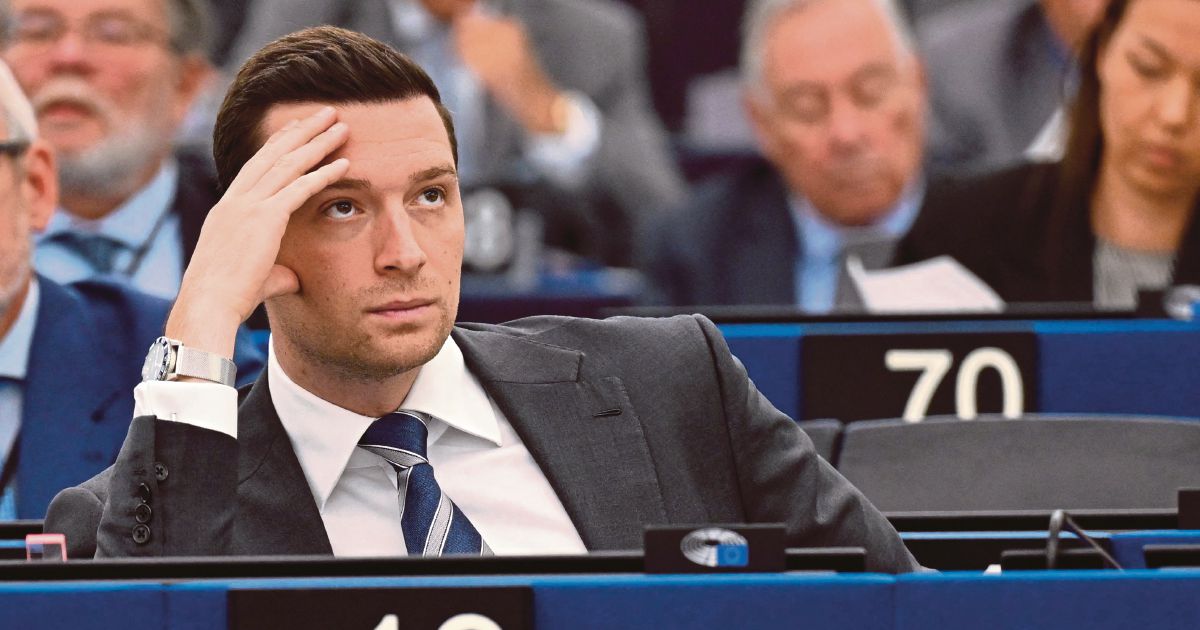
Jordan Bardella, the prominent far-right figure widely viewed as a potential presidential contender in France, faces fresh scrutiny after a government corruption monitoring agency filed for an inquiry into claims he occupied a fake parliamentary assistant role in Brussels. The allegations, which underscore the ongoing struggle between France's mainstream political establishment and its resurgent nationalist movement, centre on alleged employment irregularities during his time connected to European institutions.
The timing of the corruption watchdog's move, announced on Tuesday, places immediate pressure on Bardella and his National Rally party at a sensitive moment when polls suggest strengthening public support for far-right politics across France. Such corruption allegations, even if ultimately unproven, carry significant reputational weight in European democracies, where institutional integrity remains a core voter concern. The case mirrors similar controversies that have previously challenged other nationalist politicians across the continent, creating parallel questions about parliamentary accountability standards.
Bardella's party has firmly rejected the allegations, characterising them as politically motivated attacks designed to undermine the movement's credibility during a period of rising electoral momentum. Party officials have suggested that the corruption watchdog's initiative reflects establishment anxiety about shifting French political demographics and the challenge traditional parties face from nationalist rivals. This defensive posture reflects the broader pattern whereby allegations involving far-right figures often become entangled with broader questions about institutional fairness and whether oversight mechanisms apply equally across the political spectrum.
The specific nature of the alleged fictitious position remains a matter of dispute, with the watchdog's investigation now tasked with clarifying whether assistant posts were genuinely filled or represented nominal arrangements designed to provide parliamentary salaries without corresponding substantive work. European Parliament employment arrangements, while subject to formal regulations, have historically been vulnerable to creative interpretations regarding job descriptions and time commitments. Such ambiguities have occasionally enabled questionable practices that, while potentially circumventing strict legal definitions of fraud, nonetheless breach the spirit of institutional transparency.
For Malaysian and Southeast Asian observers, the Bardella controversy offers instructive parallels regarding how nationalist movements across different democracies navigate questions of institutional legitimacy and accountability. The incident highlights the tension between populist political forces challenging established governance norms and watchdog agencies tasked with maintaining standards. Similar dynamics have emerged in various Asian democracies where anti-establishment movements have questioned whether traditional oversight bodies apply rules consistently or selectively depending on political affiliation.
The European context matters significantly here, as the European Parliament operates within a complex multinational structure where employment regulations, though codified, must be interpreted across different national traditions and administrative practices. This complexity occasionally creates grey areas where political actors can argue reasonable differences in how assistant positions should function, though critics argue such arguments frequently serve as convenient cover for substantive irregularities. The investigation will therefore need to navigate not merely factual questions about whether work was performed, but also institutional questions about what standards should apply to all parliamentary employees.
Bardella's potential trajectory toward higher political office has intensified media scrutiny of his background and conduct, inevitable for any politician approaching genuine power. However, the timing and nature of investigations into opposition figures often become themselves objects of political contention, raising broader questions about whether administrative agencies can maintain genuine independence when examining prominent politicians. This phenomenon transcends French politics, affecting democracies globally where corruption-fighting institutions must somehow avoid appearing partisan while legitimately investigating serious allegations.
The investigation's outcome could significantly influence how French voters assess Bardella's fitness for high office, particularly given that European societies place substantial emphasis on institutional propriety and financial transparency. Even allegations alone, without formal convictions, can damage political credibility in environments where voters expect their leaders to exemplify respect for rules and public accountability. The National Rally's repeated electoral advances suggest such concerns may matter less to its core supporters, yet they remain consequential for persuading centrist voters considering tactical voting or traditional right-wing voters evaluating alternatives.
The inquiry's progression will likely take months, potentially extending beyond any forthcoming electoral contests, creating prolonged uncertainty about whether formal charges emerge or whether investigators determine the allegations lack sufficient substance. This temporal dimension adds political complexity, as Bardella can simultaneously pursue his political ambitions while the corruption watchdog pursues its findings, effectively running parallel tracks that may never definitively intersect. For institutional accountability mechanisms, such extended timelines create their own difficulties, as investigations that conclude after elections lose their capacity to influence voting behaviour.
Beyond the immediate facts under investigation, the case reflects broader European debates about whether parliamentary assistant positions should operate under stricter international oversight, given their recurring vulnerability to dubious arrangements. Reformers have periodically proposed tighter accountability mechanisms requiring substantive proof of work performed, yet such reforms typically face resistance from legislators reluctant to impose standards that might complicate their own operational flexibility. The Bardella investigation may ultimately influence whether such reform pressures strengthen sufficiently to produce institutional change across European Parliament employment practices.

