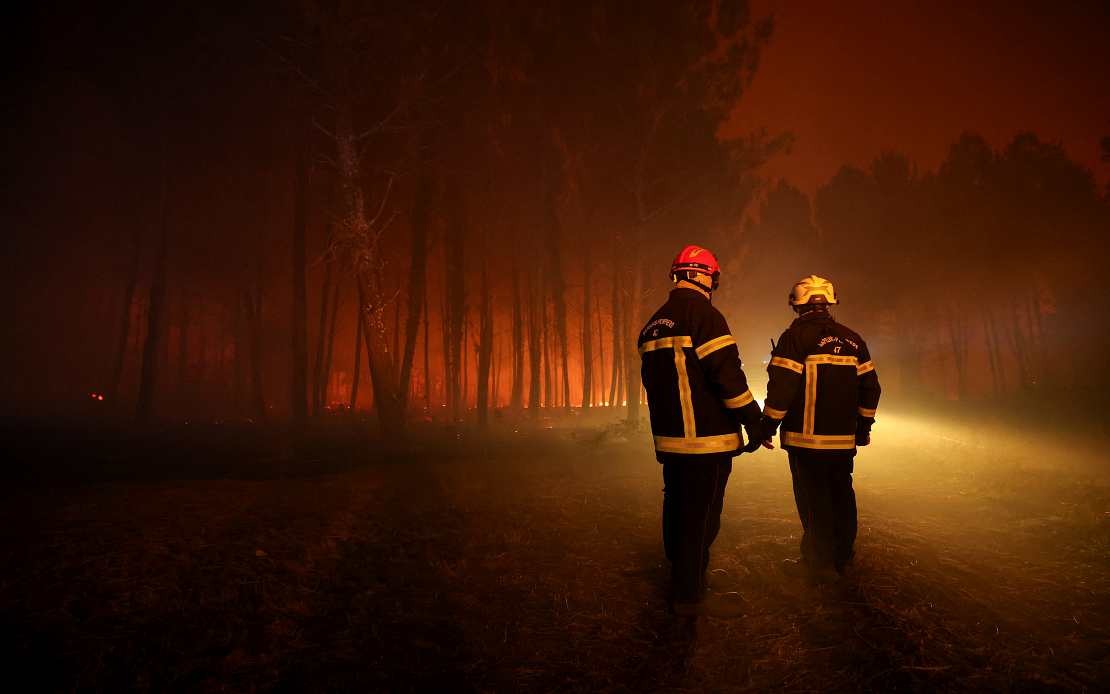
A fifteen-year-old boy has been formally charged in connection with a fire near Bordeaux Airport that claimed the lives of two firefighters in late July. The teenager appeared before a French judge on Thursday and was subsequently remanded to a closed educational facility pending trial. The case marks a stark reminder of how rapidly small acts of negligence can escalate into tragedy, particularly in contexts where emergency responders face heightened danger.
The incident occurred in Merignac, a town positioned strategically near Bordeaux Airport in southwestern France. According to French media reports, the fire broke out following the disposal of a carelessly discarded cigarette, demonstrating the persistent risk posed by inadequate smoking habits, especially in outdoor areas vulnerable to rapid fire spread. The region's summer conditions likely contributed to the fire's intensity and rapid expansion once ignited.
Investigators determined that two brothers had stopped in the area while smoking. The older sibling, aged 22, properly extinguished his cigarette in a parking lot. However, the teenager disposed of his cigarette onto nearby grass, where it ignited. This distinction in behaviour proved crucial to the investigation's outcome and subsequent legal proceedings. The younger brother's alleged carelessness contrasted sharply with his older sibling's more cautious approach, underscoring how individual decisions within families can diverge dramatically.
Both brothers were initially taken into police custody for questioning regarding their involvement in the incident. The older brother, arrested on Wednesday, faced scrutiny alongside his younger sibling. However, once the 15-year-old acknowledged responsibility for initiating the fire, authorities released the 22-year-old without charges. This development highlights how investigative clarity can sometimes emerge quickly when individuals cooperate with authorities and accept accountability for their actions.
The fire's consequences proved catastrophic for emergency personnel responding to the call. On July 21, two firefighters lost their lives while battling the building blaze. Their emergency vehicle became engulfed and trapped by advancing flames, preventing their escape. Such tragedies underscore the inherent dangers firefighters face daily when responding to emergencies, often with incomplete information about conditions they will encounter. The loss of life in emergency services carries profound ripple effects through families, communities, and the broader profession.
The Bordeaux prosecutor's office initiated a comprehensive investigation immediately following the incident, examining both the circumstances surrounding the fire and its underlying cause. Such inquiries serve multiple purposes: establishing facts for potential prosecution, identifying systemic vulnerabilities, and informing future prevention strategies. For French authorities, this case represented an opportunity to examine fire safety protocols and emergency response procedures in the region.
The teenager's placement in a closed educational centre rather than conventional detention reflects French juvenile justice principles, which emphasise rehabilitation over purely punitive approaches. This pathway acknowledges the offender's age while maintaining accountability through structured confinement and educational programming. France's juvenile system typically prioritises intervention designed to redirect young people away from criminal trajectories, though the gravity of consequences resulting from the defendant's actions complicates straightforward rehabilitation narratives.
For Southeast Asian readers and Malaysian authorities particularly, this case carries instructive value regarding fire prevention in developed nations and the legal frameworks governing juvenile culpability. Malaysia's own fire safety regulations and protocols governing young people's accountability operate within different cultural and legal contexts. Nevertheless, the fundamental lesson—that inadequate supervision of youth behaviour and careless handling of ignition sources can trigger catastrophic outcomes—transcends geographic boundaries and remains universally relevant.
The incident also illustrates broader patterns of accidental fire initiation across European jurisdictions, where summer months consistently witness increased fire risk. Unlike regions prone to large-scale industrial accidents, many developed nations experience significant property damage and loss of life from deceptively simple causes: discarded cigarettes, unattended campfires, and defective household appliances. Public education campaigns in France and elsewhere have long emphasised fire prevention, yet behavioural compliance remains incomplete.
The criminal charging of a minor in connection with emergency responders' deaths raises complex questions about causation, responsibility, and proportionality in juvenile justice systems. Did the teenager's actions constitute gross negligence deserving serious criminal liability, or does the tragic outcome disproportionately magnify what might otherwise be treated as youthful recklessness? French courts will navigate these philosophical and legal questions during trial proceedings.
The case underscores dependencies between everyday public behaviour and emergency service safety. Firefighters do not merely respond to fires initiated through malice or deliberate arson; they confront dangers stemming from routine human carelessness amplified by natural conditions and environmental factors. Every year, preventable fires claim lives across developed and developing nations alike, demonstrating that no society has entirely solved the intersection of human fallibility and fire risk.

