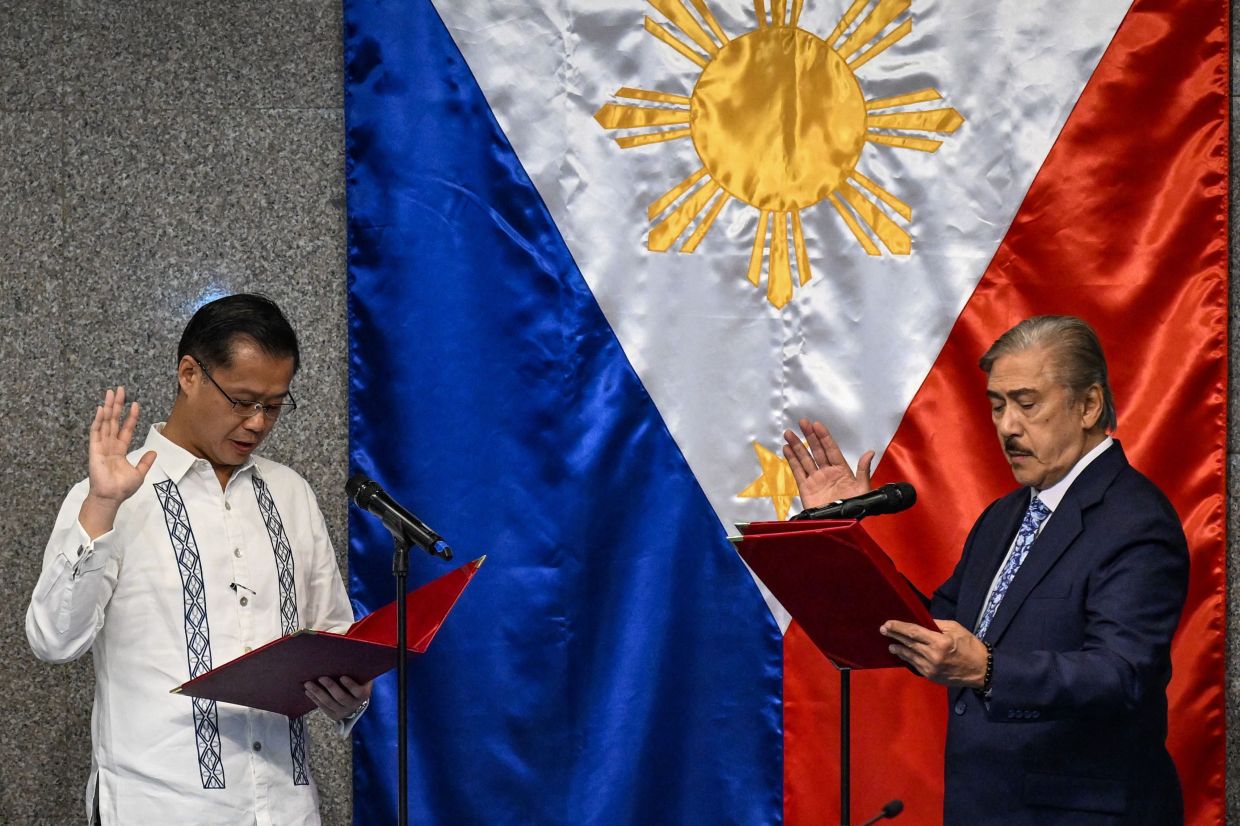
The Philippine Senate has installed Senator Sherwin Gatchalian as its new president following a special session held on Wednesday, June 17. The vote represented a significant moment of political recalibration in the upper chamber, with precisely 13 senators casting ballots in favour of the former Valenzuela City mayor—the minimum threshold required to elect a Senate president. The development marks a striking reversal of circumstances that had unfolded just two weeks earlier, when rival factions appeared locked in a deadlock over control of the 24-member body.
Gatchalian's ascension to the presidency caps a career that has spanned multiple levels of the Philippine political system. Prior to his Senate tenure, he represented Valenzuela City as its chief executive and served in the House of Representatives, accumulating substantial experience in legislative and executive governance. His elevation to the top Senate post reflects confidence from a majority bloc that he can effectively manage the chamber's agenda and navigate the complex parliamentary dynamics that have recently roiled the institution.
The path to Gatchalian's victory was anything but straightforward. On June 3, a group of 12 senators had moved to elect him as Senate president pro tempore, a procedural manoeuvre that simultaneously declared Alan Peter Cayetano's position vacant. Cayetano, who had only assumed the Senate presidency on May 11, swiftly disputed this action, asserting that he remained the rightful presiding officer and that a minimum of 13 senators were required to conduct any legitimate business regarding the election or removal of Senate officers. This procedural dispute created ambiguity about which faction actually commanded the legislative chamber.
The critical turning point arrived when Senator Joel Villanueva, who had previously aligned himself with Cayetano's faction, unexpectedly shifted his support to Gatchalian's bloc. This defection proved decisive in altering the arithmetic that Cayetano had relied upon to maintain his position. By Tuesday, June 16, Cayetano acknowledged that the political landscape had fundamentally changed. Following a conversation with Villanueva, the then-president signalled his willingness to step down rather than engage in a protracted struggle for control. This capitulation reflected a pragmatic recognition that the numbers no longer favoured his continued tenure.
The sequence of events reveals the fluid nature of Philippine legislative politics, where individual senators can dramatically reshape institutional power balances through strategic repositioning. Villanueva's switch suggests deeper dissatisfaction within the Cayetano camp, though the precise motivations behind his defection remain publicly unexplained. Such sudden realignments are not uncommon in Philippine politics, where ideological consistency often takes a back seat to practical considerations of power, influence, and access to resources.
The current composition of the Senate complicates the institution's functioning and adds urgency to the leadership transition. The chamber officially comprises 24 seats, but only 22 senators are currently seated. The absence of two members stems from serious circumstances affecting the institution's stability and international standing. Senator Jinggoy Estrada surrendered himself to police earlier in June and subsequently faced a suspension order from the anti-graft court, the Sandiganbayan, imposed on Tuesday. His 90-day suspension stems from allegations in his graft case, rendering him temporarily unavailable for voting and deliberations.
The situation is further complicated by Senator Ronald Dela Rosa's status as a fugitive. The International Criminal Court has issued a warrant for Dela Rosa's arrest, and his current whereabouts remain unknown. His absence from the Senate chamber reflects broader international legal complications that have affected Philippine institutional life. The combination of Estrada's temporary suspension and Dela Rosa's fugitive status reduces the effective Senate quorum and creates uncertainty about the body's capacity to conduct sensitive legislative business that might require broad consensus.
The timing of these developments raises questions about governance and institutional resilience in the Philippine system. The Senate's current predicament—where leadership disputes occur simultaneously with criminal proceedings against members and international warrant concerns—illustrates vulnerabilities in maintaining stable parliamentary functions. For regional observers, particularly those in Southeast Asia monitoring institutional strength across the bloc, the Philippine Senate's turmoil serves as a cautionary note about the fragility of legislative institutions when personal political fortunes outweigh institutional interests.
Gatchalian's election, while resolving the immediate crisis of dual presidencies, leaves unresolved the deeper question of how the Senate will operate with substantially reduced membership and ongoing complications affecting individual members. His mandate will require deft handling of these institutional challenges whilst maintaining the confidence of the 13-senator bloc that elected him. The narrowness of his victory margin—precisely at the minimum threshold—also means he enjoys limited flexibility to accommodate dissenting voices within his coalition.
For Malaysia and other ASEAN members maintaining bilateral relationships with the Philippines, the Senate's institutional stability matters considerably. The Senate ratifies international agreements, approves budgets, and provides constitutional oversight of executive actions. Periods of internal legislative discord can slow the processing of legislation relevant to regional cooperation, trade agreements, and diplomatic initiatives. Observers monitoring Philippine governance will closely track whether Gatchalian can consolidate support and restore functional stability to an institution whose recent history has been marked by acrimony and procedural disputes.