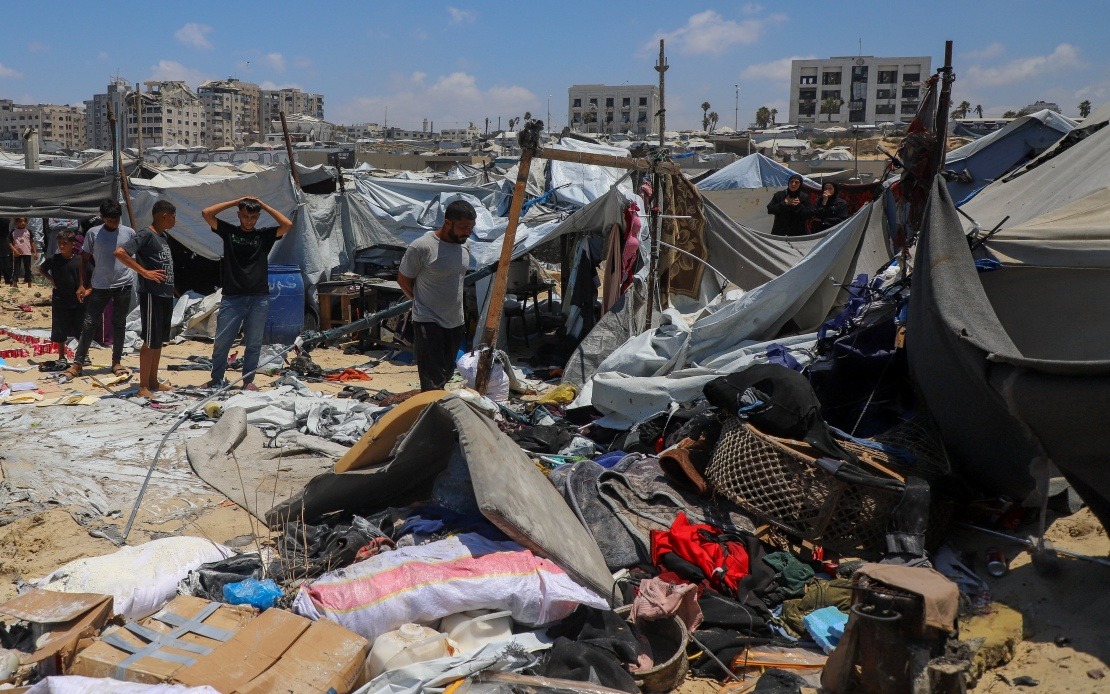
The scale of destruction across the Gaza Strip has reached devastating levels, with more than 90 per cent of the territory damaged or destroyed according to assessments compiled by the Palestinian Government Communication Centre. The scale and pace of destruction represents a critical humanitarian challenge, with the Palestinian Authority documenting the extent of physical devastation across the conflict zone. The report, released on Monday and covering the period from June 29 to July 6, paints a picture of intensified military operations that have reshaped the geography of the war-torn enclave.
Israeli military operations during that single week concentrated on three strategically significant areas: Khan Younis in the south, Rafah near the Egyptian border, and Gaza City in the north. The escalation of activities across these regions resulted in at least eight deaths among the Palestinian civilian population, with local medical sources confirming the toll. Beyond the loss of life, the military campaign also involved extensive shelling of residential neighborhoods and the systematic demolition of homes, creating new waves of internal displacement as Palestinian families fled damaged areas seeking safer ground.
The occupation forces' territorial control now extends across approximately four-fifths of the Gaza Strip, consolidating their military dominance over the territory. This level of control allows for sustained military operations and administrative authority across the majority of the enclave. The combination of widespread destruction and territorial occupation creates a complex humanitarian environment where movement restrictions compound the challenges faced by the civilian population in accessing basic services and resources.
Beyond the Gaza Strip, military operations in the occupied West Bank have intensified significantly during the same period. The Palestinian Government Communication Centre documented widespread raids conducted by Israeli occupation forces across numerous Palestinian population centres. These operations included forced entry into homes, detentions, restrictions on movement through checkpoints and barriers, and the closure of key transportation routes. The affected areas span the length and breadth of Palestinian territories, including Ramallah, Nablus, Hebron, Bethlehem, Jenin, Qalqilya, Tulkarem, and occupied Jerusalem, suggesting a coordinated approach to military operations across the West Bank.
Settler violence has emerged as a significant additional dimension of the broader conflict. Colonial settler militias have launched a series of attacks targeting Palestinian communities and their assets across the West Bank. These incidents have ranged from incendiary attacks on civilian infrastructure, including the burning of a cafeteria in al-Lubban ash-Sharqiya village, to direct assaults on Palestinian shepherds and herders operating east of Bethlehem. Attempts to seize livestock and blocking of village entrances further illustrate the systematic pressure being applied against Palestinian livelihoods and freedom of movement in rural and agricultural areas.
The agricultural sector has borne particular strain from these operations, with the Palestinian Ministry of Agriculture documenting a significant surge in targeted actions against farming communities. The ministry's weekly briefing revealed the destruction of extensive olive groves, crops that represent centuries of Palestinian heritage and current economic livelihood for thousands of families. During the reporting period, 2,559 olive trees fell victim to uprooting, burning, or damage, with the primary impact concentrated in the Salfit, Jenin, and Nablus governorates.
The economic impact of agricultural destruction extends far beyond the immediate loss of trees and crops. The documented financial losses reached approximately US$11.78 million during this single week of intensive operations, a substantial sum for Palestinian communities heavily dependent on agricultural income. At least 125 farmers sustained direct losses to their productive assets, disrupting not only their current harvests but also their capacity to generate income in future seasons. Many olive trees require years to mature and produce, making their destruction a long-term economic setback for affected families.
For Malaysian observers and policymakers, these developments carry several important implications. The scale of destruction documented in Gaza represents an unprecedented humanitarian crisis requiring sustained international attention and support. As a member of the Organisation of Islamic Cooperation and a nation with a substantial Palestinian advocacy constituency, Malaysia's position on these developments carries significance within both regional and global forums addressing the Israeli-Palestinian conflict.
The reports also highlight the interconnected nature of displacement and agricultural disruption in conflict zones. Communities dependent on farming face not only immediate violence but also systemic restrictions that prevent them from maintaining their livelihoods. This pattern, well-documented in other regional conflicts, creates cycles of displacement, poverty, and humanitarian need that extend far beyond the immediate conflict period.
The international dimensions of these developments remain significant. The level of military capability demonstrated and the extent of operations occurring across multiple territories simultaneously underscore the asymmetry in military resources between Israeli forces and Palestinian armed groups. This disparity shapes the nature of the conflict and the humanitarian consequences experienced by civilian populations caught within contested areas.

