Ghana's preparation for their World Cup Group L clash against Panama took on fresh urgency on Tuesday as a Canadian federal court weighed an appeal over Thomas Partey's entry to the country, just one day before the fixture at Toronto Stadium. Coach Carlos Queiroz sought to project calm despite the uncertainty, insisting that his squad possessed the tactical flexibility to compete effectively regardless of the midfielder's availability—a statement that underscores the delicate balance between competitive ambition and the off-field complications threatening to disrupt the tournament.
Partey, a key player for Villarreal in Spain's La Liga, has become embroiled in legal proceedings in Britain involving allegations of rape and sexual assault, charges he has categorically denied. The midfielder's attempt to enter Canada for the World Cup was initially rebuffed by authorities, prompting Ghanaian officials to mount a legal challenge through the country's court system. The timing of the appeal hearing, occurring mere hours before Ghana's match, created a peculiar tension: potential resolution hung tantalizingly close, yet uncertainty remained the operative condition under which Queiroz and his coaching staff had to prepare.
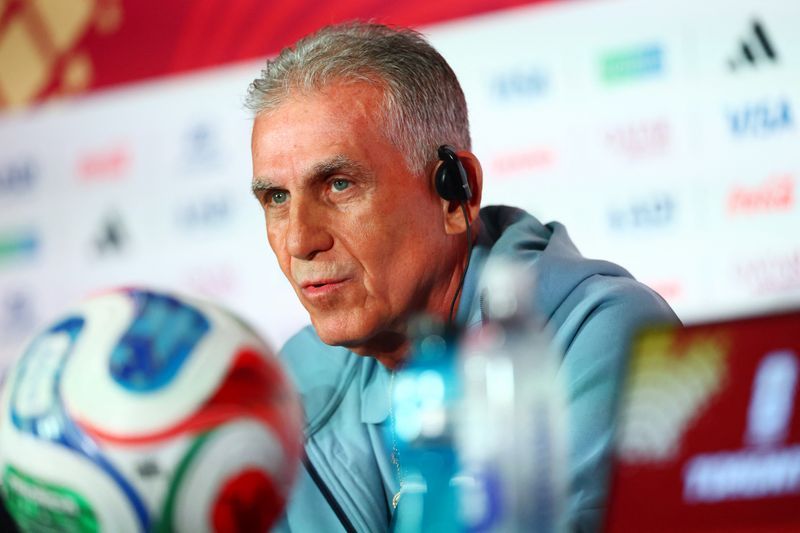
Queiroz, the 73-year-old veteran strategist who has guided multiple national teams through high-pressure tournaments, adopted a pragmatic stance when confronted with questions about Partey's legal troubles and entry status. Rather than engaging substantively with the allegations or prolonging discussion of circumstances beyond his direct control, the Portuguese coach redirected focus toward the technical and tactical dimensions of the impending contest. His refusal to elaborate on Partey's situation reflected both professional restraint and a deliberate strategy to prevent extraneous narratives from consuming the squad's mental energy ahead of critical competition.
The Ghana boss articulated confidence in his team's preparation, stating that contingency plans had been thoroughly established. This declaration suggested that whether Partey ultimately gained entry or remained barred from Canadian territory, the coaching staff had devised alternative approaches capable of fielding a competitive XI. Such preparation, while necessary from a practical standpoint, also hinted at the broader challenge facing African nations in World Cup competitions—the need to navigate both sporting excellence and complex geopolitical and legal circumstances that can significantly impact squad composition.
Queiroz's assessment of Panama revealed a coach who had conducted thorough opposition analysis. He characterised the Central American side as an organized and experienced opponent, yet one whose tactical framework contained identifiable vulnerabilities that Ghana possessed the personnel and strategic acumen to exploit. This balanced perspective—acknowledging Panama's strengths whilst identifying exploitable weaknesses—reflected the calibrated confidence of a manager who understood that overconfidence breeds tactical complacency whilst excessive caution inhibits aggressive play.
The Ghana coach highlighted several dimensions of his squad's capabilities that he anticipated would prove decisive in determining the match's outcome. Speed, technical skill, individual one-on-one capability, and physical strength emerged as the principal assets Queiroz believed would enable Ghana to impose their style upon the contest. His emphasis on Ghana's collective experience—presumably accumulated through previous World Cup campaigns and competitive continental tournaments—framed the upcoming fixture as a confrontation between contrasting footballing philosophies and national traditions rather than merely a straightforward competitive encounter.
Beyond the immediate Partey situation and Panama matchup, Queiroz used his public platform to voice concerns regarding FIFA's introduction of mandatory hydration breaks during World Cup matches. The regulation, implemented ostensibly to protect player welfare in demanding climatic and physical conditions, has generated considerable debate within coaching circles and among players themselves. Rather than dismissing the protocol outright, Queiroz advocated for comprehensive scrutiny of the rule's implementation and underlying motivations once the tournament concluded.
The coach's call for an integrity report represented a sophisticated critique: he sought transparent evaluation of whether the hydration breaks genuinely prioritised player health and athletic performance or whether commercial and marketing considerations had influenced the policy's adoption. This concern resonates particularly across the Asian and African regions, where scepticism regarding FIFA's decision-making processes and its alignment with corporate interests remains widespread. Queiroz's articulation of this concern provided voice to broader frustrations within the football community about the degree to which player welfare considerations are sometimes secondary to financial imperatives.
For Malaysian readers and Southeast Asian observers, Ghana's World Cup campaign carries particular resonance. The West African nation has historically punched above its weight in global competitions, demonstrating that footballing excellence need not be confined to Europe or South America. Queiroz's appointment itself signalled Ghana's ambitions to compete at the tournament's highest level—the veteran coach's track record with Colombian and Portuguese national teams testified to his ability to elevate squad performance. Yet the Partey situation exemplified the complex intersection of global legal frameworks, national sovereignty, and international sporting competition that increasingly characterises elite football.
The Panama encounter presented Ghana with an opportunity to establish early Group L momentum. The Central Americans, though capable competitors, represented the category of opponent against which traditional World Cup heavyweights are expected to accumulate victories. Ghana's performance in this fixture would therefore establish the psychological foundation for their remaining group-stage matches and determine whether Queiroz's squad could realistically contest for qualification to the knockout stage.
Queiroz's measured confidence and emphasis on tactical preparation reflected mature coaching philosophy. Rather than being distracted by controversies or legal proceedings, he maintained focus on variables within his direct control—team selection, tactical setup, psychological preparation, and in-game adjustments. This professional discipline, whilst perhaps appearing uninspiring in press conference settings, represents the mentality through which successful tournament campaigns are constructed.
The outcome of the federal court appeal remained pending as the manager spoke, creating a residual element of uncertainty that would only be resolved with formal judicial decision. Regardless of that determination, Queiroz had publicly committed Ghana to competitive readiness, suggesting a squad prepared to overcome whatever obstacles the tournament, Canadian immigration authorities, and their Central American opponents might present. For Ghana and for African football more broadly, the ability to maintain competitive focus whilst navigating legal, administrative, and geopolitical complexities represents an increasingly essential capacity in contemporary international sport.