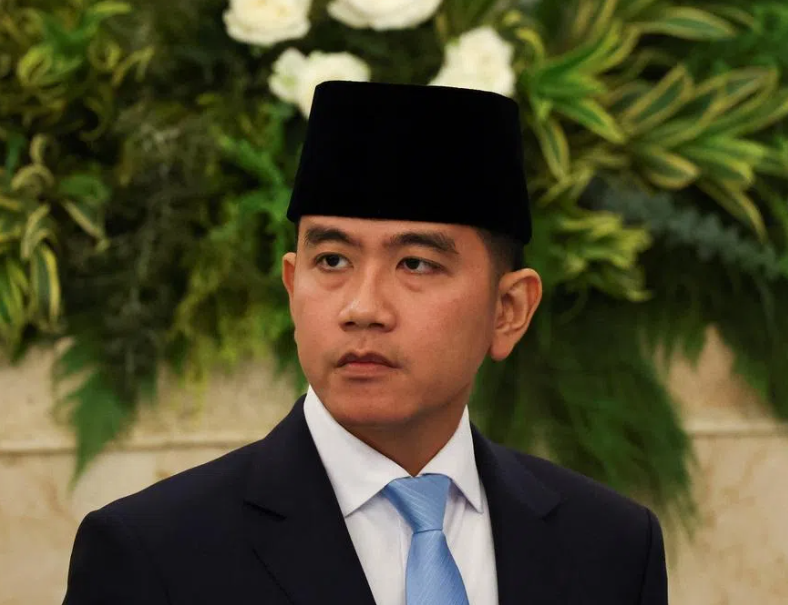
Vice-President Gibran Rakabuming Raka has stepped into the spotlight through direct engagement with student protesters, inviting five university representatives to accompany him on an official visit to eastern Indonesia on June 18, just three days after holding closed-door discussions about their concerns. The move reflects an apparent strategy to position himself as responsive to public grievances, particularly surrounding two of the government's most contentious initiatives: the free meals programme and the Red and White Cooperative scheme, which aims to establish thousands of village-run businesses across the archipelago.
During the initial meeting with student representatives from institutions including Bung Karno University, Gibran signalled openness to their research findings and pledged to audit student concerns before briefing President Prabowo Subianto. Muhammad Abdi Maludin, a student leader present at the discussion, told the media that the Vice-President had responded positively to their documentation. However, this apparent receptiveness masked deeper scepticism, as social media responses questioned whether the selected students truly represented Indonesia's broader university movement or whether the engagement amounted to theatre designed to neutralise criticism rather than address underlying grievances.
Analysts at Jakarta's Center for Strategic and International Studies identify a clear political calculation underlying Gibran's outreach. His visibility around student concerns and willingness to meet with critics construct an image of a communicative government figure engaged with ordinary citizens—a carefully cultivated persona aimed at the 2029 presidential election cycle. At 38 years old, the eldest son of former president Joko Widodo has not publicly declared electoral intentions, yet his actions suggest preparation for future political competition. By positioning himself as a bridge between youth concerns and presidential decision-making, Gibran may be attempting to build grassroots support and distinguish himself from the broader administration.
Yet the Vice-President's actual authority over the programmes drawing student criticism remains severely constrained. The National Nutrition Agency, which oversees the free meals initiative, reports directly to President Prabowo, not the Vice-President. Similarly, the Red and White Cooperative programmes operate as presidential priority initiatives coordinated across multiple ministries and military agencies. Gibran's involvement in these portfolios appears largely ceremonial rather than substantive, suggesting that his engagement with students, while politically expedient, cannot translate into the policy reforms the protesters demand. Observers note that since taking office in October 2024, Gibran has struggled to define a meaningful executive role beyond ceremonial assignments related to Papua's development and the new capital city Nusantara.
This structural weakness in Gibran's position explains the performative character of his student outreach. Rather than wielding genuine authority to address programmatic failings, the Vice-President appears engaged in what researchers describe as a low-cost attention-seeking strategy. His visits to schools implementing the meals programme allow him to acknowledge shortcomings and call for improved governance without requiring direct control over reforms. When visiting East Nusa Tenggara on June 18, Gibran acknowledged administrative problems in the free meals scheme following corruption allegations against National Nutrition Agency chief Dadan Hindayana, who was arrested that month for alleged procurement irregularities. These public acknowledgements create an impression of concerned leadership without demanding the institutional changes necessary to address systemic dysfunction.
The student engagement initiative suffered credibility damage when reports emerged that participants had received payments following their palace meeting. By late June, news outlets Kompas and Tribunnews reported that student leaders had acknowledged receiving between 2 million and 20 million rupiah after attending Gibran's discussion, raising questions about whether participation reflected genuine grassroots concern or compensation for staged engagement. The Presidential Palace indicated it would investigate the payments' source and purpose, yet the revelation underscored academic critics' suspicions that the entire exercise represented a carefully orchestrated performance rather than organic engagement with university movements. Padjadjaran University scholar Irman Lanti observed that the students selected for the palace meeting did not represent Indonesia's largest and most influential campuses, suggesting deliberate curation designed to avoid confrontation with more organised protest constituencies.
The Vice-President's timing for this outreach proves particularly significant given the spreading nature of student-led protests and intensifying government scrutiny. Corruption scandals within flagship programmes have energised student activism, creating a window of public receptiveness to criticism of executive initiatives. By engaging directly with this moment, Gibran capitalises on existing momentum without requiring him to champion substantive reforms. Analysts describe this as riding the wave of student demonstrations—leveraging public anger to raise his personal profile while maintaining alignment with presidential priorities he cannot materially challenge. For a vice-president struggling to establish distinct influence within the administration, this strategy offers a relatively cost-effective means of attracting attention and building constituencies.
The broader institutional context constrains Gibran's potential impact in ways that distinguish his position from some predecessors. Unlike previous vice-presidents assigned portfolios with clear administrative responsibilities, Gibran occupies a more ambiguous role. The military and police apparently exercise significant control over programmes ostensibly addressing poverty and development, limiting civilian oversight and vice-presidential influence. This distribution of authority reflects President Prabowo's own military background and the continued institutional importance of security sectors in shaping economic policy. Consequently, Gibran's engagement with student critics addresses a governance gap without implying he possesses the institutional standing to resolve it.
For Malaysian and regional observers, Gibran's outreach illuminates broader challenges facing vice-presidential roles in Southeast Asia's largest democracy. When senior government positions lack clearly defined authority, their occupants often resort to symbolic engagement and personality-based politics to establish relevance. Gibran's student meetings exemplify this tendency—substituting performative responsiveness for structural influence. This pattern carries implications for governance quality, as it incentivises appearance-based rather than substantive policymaking. The payments to students further highlight how political engagement in Indonesia increasingly operates through transaction-based relationships rather than ideological or policy-driven movements, a concerning trend for democratic accountability across the region.
Moving forward, Gibran's success in building political capital through this engagement strategy will likely determine whether he consolidates a distinctive role within the Prabowo administration or remains marginalised. Analysts suggest his approach reflects awareness of his current weakness—by courting student opinion and positioning himself as reform-minded, he may gradually accumulate political assets useful for future electoral contests. However, unless he translates visibility into material influence over policy implementation, sustained student support appears unlikely. The emerging pattern suggests a vice-president performing leadership rather than exercising it, a distinction crucial for evaluating the credibility of Indonesia's governance institutions as democratic safeguards.

