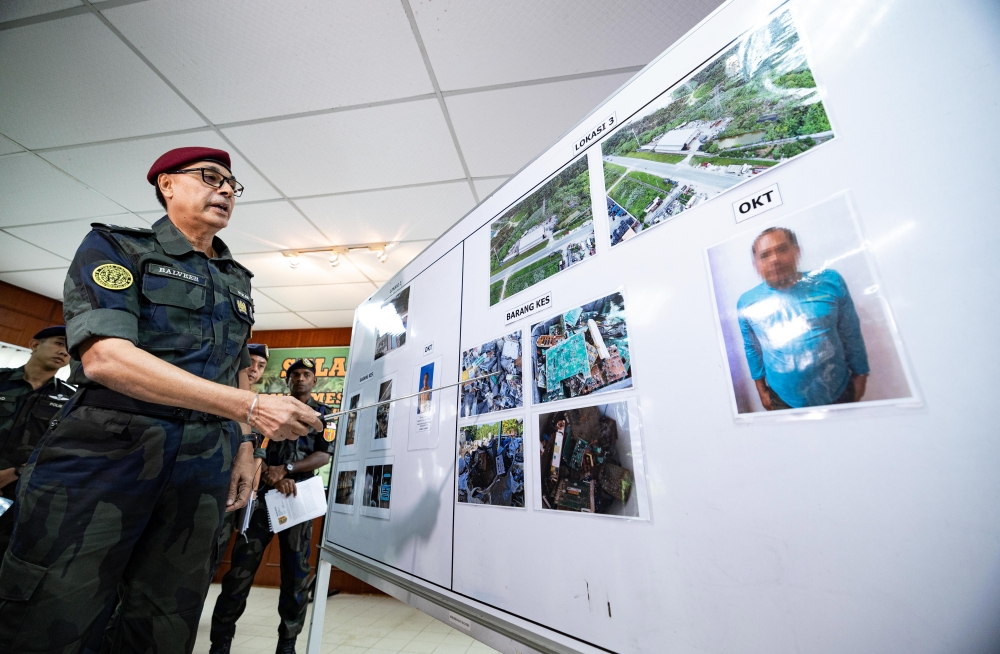
Malaysia's General Operations Force (GOF) Northern Brigade has delivered a significant blow to organised e-waste smuggling operations in the Perak capital, intercepting a major consignment of illegal electronic waste during a series of coordinated enforcement operations in Ipoh. The raids culminated in the arrest of 14 suspects and the confiscation of 120,220 kilogrammes of contraband materials, with authorities estimating the seizure's street value at RM9.39 million.
The operation represents an escalation in law enforcement efforts targeting the growing menace of illegal e-waste trafficking in Malaysia, a country increasingly serving as a transhipment hub for prohibited electronic refuse from developed nations. The GOF's intervention signals heightened vigilance against networks that have long exploited weak enforcement mechanisms and loopholes in border controls to divert hazardous materials destined for illegal recycling operations, often in countries with minimal environmental safeguards.
Electronic waste constitutes one of the world's fastest-growing waste streams, and Malaysia has become an inadvertent destination for discarded computers, mobile phones, and other devices from industrialised countries. While some material arrives for legitimate refurbishment and recycling, a substantial portion represents prohibited waste that violates the Basel Convention's restrictions on transboundary hazardous waste movement. The materials seized in Ipoh would typically contain valuable metals including copper, gold, and rare earth elements, alongside toxic substances such as lead, mercury, and cadmium that pose serious environmental and health risks if processed improperly.
The fourteen individuals detained following the raids face potential charges under Malaysia's environmental protection statutes and customs regulations. Investigations into the network's operational structure, supply chains, and intended destination markets are expected to reveal the sophistication of smuggling routes and the international connections facilitating the contraband's movement. Law enforcement sources suggest the operation had been under surveillance for several months, with the timing of the raids coordinated to maximise disruption and prevent dispersal of the accumulated stockpile.
For Malaysian policymakers and environmental regulators, the Ipoh operation underscores persistent vulnerabilities in the nation's enforcement architecture despite periodic crackdowns. E-waste smuggling networks demonstrate remarkable resilience and adaptability, continuously evolving their methods to evade detection as authorities tighten controls at conventional entry points. The sheer volume recovered—sufficient to fill several shipping containers—indicates this represents merely one iteration of what appears to be systematic trafficking rather than isolated criminal activity.
The financial implications are substantial. The RM9.39 million valuation reflects the materials' commodity worth, encompassing precious metal content and components suitable for industrial recycling. However, this figure obscures the true economic cost of illegal e-waste importation, which generates no tax revenue, undermines legitimate recycling businesses operating within regulatory compliance, and imposes severe environmental liabilities upon Malaysia's natural resources and public health infrastructure.
From a regional perspective, the Ipoh seizure illuminates a broader Southeast Asian challenge. Countries throughout the region—including Thailand, Vietnam, and Indonesia—have reported similar interceptions of illegal e-waste shipments, often originating from wealthy nations that export their waste management burdens elsewhere. Malaysia's geographic position and port infrastructure make it particularly vulnerable to becoming an entrepôt for diverted materials. Addressing the problem requires coordinated international action, stronger bilateral agreements with source countries, and enhanced cooperation among ASEAN members to establish consistent enforcement standards and information-sharing protocols.
The GOF's successful operation demonstrates that determined enforcement can yield tangible results when resources are concentrated strategically. However, sustained impact requires consistent pressure against smuggling networks and their facilitators. Single interdictions, while significant, rarely dismantle entire trafficking operations; rather, they may prompt networks to modify routes or adapt operational procedures. The arrested individuals will likely face prosecution, but disrupting higher-level organisers and international connections necessitates deeper investigative work and cross-border cooperation that frequently encounters jurisdictional complications.
Environmental advocates contend that the fundamental solution requires addressing demand-side pressures that incentivise e-waste exports from developed nations. Stricter enforcement of extended producer responsibility requirements in origin countries, higher domestic recycling costs that reduce the economic advantage of smuggling, and international agreements with more rigorous verification mechanisms could substantially reduce the volume of illegal material entering Malaysian territory. Until such systemic changes materialise, enforcement agencies will continue confronting well-resourced smuggling networks operating within margins of profitability that compensate for periodic losses to law enforcement.
The implications for Malaysia's environmental standing are considerable. International rating agencies and sustainable development assessments increasingly penalise nations that become repositories for others' waste, particularly hazardous materials that damage ecosystems and public health. The Ipoh operation, while demonstrating enforcement capability, simultaneously highlights an ongoing vulnerability that international observers scrutinise when evaluating Malaysia's environmental governance.
Moving forward, stakeholders suggest the GOF raid should catalyse broader policy discussions about e-waste management infrastructure, regulatory harmonisation across ASEAN, and enhanced port security protocols specifically targeting containerised waste materials. Malaysia's commitment to addressing illegal e-waste trafficking will significantly influence its environmental credibility and regional standing as nations collectively confront the mounting challenge of electronic waste in an increasingly digital global economy.

