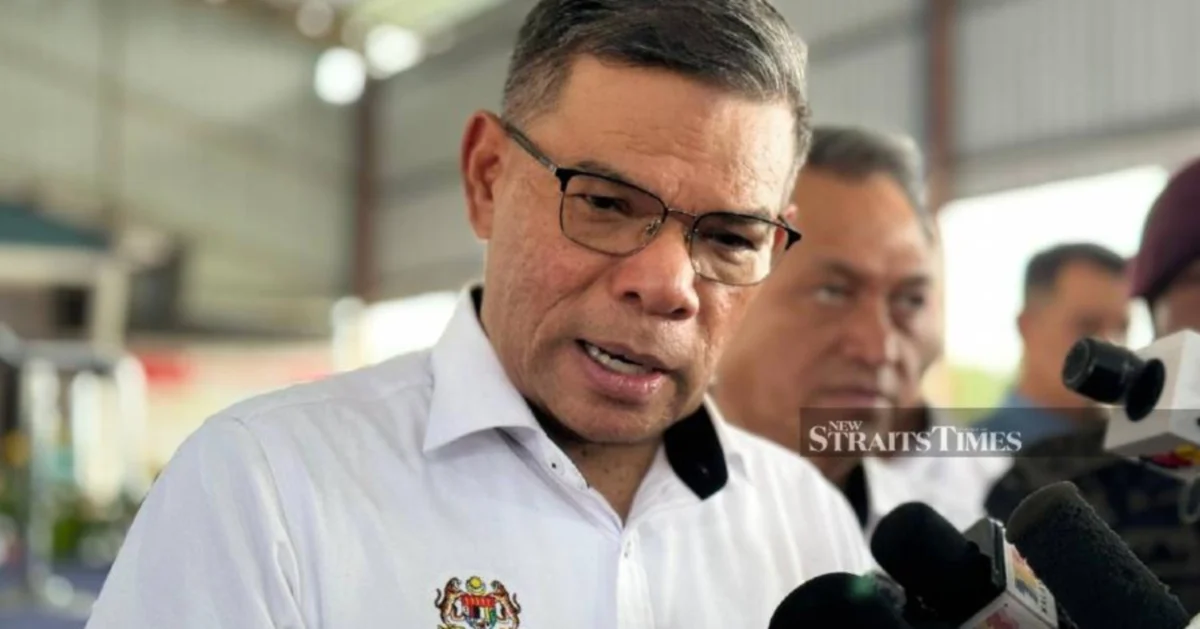
Prime Minister Datuk Seri Anwar Ibrahim has thrown his support behind a substantial RM22 million funding initiative aimed at strengthening the operational capacity of the Malaysian Border Control and Protection Agency (MCBA). The financial injection, announced through a government statement, underscores the administration's prioritization of border security infrastructure at a time when the region faces evolving challenges to territorial integrity and national sovereignty.
The allocation represents a significant commitment to modernizing equipment and weaponry for frontline border personnel, whose mandate encompasses surveillance, interdiction, and enforcement operations across Malaysia's complex maritime and terrestrial boundaries. By provisioning the agency with contemporary firearms and complementary gear, the initiative addresses operational gaps that have become increasingly apparent given the expanding scope of cross-border activities, from smuggling operations to illegal immigration networks.
The Malaysian Border Control and Protection Agency operates within the broader framework of national security architecture, coordinating with maritime authorities, police special forces, and customs agencies to maintain border integrity. The RM22 million investment reflects recognition that effective border management requires not merely personnel deployment but comprehensive equipment packages that enhance operational effectiveness and officer safety. Malaysia's geographic position—with over 2,600 kilometres of coastline and multiple land borders—demands sophisticated systems and reliable armaments to counter diverse threats.
This funding decision arrives amid persistent regional concerns about transnational crime syndicates, human trafficking operations, and illicit arms trafficking that frequently exploit porous border zones. Southeast Asia's maritime corridors remain particularly vulnerable, with criminal networks utilizing advanced vessels and communication systems that outpace conventional enforcement tools. The MCBA's capacity to respond effectively depends significantly on equipment parity with threats they confront, making periodic modernization investments essential to operational credibility.
The government's fiscal allocation also reflects broader budgetary priorities under the current administration. Since taking office, Prime Minister Anwar Ibrahim's cabinet has pursued strategic investments in security and defence portfolios, balancing fiscal discipline with institutional strengthening. The RM22 million commitment sits within a larger defence spending framework, though the precise distribution across different security agencies remains subject to parliamentary oversight and public accountability mechanisms.
Equipment provisions for border agencies typically include small arms, communication systems, surveillance technology, protective gear, and transportation assets. The comprehensive nature of the allocation suggests a holistic approach to capability enhancement rather than piecemeal upgrades. Modern border operations demand integrated systems where firearms, reconnaissance equipment, and information-sharing platforms function cohesively to maximize enforcement effectiveness and minimize response times to emerging threats.
For Malaysia, maintaining credible border control carries economic and diplomatic significance beyond immediate security concerns. International trading partners and investment communities assess country risk partly through evaluation of border security capability, recognizing that effective enforcement protects supply chains and reduces associated operational costs. The MCBA's capacity therefore carries indirect implications for Malaysia's standing as a reliable trading nation and safe transit hub for regional commerce.
The investment also positions Malaysia favourably within regional security cooperation frameworks, demonstrating institutional commitment to transnational law enforcement partnerships. ASEAN-level maritime coordination initiatives and bilateral agreements with neighbouring countries increasingly depend on member states maintaining credible, equipped enforcement agencies. The RM22 million allocation signals Malaysia's willingness to contribute substantively to regional security architecture, enhancing the country's voice in collaborative border management discussions.
Staffing and training considerations complement the equipment investment, though these typically receive separate budgetary allocations. The MCBA's existing personnel require familiarization with new systems, necessitating concurrent investment in instructional capacity and operational doctrine development. This broader ecosystem of training and equipment integration determines whether financial outlays translate into genuine operational improvements or become underutilized assets gathering institutional dust.
The announcement arrives during a period when border security agencies across Southeast Asia face mounting pressure to balance enforcement efficiency with humanitarian considerations. Managing irregular migration flows, distinguishing between commercial maritime traffic and criminal movement, and preventing weapons smuggling while protecting human rights represent complex operational challenges that equipment alone cannot resolve. The RM22 million investment therefore forms part of larger institutional strengthening initiatives encompassing personnel development, inter-agency coordination enhancement, and operational doctrine refinement.
Looking forward, the MCBA's equipment modernization programme may establish precedent for subsequent investments in other security agencies, potentially triggering broader discussions about defence spending and institutional capability development. Parliamentary committees and public oversight bodies will likely scrutinize implementation progress, equipment procurement transparency, and whether the investment generates measurable improvements in border security metrics and operational effectiveness indicators.

