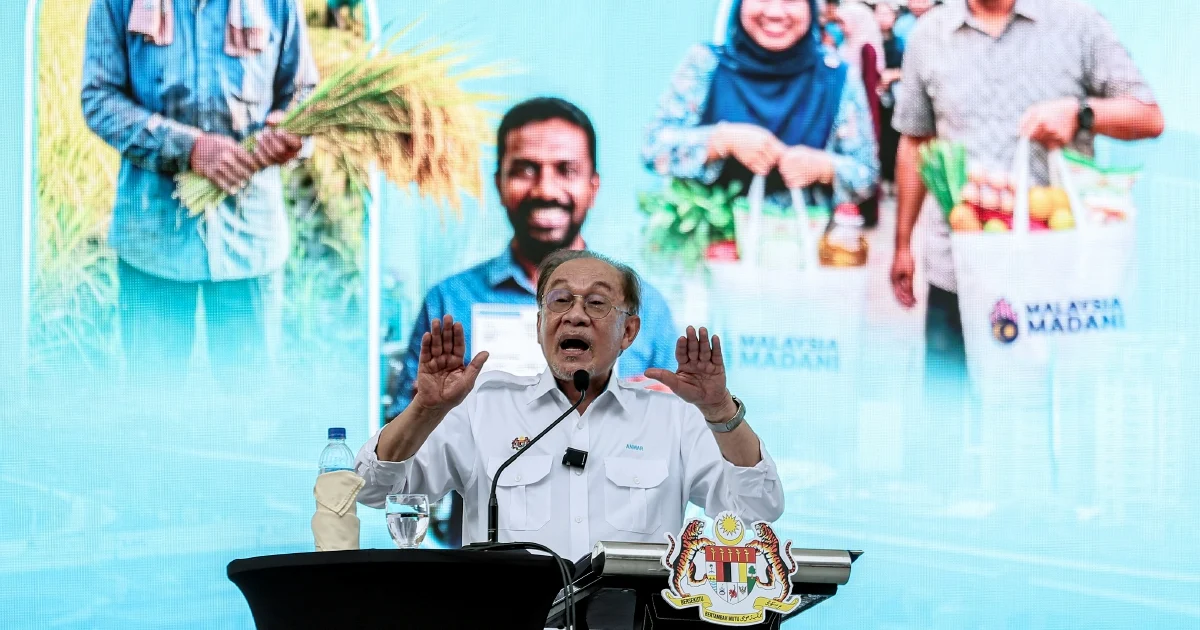
Prime Minister Anwar Ibrahim unveiled a significant funding boost for grassroots community security initiatives during his visit to Segamat, announcing that Neighbourhood Watch Areas (KRT) across the country will see their annual grants increased to RM10,000 from the previous RM6,000 allocation. The decision reflects the government's commitment to strengthening community-based policing and neighbourhood cohesion at the local level, with the enhanced funding set to take effect from January 1, 2027.
The increase represents a 67 percent boost to the resources available to these voluntary community safety groups, which form the backbone of grassroots crime prevention efforts in residential areas throughout Malaysia. Neighbourhood Watch Areas have long served as important links between residents and law enforcement, fostering trust and coordination in addressing petty crimes, suspicious activities, and public safety concerns at the neighbourhood level. This funding enhancement acknowledges the vital role these organisations play in creating safer living environments while reducing the burden on formal policing resources.
The RM4,000 annual increment per neighbourhood watch unit translates into substantial additional capacity for these groups to execute their community programmes. With limited budgets historically constraining their activities, many KRT units have struggled to organise regular patrol schedules, training workshops, and community awareness campaigns. The improved funding will enable these organisations to purchase necessary equipment such as torches, communication devices, and reflective clothing for night patrols, as well as fund basic training programmes to enhance volunteer effectiveness and safety protocols.
From a financial perspective, the announcement signals the government's prioritisation of preventative security measures over purely enforcement-focused approaches. By investing in neighbourhood-level initiatives, authorities demonstrate faith in community engagement as a cost-effective strategy for maintaining order and preventing crime before it escalates. For communities across Malaysia, particularly in suburban and semi-urban areas where formal police presence may be stretched, this investment promises improved capacity for rapid response to local security issues and enhanced coordination with official law enforcement agencies.
The timing of the announcement, with disbursement commencing in January 2027, provides neighbourhood watch organisations with advance notice to plan their activities and budget allocation for the coming year. This administrative consideration allows volunteer committees to assess their operational needs and design programmes that can effectively utilise the increased funding. Many groups may use the additional resources for skills development of members, public education initiatives addressing specific local crime patterns, or targeted prevention activities tailored to their neighbourhood's unique circumstances.
For Malaysian residents living in organised residential developments and established neighbourhoods, the funding increase represents tangible government support for their voluntary safety efforts. Neighbourhood watch participation has historically varied across the country, with some areas maintaining active, well-organised units while others struggle with volunteer fatigue and limited resources. Enhanced annual grants may reinvigorate flagging initiatives and provide incentive structures that attract renewed community involvement in local security arrangements.
The announcement also reflects broader governance trends in Malaysia toward decentralising responsibility for public safety to community level. Rather than expanding police force capacity—which demands significant recurrent expenditure—the government opts to empower citizens to take primary responsibility for neighbourhood security. This approach aligns with international best practice in community policing and acknowledges the limitations of centralised enforcement in addressing the nuanced, localised nature of crime and safety concerns in residential settings.
Statewide implementation of this increased grant scheme will require coordination between federal oversight bodies, state administrations, and local authorities responsible for managing KRT registrations and fund disbursement. The administrative framework must ensure equitable distribution across all qualifying neighbourhood watch areas while maintaining transparency and accountability in fund deployment. For policymakers and community organisers, establishing clear guidelines on permissible uses of the grant and reporting requirements will be critical to maximising the scheme's effectiveness and public benefit.
The funding increase also carries implications for the broader security landscape in Southeast Asia, where similar grassroots community policing models operate in neighbouring countries. Malaysia's demonstrated commitment to resource-intensive community safety programmes may prompt regional peer engagement and knowledge-sharing on effective neighbourhood watch models. As urbanisation and social change create new challenges for community cohesion across Southeast Asia, evidence of successful investment in local initiatives carries lessons for other nations grappling with similar pressures on formal law enforcement capacity.

