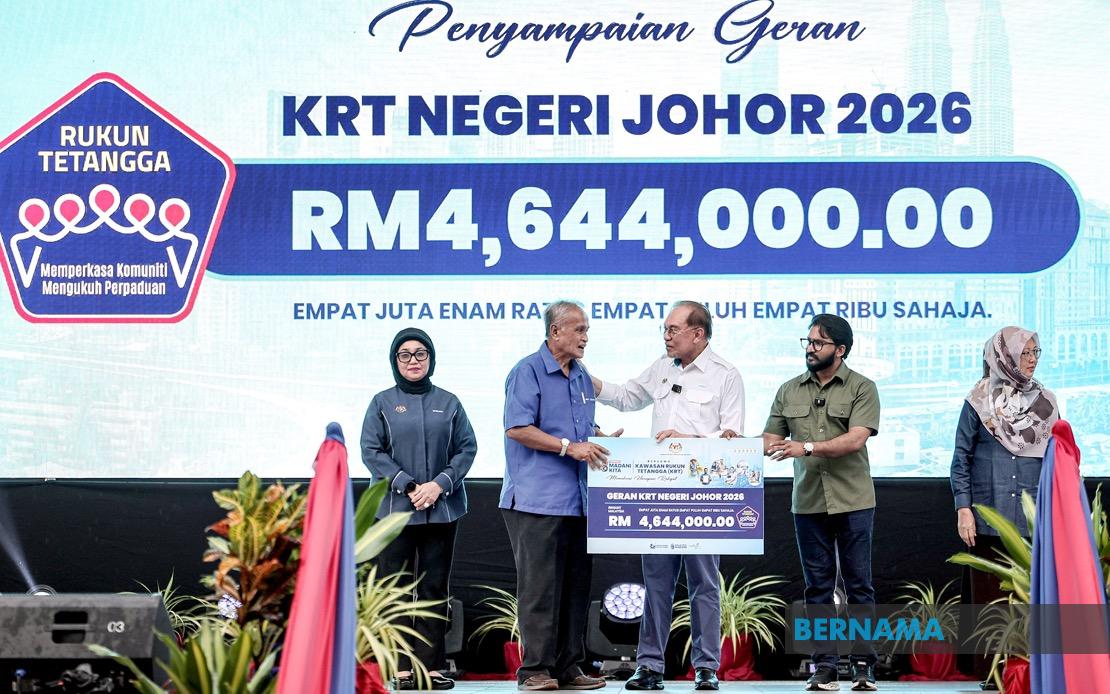
Prime Minister Datuk Seri Anwar Ibrahim has announced a significant increase in government funding for Neighbourhood Watch organisations across Malaysia, raising their annual grants to RM10,000 from the current RM6,000. The enhanced allocation will take effect from January 1, 2027, marking the first substantial boost to these grassroots bodies in over a decade. The announcement was made during the MADANI KITA Programme held at Dataran Segamat in Johor, underscoring the administration's commitment to strengthening community-level governance structures.
The decision to increase KRT funding represents acknowledgment of a long-standing disparity in resource allocation. For ten consecutive years, these neighbourhood organisations have operated with a static RM6,000 annual budget, despite their expanding responsibilities in addressing local development challenges and maintaining social cohesion. By elevating the grant amount by 67 percent, the government signals renewed investment in institutional capacity at the grassroots level, where these groups serve as vital intermediaries between residents and government agencies.
Anwar emphasised that the grant enhancement is conditional on KRTs maintaining transparent reporting standards regarding their developmental activities and community engagement initiatives. This stipulation reflects the government's broader governance philosophy of linking resource allocation to accountability and measurable outcomes. The Prime Minister framed the funding increase within the context of revitalising the tradition of consensus-building and unity at the neighbourhood level, describing KRT as fundamental to sustaining democratic participation from the ground up.
Beyond financial support, the Prime Minister highlighted the strategic importance of these organisations in addressing security concerns and welfare matters within their respective jurisdictions. Neighbourhood Watch groups function as early-warning systems for local authorities and security personnel, facilitating information-sharing on community safety issues. By strengthening their operational capacity through improved funding, the government aims to enhance their ability to collaborate with police and other enforcement agencies in addressing crime and social disorder at the source.
Anwar reiterated Malaysia's foundational strength in its multi-ethnic and multi-religious composition, positioning social harmony as a national competitive advantage rather than merely a domestic policy objective. He cautioned against weaponising cultural or religious differences as tools for social division, instead advocating for celebration of diversity as intrinsic to national identity. This framing situates the KRT funding increase within a broader strategy of institutional reinforcement aimed at protecting communal relations during periods of potential social tension.
The timing of this announcement carries significance for Malaysia's political and social landscape. As the nation navigates complex questions surrounding religious education, ethnic representation, and economic disparity, neighbourhood-level organisations become critical forums for dialogue and dispute resolution. Enhanced funding enables KRTs to invest in community programmes, mediation initiatives, and awareness campaigns that address local grievances before they escalate into broader social fractures.
Simultaneously, the Prime Minister unveiled additional development investments in Johor state, allocating RM3.205 million for infrastructure improvements at Islamic educational institutions across multiple districts. These projects encompass repair and upgrading works at religious schools, madrasahs, study centres, and tahfiz facilities in areas including Batu Pahat, Muar, and Segamat. The allocation reflects government commitment to improving educational infrastructure within the Islamic schooling ecosystem, ensuring students access modern, safe learning environments.
Complementing these initiatives, Anwar approved an immediate RM1.0 million allocation for urgent maintenance and critical repairs at Royal Malaysian Police quarters in Johor. This investment addresses longstanding concerns about police personnel accommodation standards, linking improved facility conditions to broader welfare considerations for security sector employees. The government frames such investments as essential to maintaining morale and operational effectiveness among personnel responsible for national security.
The layered approach demonstrated through these multiple announcements reveals strategic thinking about institutional development across several domains simultaneously. By targeting neighbourhood organisations, educational infrastructure, and security sector welfare in a single policy announcement, the government projects an image of comprehensive, inclusive governance that acknowledges diverse stakeholder groups. This multipronged strategy may serve to build political goodwill across constituencies ranging from community leaders to religious educators to law enforcement representatives.
For Malaysian readers and Southeast Asian observers, these developments suggest an administration prioritising institutional resilience and grassroots engagement as mechanisms for governance stability. In a regional context where several nations experience periodic social tension and communal friction, Malaysia's approach of substantially funding neighbourhood-level bodies represents an interesting policy choice. Rather than concentrating resources at higher administrative levels, this strategy disperses capacity-building investment throughout community structures.
The RM10,000 annual grant level, while appearing modest in absolute terms, carries symbolic weight within local governance circles. For many neighbourhood organisations operating on shoestring budgets, the 67 percent increase enables meaningful investments in community programmes, meeting venues, and training initiatives. The quantum of increase, proportionally significant though the absolute amount remains limited, may generate positive sentiment among volunteer community leaders who have long advocated for resource recognition.
Looking forward, the January 2027 implementation date allows organisations time to plan programme expansions and budget allocation strategies. Early disbursement procedures and government communication will significantly influence whether KRTs effectively translate funding increases into tangible community benefits or simply absorb additional resources within existing operational structures. The conditioning of grants on reporting requirements suggests the government intends to monitor how organisations utilise enhanced resources, though enforcement mechanisms remain unclear.

