The Prime Minister's Department (Religious Affairs) has unveiled an ambitious programme designed to ensure that the intellectual contributions of prominent Islamic scholars reach far beyond university lecture halls and specialised forums. The Maal Hijrah Lecture Series represents a deliberate effort to democratise access to the thinking of figures who have gained recognition both domestically and internationally, recognising that valuable insights risk remaining confined to small circles of academics and specialists if no structured effort is made to disseminate them widely.
Minister in the Prime Minister's Department (Religious Affairs) Dr Zulkifli Hasan explained the philosophical underpinning of this initiative during the official launch of the Maal Hijrah 1448H/2026 Lecture Series in Putrajaya. He emphasised that the government cannot permit the accumulated wisdom of these established Islamic intellectuals to remain isolated within institutional or elite circles, effectively locked away from the general population. The minister articulated a vision wherein the intellectual contributions of Maal Hijrah figures would permeate all strata of Malaysian society, ensuring that their perspectives on contemporary issues facing Muslims and the broader community gain traction among ordinary citizens rather than remaining the preserve of scholars and policy specialists.
The conceptual foundation for this initiative stems from recognition that knowledge dissemination is not automatic. Without deliberate institutional frameworks and strategic partnerships, even the most significant intellectual work can fail to influence public discourse or shape social attitudes. By positioning this as a formal government programme, authorities are signalling their commitment to elevating the profile and accessibility of Islamic thought leadership in Malaysia. The minister expressed hope that this effort would result in widespread appreciation of Maal Hijrah figures' contributions not merely among Muslim audiences but extending to non-Muslim Malaysians as well, thereby promoting interfaith understanding through exposure to contemporary Islamic scholarship.
The initiative has already garnered substantial institutional support from Malaysia's higher education sector. Dr Zulkifli noted that religious affairs agencies and key strategic partners, including Universiti Sains Islam Malaysia (USIM) and International Islamic University Malaysia (IIUM), have responded positively to the proposal. These institutions bring established infrastructure, audience reach, and academic credibility to the venture. The involvement of IIUM, in particular, signals the project's international dimension, as Malaysia's premier Islamic university maintains extensive networks across Muslim-majority nations and engages regularly with scholars from diverse regions and intellectual traditions.
Plans are already underway to expand institutional partnerships beyond the initial universities. Dr Zulkifli indicated that the government intends to broaden collaboration to encompass additional universities and educational institutions across the country. This scaling approach suggests recognition that sustainable impact requires dispersing lecture activities geographically and institutionally, preventing concentration of these intellectual forums in a handful of established centres. By engaging more institutions, authorities aim to create multiple channels through which contemporary Islamic scholarship reaches students, academics, and the general public across different regions of Malaysia.
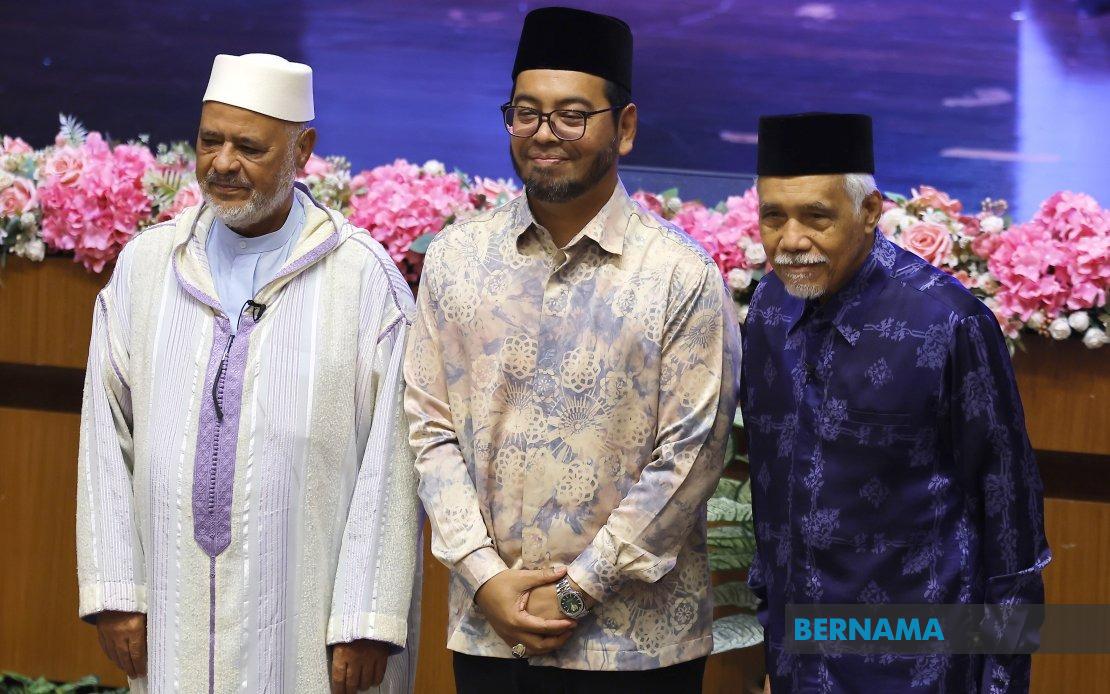
The lecture series coincides with the annual recognition of distinguished Islamic figures. The 1448H/2026 celebration saw two significant honours conferred upon scholars who exemplify the calibre of thinkers whose work the government wishes to promote. Emeritus Professor Osman Bakar, rector of IIUM, received recognition as the national Maal Hijrah figure, while Professor Sheikh Dr Ahmad Al-Raysuni, a specialist in Islamic jurisprudence from Morocco, earned designation as the international Maal Hijrah figure. These awards were presented during the national-level celebration at Masjid Putra by the Sultan of Perak, Sultan Nazrin Shah, who also distributed cash prizes, trophies, and certificates of appreciation to both recipients.
Osman Bakar's selection as national Maal Hijrah figure carries particular significance given his position heading IIUM. His intellectual contributions span diverse domains, from Islamic philosophy to contemporary issues, and his leadership of Malaysia's largest Islamic university positions him as an influential voice shaping how Islamic scholarship is taught and transmitted to the next generation. The recognition effectively validates his approach to academic Islamic studies whilst simultaneously raising his profile beyond the university community where many of his contributions have traditionally been concentrated.
Ahmad Al-Raysuni's international award reflects Malaysia's engagement with the broader Muslim world. His expertise in Islamic jurisprudence and contemporary Islamic thought makes him representative of the type of international scholar whose insights Malaysia wishes to introduce to local audiences. The inclusion of an international figure in this recognition programme signals that the government views valuable Islamic scholarship not as parochially national but as part of a global intellectual conversation from which Malaysia can draw wisdom and insight. The collaboration with international scholars enriches domestic discourse whilst positioning Malaysia as a centre of engagement with world Islamic intellectual traditions.
The rationale driving this initiative reflects broader trends in how governments approach public intellectual engagement. Rather than leaving dissemination of scholarly work entirely to market forces or academic networks, the religious affairs ministry is recognising that intentional policy intervention can shape intellectual discourse. By creating formal platforms for established figures to share their thinking, authorities aim to influence the quality and direction of public conversation on matters touching religion, ethics, and social welfare.
The lecture series also addresses a potential communication gap between academic research and public understanding. Many scholars produce significant work that influences specialists in their field but struggles to gain traction in broader society. By creating dedicated forums and enlisting institutional partners to host lectures and related activities, the government is attempting to bridge this divide. This approach acknowledges that not all valuable intellectual work naturally finds popular audiences; instead, structured initiatives can amplify voices and ideas deserving wider recognition.
The involvement of universities like USIM and IIUM positions the lecture series within academic frameworks that lend credibility whilst also reaching beyond purely academic audiences. These institutions regularly host public lectures, community engagement programmes, and extend their reach through student bodies and alumni networks. By channelling the Maal Hijrah Lecture Series through such institutions, the government gains access to established platforms for knowledge dissemination whilst maintaining quality standards associated with university-based intellectual work.
For Malaysian society more broadly, this initiative suggests a government committed to elevating the intellectual foundations of public discourse on Islam-related matters. Rather than relying on informal transmission of Islamic knowledge through traditional channels, the approach creates systematic mechanisms for contemporary scholarly voices to reach diverse audiences. This may influence how younger Malaysians, in particular, encounter Islamic intellectual traditions, potentially shifting their engagement from devotional or ritual frameworks toward more analytically sophisticated engagements with Islamic thought.