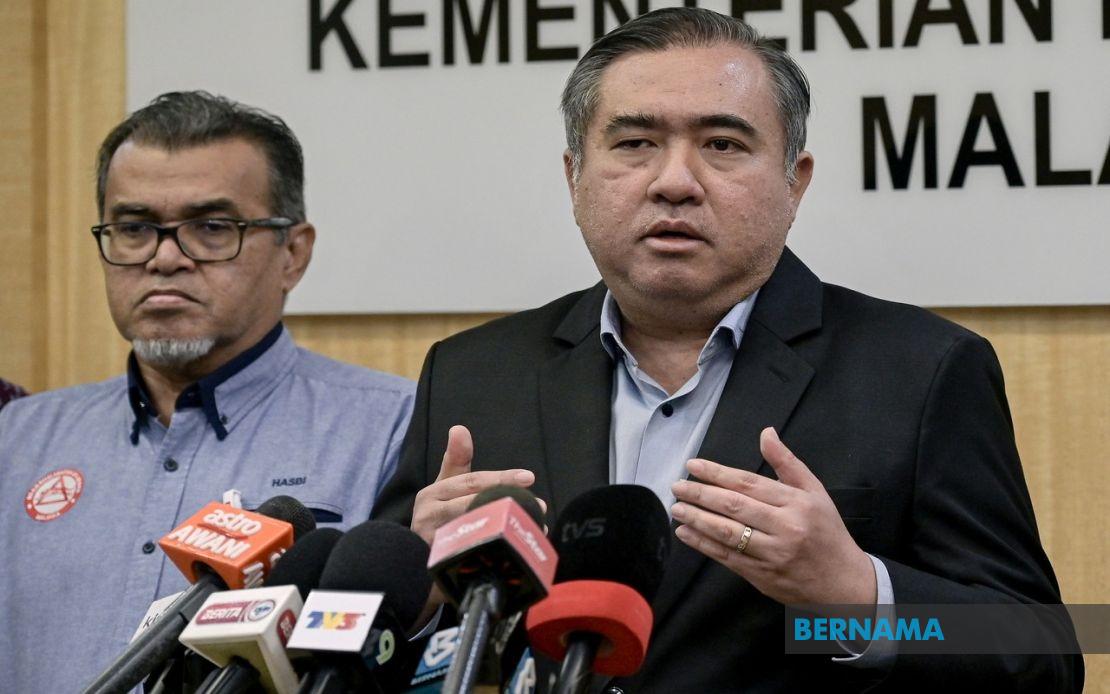
Transport Minister Anthony Loke has clarified the government's regulatory stance on the management structure of Malaysia's port operators, stating that while the state maintains strict ownership requirements, it does not intervene in day-to-day corporate leadership appointments. Speaking at a press conference in Putrajaya on July 17, Loke outlined a distinction between financial control and operational management that underpins current port sector governance.
The minister's comments come amid international media reports concerning the appointment of Sultan Ahmed Sulayem, the former chairman and chief executive of DP World, to lead MMC Ports Holdings Bhd as executive chairman. This development triggered questions about whether such appointments aligned with government oversight of a strategically significant sector. Loke's response signals a pragmatic regulatory philosophy that prioritizes ownership structure over management selection, reflecting broader principles adopted across Malaysia's critical infrastructure sectors.
At the heart of government policy sits a non-negotiable threshold: any company holding a port concession or managing strategic national assets must maintain Malaysian ownership at a minimum of 51 per cent. This requirement serves as the primary regulatory checkpoint for the transport ministry. Loke emphasised that once this ownership condition is satisfied, the government refrains from scrutinising internal corporate decisions regarding which individuals—whether Malaysian or foreign—occupy senior management positions. This approach balances the need to preserve Malaysian control of vital economic assets against the practical reality that expertise in specialised sectors may necessitate engaging experienced international professionals.
The distinction Loke drew between shareholding regulation and management autonomy reflects a deliberate policy choice that has implications for how Malaysia attracts global expertise to its ports sector. By allowing foreign nationals to serve as chief executives and other senior roles, the government signals openness to international talent while maintaining what it considers essential control through majority ownership. This framework exists partly because port operations have become increasingly sophisticated, requiring knowledge of complex global supply chains, digitalisation, and modern logistics practices that may be more readily available in the international market.
The Port of Tanjung Pelepas serves as a concrete example within Malaysia's own port landscape. This facility, situated in Johor and serving as a major transshipment hub, operates under leadership that includes foreign national chief executives, yet the government does not exercise day-to-day supervision over such appointments. Loke's reference to PTP underscores that the present arrangement is not novel or exceptional but rather reflects established practice across the Malaysian port sector. The port has become competitive precisely because it attracts world-class management talent regardless of nationality, a competitive advantage that domestic ownership rules alone would not guarantee.
Regarding the specific situation at MMC Ports Holdings Bhd, Loke stated the ministry had received no formal notification from the company or its concessionaire regarding changes in shareholding structure. This distinction matters substantially because notification requirements exist to ensure the government maintains visibility over shifts in financial ownership, even if management appointments themselves proceed without formal approval. The absence of such notification suggests either that the leadership transition at MMC Ports did not involve changes to the fundamental ownership structure, or that the relevant notification processes had not yet been completed at the time of Loke's remarks.
The minister's emphasis on notification mechanisms points to a secondary layer of government oversight that operates independently of management approvals. Any modifications to shareholding arrangements must be reported through the Public-Private Partnership Unit (UKAS), a central coordinating body responsible for monitoring concession agreements and strategic asset management across government. This requirement ensures that even as the ministry steps back from personnel decisions, it maintains adequate information to detect ownership changes that might threaten the 51 per cent Malaysian control threshold.
This regulatory architecture reflects lessons learned from infrastructure sectors globally, where governments have grappled with balancing local control against the need for operational excellence. Malaysia's approach prioritises financial stewardship while permitting operational flexibility, a model that contrasts with either pure state ownership and management or completely hands-off private sector arrangements. The 51 per cent ownership floor provides symbolic and practical assurance that core decisions affecting port strategy, investment, and national interest remain ultimately answerable to Malaysian stakeholders.
The practical implications for Malaysian readers extend beyond port governance alone. The principles Loke articulated—strong ownership requirements combined with professional management freedom—have become embedded across Malaysia's strategic infrastructure ecosystem. Similar arrangements apply to telecommunications, energy, and transportation sectors where foreign expertise proves valuable but Malaysian control remains non-negotiable. This model has allowed Malaysia to modernise critical infrastructure while preserving what policymakers view as necessary national safeguards.
For regional competitors and neighbouring Southeast Asian nations watching Malaysia's port sector, these clarifications carry competitive significance. The willingness to install internationally experienced leadership while maintaining Malaysian ownership can enhance operational performance and market positioning against regional rivals. Countries like Singapore, which maintains substantial foreign management participation in its ports authority, and Thailand, which emphasises more direct government involvement, offer contrasting models. Malaysia's middle path attempts to capture advantages from both approaches.
The clarity provided by Transport Minister Loke on this governance question matters because port sector appointments often generate scrutiny and public interest given their strategic importance. By explicitly distinguishing between permissible management decisions and regulated ownership requirements, the minister has attempted to set clear expectations for both domestic stakeholders and international investors. Companies can proceed with management appointments based on merit and expertise without seeking government approvals, while government authorities retain clear oversight mechanisms for detecting problematic shifts in control.
Looking forward, this regulatory approach suggests Malaysia intends to remain an attractive destination for major international port operators and managers while maintaining its strategic ownership position. The framework implicitly invites global expertise to enhance local capacity without surrendering financial and strategic control to foreign entities. For Malaysian readers involved in the transport and logistics sectors, this clarification confirms that operational excellence and professional management excellence need not be sacrificed for the sake of ownership regulations.

