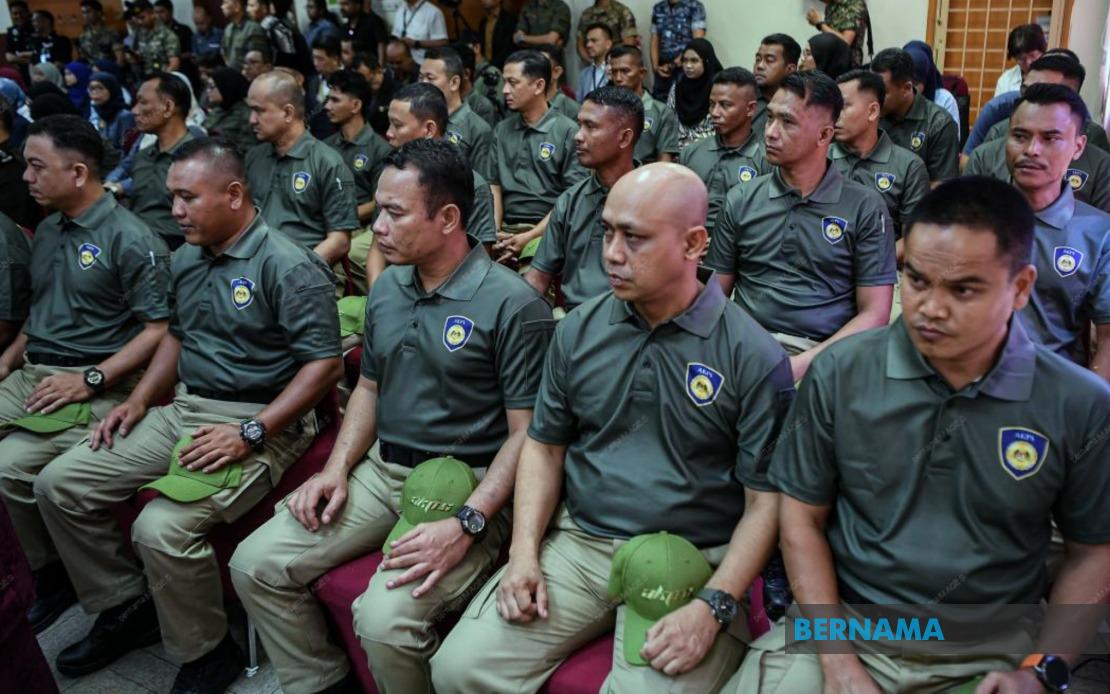
The Malaysian government has moved to reassure thousands of Border Control and Protection Agency (AKPS) personnel that their employment rights and welfare arrangements will remain intact as the organisation undergoes a significant restructuring beginning July 1. Deputy Home Minister Datuk Seri Dr Shamsul Anuar Nasarah delivered the assurances during parliamentary proceedings on June 25, responding to concerns about institutional stability and staff protection following the agency's establishment through consolidation of multiple enforcement bodies.
Under the transition arrangements, personnel transferring to the new service scheme administered by the Public Service Department will face no jeopardy to their career advancement, length-of-service rankings, retirement entitlements or existing welfare provisions, provided they maintain their positions within their current agencies. This commitment represents a significant safeguard for workers navigating the organisational restructuring, as government agencies in Malaysia frequently face coordination challenges during large-scale consolidations that can inadvertently disadvantage staff members caught between institutional arrangements.
The AKPS itself represents an ambitious institutional consolidation project, bringing together previously separate enforcement agencies to create a unified border management operation. The consolidated agency now manages personnel and operational oversight across 122 designated entry points nationwide, coordinating the flow of both human and commercial traffic into and out of Malaysian territory. This centralised approach aims to enhance security protocols and streamline administrative processes that were previously fragmented across multiple organisations.
Before the new service scheme took formal effect, the AKPS filled its organisational positions through a secondment mechanism, drawing officers from their parent agencies on a temporary basis rather than through permanent transfers. This arrangement created uncertainty about long-term employment status for many workers, particularly regarding whether they would eventually be formally incorporated into the AKPS structure or returned to their original departments. The deputy minister's statement clarifies that officers electing not to accept formal appointment transfer will remain provisionally within AKPS pending placement decisions made by the Public Service Department.
For those officers who decline permanent appointment under the new scheme, an alternative pathway exists through redeployment to their original parent agencies. The placement process will be administered by individual service heads based on departmental vacancies and operational requirements, ensuring that workers are not left in indefinite limbo but instead directed to positions matching their skills and seniority. This dual-path approach acknowledges that not all AKPS personnel may wish to commit permanently to the consolidated agency, recognising the diverse career aspirations within the civil service workforce.
Currently, the AKPS operates with significant staffing constraints that may be impacting service delivery at border facilities. As of mid-June, approximately 6,824 of the 8,403 positions budgeted for the agency had been filled, leaving nearly 1,579 positions vacant. This shortfall represents roughly 19 per cent of the intended workforce complement, a gap that could strain operational capacity at major immigration and customs checkpoints during peak travel periods. The vacancy situation underscores why the government has introduced financial incentives to attract and retain qualified personnel within the agency.
To offset the challenges of maintaining optimal service standards during the transition and staffing phase, the government has implemented a compensation package designed to make AKPS positions more attractive relative to comparable civil service roles. Appointees receive an additional annual salary increment beyond standard scales, supplemented by a RM200 service incentive award, recognising the demanding nature of border management work and the geographic distribution of posting locations across the country. These benefits represent an institutional investment in workforce stability at a critical juncture.
The consolidation of border and enforcement operations carries significant implications for Malaysia's broader security architecture and regional integration objectives. Unified command structures and standardised procedures at entry points can enhance intelligence sharing, reduce administrative duplication, and create consistency in how Malaysia engages with neighbouring countries on border security matters. For Southeast Asian regional cooperation frameworks like the ASEAN Coordinated Border Management initiative, having a single institutional focal point for border operations facilitates more coherent coordination with counterpart agencies across the region.
The parliamentary response to staffing concerns also reflects growing political attention to civil service working conditions and institutional reform outcomes. Opposition Member Rushdan Rusmi raised questions about enforcement institution stability, indicating that border and security agency operations now feature prominently in routine legislative scrutiny. This attention level suggests policymakers recognise that border management capacity directly affects public confidence in governmental competence on security and immigration matters, particularly in an era of heightened concerns about irregular migration and transnational crime.
The progressive filling of AKPS vacancies involves coordinated effort across multiple government portfolios, including the Home Ministry, the Public Service Department, and the original parent agencies from which personnel were seconded. This interagency coordination reflects the structural complexity inherent in consolidating enforcement bodies that previously operated under different ministerial portfolios and administrative cultures. Successful implementation requires alignment of personnel management systems, procurement procedures, and operational protocols across organisations that may have developed distinct institutional practices over many years.
Looking forward, the AKPS transition model may provide lessons for other Malaysian government consolidation initiatives, particularly as the civil service continues modernising its structures. The explicit commitment to protecting existing entitlements and creating alternative pathways for reluctant transferees suggests a learning curve from previous institutional mergers that generated staff morale problems and operational disruptions. Future consolidations might incorporate similar safeguards from the outset rather than introducing them reactively during implementation phases.
For Malaysian civil servants broadly, the AKPS restructuring illustrates both the opportunities and uncertainties accompanying institutional reform in the modern state apparatus. While consolidation can generate efficiencies and enhance service delivery, it necessarily disrupts established career pathways and institutional relationships. The government's parliamentary assurances appear designed to signal that it recognises these disruptions and is committed to protecting workers from bearing disproportionate costs of organisational restructuring, a message likely intended to build confidence in future reform initiatives requiring employee cooperation and institutional adaptation.

