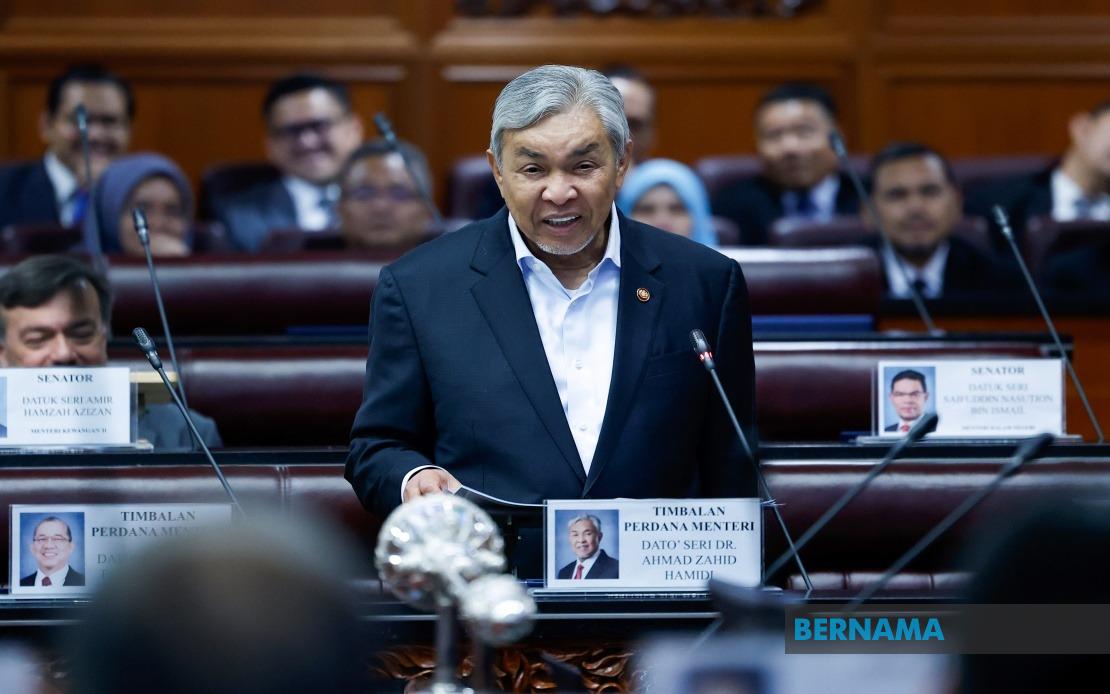
The Malaysian government is actively reassessing its regulatory framework governing land administration within Federal Land Development Authority (FELDA) settlements, focusing on modernising inheritance mechanisms and addressing acute housing shortages affecting younger generations of settlers. Deputy Prime Minister Datuk Seri Dr Ahmad Zahid Hamidi disclosed in Parliament that the administration is examining several substantive proposals intended to streamline operations under the Land (Group Settlement Areas) Act 1960, a statute that has governed settlement affairs since independence.
Among the most significant proposed changes is a mechanism to restrict the number of registered heirs to two nominated individuals per settlement lot, alongside plans to designate a single administrative representative responsible for coordinating affairs related to each property. These modifications represent attempts to untangle complex inheritance arrangements that have historically created administrative bottlenecks and disputes within FELDA communities, where unclear succession paths have frequently delayed land title issuance and created uncertainty for beneficiaries. The streamlining of heir registration reflects government recognition that the current system, designed for an earlier era, struggles under contemporary demographic pressures.
Equally significant are proposals to permit the construction of multiple residential units on individual residential lots, provided such development adheres to prescribed conditions, complies with state and local planning policies, and receives formal approval from relevant authorities. This reform directly addresses the housing aspirations of FELDA's second and third generation residents, who increasingly lack viable pathways to secure affordable land and build family homes within their home communities. Young settlers have historically faced constraints when attempting to develop property or subdivide family lots, effectively pricing them out of the settlement system despite their heritage and familial connections to FELDA land.
Ahmad Zahid emphasised that the government remains committed to crafting amendments that strike an equitable balance between the competing interests of current settlers, their heirs, younger generation participants, state administrations, and broader national development objectives. This balancing act proves delicate given that FELDA settlements represent strategic agricultural assets with significant state revenue implications, while simultaneously serving as crucial affordable housing repositories for rural communities. Any amendments must therefore satisfy multiple stakeholders while preserving the integrity of settlement land use patterns and maintaining orderly development.
The Deputy Prime Minister, concurrently serving as Rural and Regional Development Minister, highlighted substantial progress in distributing land titles to FELDA settlers nationwide. Official figures reveal that 109,104 out of 112,638 eligible settlers, representing 96.86 percent of the total population, have already received formal land title documentation. This achievement underscores years of collaborative effort between FELDA and respective state land authorities, demonstrating that systematic coordination between federal and state institutions can overcome bureaucratic hurdles that historically delayed title issuance.
The government's strategy involves staged completion of title distribution to guarantee that settlers and their successors possess unambiguous legal ownership rights rather than merely provisional entitlements. This phased approach allows administrators to process applications methodically whilst maintaining documentation accuracy and preventing disputes arising from hasty or incomplete records. For the remaining 3,534 settlers awaiting title deeds, continued engagement between FELDA, State Land and Mines Offices, and District Land Offices ensures sustained momentum toward full implementation.
Parallel progress has emerged within FELCRA Berhad, the companion agency responsible for collective agricultural ventures. As of June 2026, FELCRA has successfully issued land titles covering house site lots to participants nationwide, with 4,274 out of 6,025 residential lots now bearing formal title deeds across 43 projects. The remaining 1,751 lots remain in processing stages with state land authorities, reflecting ongoing administrative work to clear backlogs. This incremental advancement demonstrates that both agricultural settlement agencies are making tangible headway in completing the foundational task of conferring legal ownership certainty upon their beneficiary populations.
The significance of these reforms extends beyond administrative convenience or technical property law adjustments. For Malaysian rural communities, FELDA and FELCRA settlements represent generational wealth repositories and cornerstones of social stability. The inability of young settlers to obtain housing or clarify inheritance rights creates frustration and contributes to rural-urban migration as younger generations abandon settlements in search of opportunities elsewhere. By enabling multiple housing units and streamlining heir registration, the government attempts to retain human capital within rural areas whilst modernising institutions designed during the 1960s.
Singapore and other developed neighbours have successfully reformed agricultural settlement frameworks to accommodate contemporary needs whilst preserving essential development controls. Malaysia's proposed amendments reflect similar pragmatic recognition that legacy legal structures require recalibration to serve present-day populations effectively. The emphasis on maintaining planning authority oversight and state government involvement ensures that liberalised housing construction rules do not undermine orderly development or environmental stewardship within settlement boundaries.
Implementing these amendments will require careful legislative drafting to address potential unintended consequences, such as speculative subdivision that fragments prime agricultural land or creates disputes among co-heirs claiming stake in registered house sites. State governments will require clear guidelines to evaluate housing construction proposals consistently across jurisdictions, preventing disparate outcomes that might breed complaints of inequitable treatment. Parliamentary debate preceding any amendments will likely illuminate additional considerations that policymakers must accommodate.
For Malaysian investors and rural development observers, these discussions signal the government's commitment to reinvigorating settlement systems as viable alternatives to urban property markets. Young professional Malaysians increasingly recognise that FELDA settlements offer more affordable housing pathways than metropolitan centres, provided legal frameworks permit wealth accumulation and property development within communities. These proposed reforms could therefore catalyse renewed interest in settlement residence among educated younger cohorts seeking affordable ownership opportunities.
The government's recognition of housing pressures facing new generation FELDA members reflects broader demographic realities affecting rural Malaysia. Population growth, delayed marriage ages, and changing family structures mean that single-unit residential allocations proving adequate for 1960s settler families prove insufficient for contemporary descendants. By enabling multiple residential units, governments acknowledge that modernised settlement frameworks must accommodate evolving demographic patterns rather than remaining frozen in time.
As Parliament considers these proposals, regional observers will monitor whether Malaysian reforms inspire similar recalibrations in neighbouring countries facing comparable settlement administration challenges. The outcome may establish precedents for adapting development frameworks designed decades ago to serve contemporary rural populations more effectively. In an era of rapid social change, even foundational agricultural institutions require periodic renewal to remain relevant and beneficial to successive generations.

