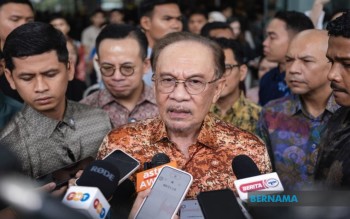
Prime Minister Datuk Seri Anwar Ibrahim has drawn a clear line on Malaysia's taxation future, declaring that his administration will not resurrect the Goods and Services Tax despite recent discussions about overhauling the consumption tax regime. Speaking after officiating the TikTok Shop Summit 2026 in Kuala Lumpur, Anwar, who doubles as Finance Minister, firmly rejected the notion of embracing a broad-based GST model while indicating flexibility regarding adjustments to the existing Sales and Service Tax framework.
The principled stance reflects the MADANI government's stated commitment to protecting lower-income households from additional tax burdens. Anwar's unequivocal language—emphasizing that he is "not prepared to consider the basic essence of GST"—signals that despite ongoing economic pressures and fiscal consolidation needs, the administration will not pursue a taxation approach that would effectively expand the tax net across all income levels. His position distinguishes between structural tax reform and targeted modifications to existing mechanisms, a nuance that carries significant weight for households and businesses across the country.
Malaysia's tax landscape has evolved considerably over the past decade, shaped by political and populist pressures. The country shifted away from GST in 2018, reverting to the SST regime amid widespread public concern about rising living costs and the regressive nature of broad consumption taxes. That transition reflected electoral sentiments and the incoming government's prioritization of affordability. Anwar's current comments suggest this political reality remains firmly entrenched, even as Treasury officials grapple with revenue shortfalls and fiscal sustainability challenges.
However, the Prime Minister's openness to SST improvements and selective GST components introduces an important caveat to his rejection. He explicitly acknowledged that the government could explore specific taxation mechanisms and modify how the current system operates without abandoning its foundational principle. This suggests that options such as targeted consumption taxes on luxury goods, enhanced compliance measures, or efficiency improvements in the SST administration remain on the table. Such selective approaches could help generate additional revenue while maintaining the overall progressivity the government prioritizes.
The broader context of this announcement reflects mounting pressure on Malaysia's fiscal position. Policymakers have reportedly discussed various revenue-enhancement proposals, including a potential tax on electronic payment transactions designed to broaden the tax base and improve collection efficiency. These conversations underscore the tension between maintaining social protection for lower-income groups and achieving fiscal targets necessary for debt management and public investment. Anwar's measured approach attempts to navigate this tension without sacrificing the government's core commitment to protecting the poor.
Malaysia's experience with GST between 2015 and 2018 provides crucial context. The six percent broad-based consumption tax, introduced by the previous government, generated significant outcry from consumers and retailers alike, with critics arguing it disproportionately affected ordinary families struggling with inflation and unemployment. The subsequent reversion to SST, which taxes goods and services at varying rates and exempts essentials, was widely celebrated as a populist victory. That historical memory likely weighs heavily on political calculations now, making any GST resurrection politically fraught regardless of economic logic.
The SST framework, while more politically palatable, has acknowledged limitations. The selective tax application creates complexity for businesses, generates lower revenue than a broad-based system, and may inadvertently create distortions in consumption patterns and investment decisions. Revenue collection has also faced challenges related to compliance and enforcement across Malaysia's diverse economy. These operational difficulties explain why Treasury officials and economists continue to advocate for consumption tax modernization, even as political constraints limit options.
Anwar's formulation—accepting potential component borrowing from GST principles while rejecting the whole architecture—offers a conceptually challenging middle path. What distinguishes a "component" of GST from SST remains ambiguous, and implementation could require clarification. Nevertheless, this framing allows the government to appear responsive to efficiency concerns while maintaining rhetorical commitment to affordability principles. The distinction matters because it suggests that targeted tax adjustments remain possible without the politically toxic label of "reintroducing GST."
The implications for Malaysian businesses and consumers are mixed. Companies may welcome continued SST stability and the avoidance of transition costs associated with switching tax regimes. However, retailers and traders operating across the region must navigate an increasingly complex tax landscape as different Southeast Asian nations pursue distinct consumption tax strategies. Malaysia's commitment to SST refinement rather than wholesale reform could affect regional competitiveness and cross-border commerce dynamics.
Looking forward, Anwar's position establishes parameters for the tax policy debate during his administration's tenure. The government has signaled that major structural overhauls are unlikely, but incremental improvements remain negotiable. This approach may satisfy neither those advocating for comprehensive fiscal reform nor those hoping for further tax reductions. Instead, it charts a politically sustainable course focused on SST optimization, though whether such adjustments can adequately address Malaysia's longer-term fiscal challenges remains an open question requiring careful monitoring of subsequent policy announcements and Treasury initiatives.

