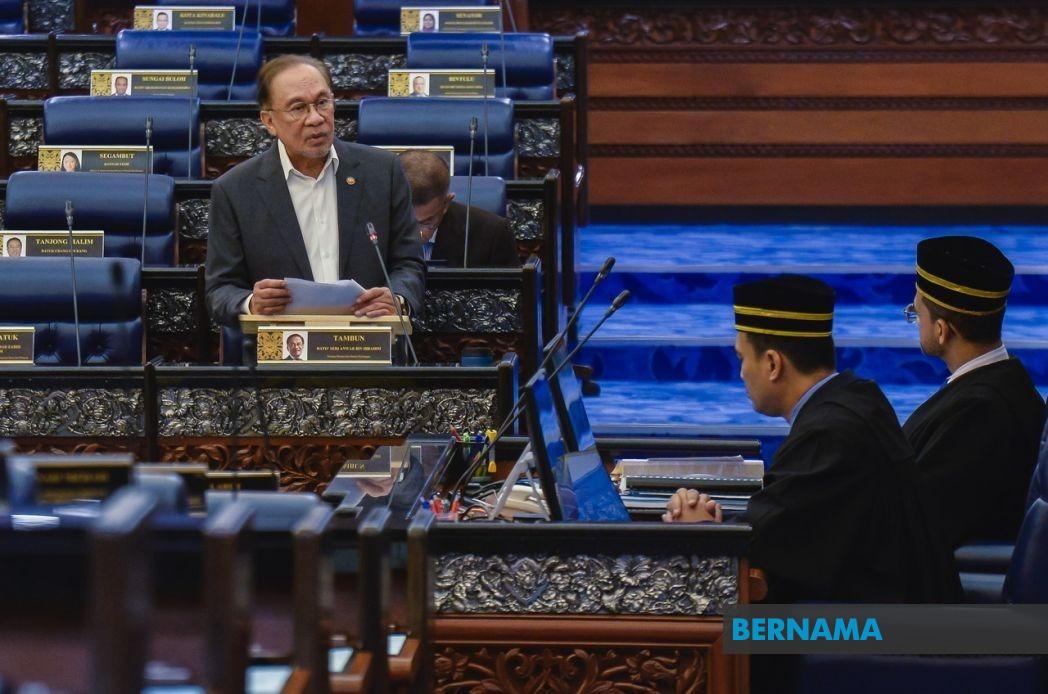
Prime Minister Datuk Seri Anwar Ibrahim has committed to investigating claims raised in Parliament that petrol station operators suffered significant financial losses during the recent overhaul of Malaysia's fuel subsidy structure. Speaking during Minister's Question Time in the Dewan Rakyat on July 7, Anwar acknowledged the concerns and signalled that the government would seek additional details from industry stakeholders before determining an appropriate course of action.
The issue emerged when PH-Ipoh Timur MP Howard Lee Chuan How highlighted reports that petrol station operators experienced losses ranging between RM40,000 and RM50,000 during the switchover to the enhanced subsidy mechanism for RON95 petrol and diesel. Lee's question reflected growing concerns from the retail fuel sector about the financial impact of policy transitions, a persistent challenge in Malaysia's attempts to balance subsidy affordability with operator profitability.
Anwar, who holds the dual portfolio of Prime Minister and Finance Minister, indicated that Second Finance Minister Datuk Seri Amir Hamzah Azizan would be tasked with gathering comprehensive information from oil companies and petrol station operators about the transition period's financial outcomes. This delegation suggests the government recognises the need for a detailed, technical examination of the claims before responding with remedial measures or policy adjustments.
The Prime Minister's remarks emphasised the cooperative relationship that has underpinned Malaysia's targeted subsidy rollout. Anwar noted that oil companies and petrol station operators have demonstrated "full cooperation" in implementing the programme, describing their partnership as essential to the system's effective operation. Without such collaboration, he suggested, the government could not have successfully deployed the targeted subsidy framework that distinguishes between different fuel grades and consumer segments.
The targeted subsidy model represents a significant departure from Malaysia's historical universal fuel price controls. Under the new system, RON95 petrol and diesel are subsidised for domestic consumers, while premium fuel grades remain market-priced. This approach aims to reduce fiscal burden while maintaining affordability for ordinary motorists. However, the transition from previous subsidy mechanisms created implementation challenges, particularly for petrol station operators managing inventory, pricing adjustments, and margin calculations during changeover periods.
Operators' claims of losses during transition phases highlight a recurrent tension in Malaysia's energy policy. When subsidy mechanisms shift, retailers must adjust their purchasing patterns, reprice stock, and accommodate policy-driven price fluctuations that may not align with their normal cost-recovery cycles. The alleged RM40,000 to RM50,000 losses per operator suggest either significant inventory devaluation or margin compression during the switchover, concerns that warrant detailed investigation to understand their systemic scale.
Anwar's commitment to discussion reflects the government's broader approach to subsidy administration, which increasingly incorporates feedback from industry participants. Rather than imposing unilateral solutions, the administration appears inclined toward consultative processes that identify genuine hardships before crafting responses. This methodology acknowledges that subsidy policy effectiveness depends not only on consumer benefit but also on retailer sustainability.
The timing of this parliamentary exchange occurs within Malaysia's ongoing economic balancing act. Subsidy spending represents a substantial fiscal commitment, with the government continuously seeking to maintain social support for fuel prices while managing budget constraints. Any investigation into operator losses during transition periods must therefore weigh industry concerns against broader fiscal implications and the government's capacity to compensate affected parties.
For petrol station operators across Malaysia, the government's willingness to examine transition losses signals potential relief mechanisms, though Lee's question and Anwar's response offer no guarantees of compensation. The investigation's findings will likely influence how future subsidy policy changes are implemented, potentially prompting the government to design smoother transition procedures that minimize disruption to retail operations.
The involvement of the Second Finance Minister in gathering details underscores the technical nature of the inquiry. Oil company cooperation will be crucial, as these entities maintain comprehensive data on wholesale price fluctuations, retail margin structures, and inventory movements during the transition period. Their perspective, alongside petrol station operator accounts, should provide a factual foundation for determining whether systematic, policy-induced losses occurred or whether reported figures reflect localized issues.
Anwar's statement that "insya-Allah, we can discuss them and work towards a good solution" leaves room for various outcomes, from formal compensation schemes to procedural reforms in future subsidy transitions. The government's openness to addressing shortcomings suggests that if investigations confirm substantial, widespread operator losses, some remedial action may follow, though its form and scale remain uncertain pending the inquiry's conclusions.
This parliamentary episode reflects broader Southeast Asian challenges in managing fuel subsidies sustainably. Malaysia's targeted subsidy approach is more fiscally prudent than universal price controls, yet it creates implementation complexities that affect supply chain participants differently. The government's commitment to investigate operator losses demonstrates recognition that subsidy policy sustainability requires not just consumer buy-in but also retailer viability, a lesson increasingly important as regional governments balance energy affordability with fiscal responsibility.

