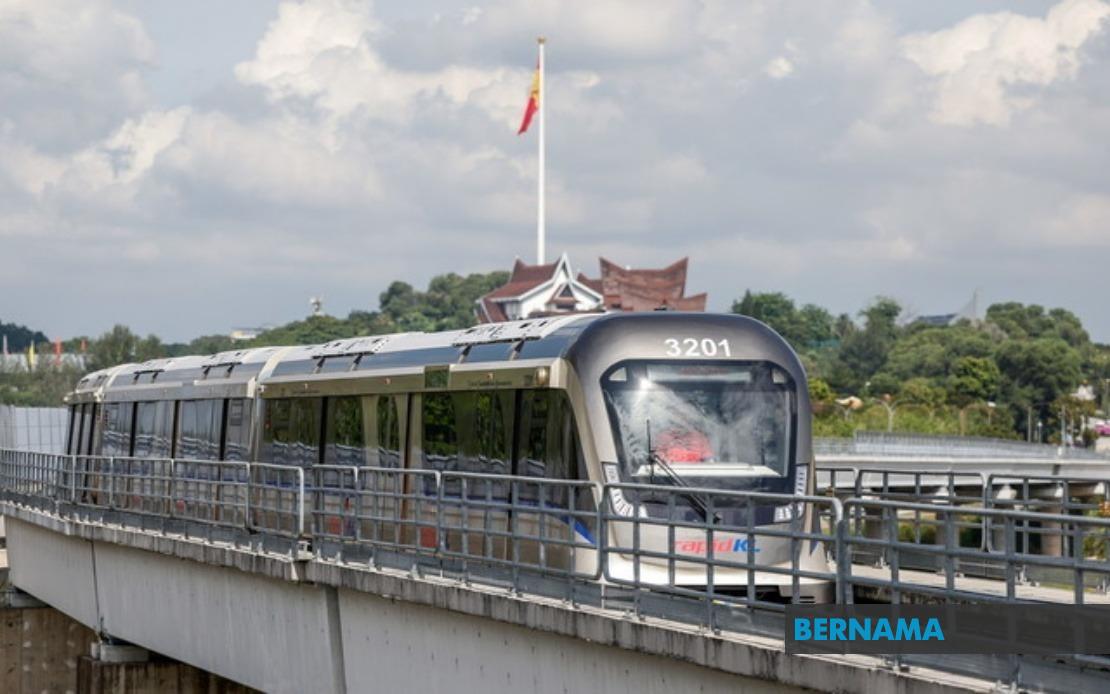
The MADANI government is moving to seek a formal audience with Sultan Sharafuddin Idris Shah, Ruler of Selangor, to provide detailed explanations regarding the troubled LRT3 Shah Alam Line project. Transport Minister Anthony Loke made the announcement after the Sultan publicly raised concerns about the project's implementation, delays, and evolving specifications, signalling a willingness to engage directly with the palace on the matter.
Loke's commitment to meet with Sultan Sharafuddin reflects the government's recognition that the royal household holds legitimate interests in infrastructure developments affecting Selangor, Malaysia's most economically developed state. The Sultan had specifically noted that since the Federal Government changed in 2018, the LRT3 project experienced a suspension lasting more than 18 months, followed by an additional 19-month delay attributable to the COVID-19 pandemic that extended into 2021. These disruptions represented a substantial departure from the original implementation timeline and raised questions about project management and stakeholder communication.
During these extended delays, the project underwent significant modifications that altered its fundamental scope. The proposed dimensions of individual stations were substantially reduced, the number of train carriages allocated to the line was cut back, and five stations originally planned along the alignment were ultimately cancelled. These reductions essentially transformed the project from its initial conception, raising concerns about whether the modified version could adequately serve the transportation needs of the Shah Alam corridor and surrounding areas. The cumulative effect of these changes suggests a recalibration of project ambitions that warrants clear public and royal explanation.
The Sultan's remarks emphasised that the LRT3 initiative should not be viewed as a prestige-driven megaproject but rather as a practical service intended for the genuine benefit and improved well-being of the resident population. This framing is significant because it suggests that the palace judges infrastructure investments primarily by their functional utility rather than symbolic value, a perspective that should resonate with cost-conscious policymakers and taxpayers alike. The Sultan's intervention thus carries implicit criticism of any perception that project modifications were driven by budgetary constraints rather than sound planning.
Anthony Loke indicated that the government accepts the Sultan's observations and recognises the legitimacy of the royal concerns raised. The decision to seek a personal audience rather than issue a written response signals respect for the royal prerogative and acknowledgment that this matter deserves high-level engagement. For Malaysian observers, this interplay between the executive and the institution of royalty demonstrates the ongoing constitutional importance of sultans in state governance, particularly concerning major development projects affecting their territories.
Beyond the LRT3 matter, Loke announced that the Ministry of Transport has taken proactive steps to facilitate voter participation in the upcoming 16th Johor State Election scheduled for 11 July. Recognising that many voters live and work outside their constituencies, the ministry coordinated with Keretapi Tanah Melayu Berhad (KTMB) to expand Electric Train Service (ETS) frequency on the Kuala Lumpur to Johor Bahru corridor. This expansion reflects practical understanding of the logistical challenges facing voters in a sprawling, urbanised state where internal migration for employment is commonplace.
The enhanced ETS services will permit outstation voters to access multiple routing options including stops at Segamat, Labis, and other intermediate stations, effectively creating a dispersed network of return pathways. This is particularly valuable for voters who have migrated to the Klang Valley for work but maintain electoral registrations in their Johor constituencies. Additionally, the arrangement benefits Singaporean-based Malaysian voters who can now utilise enhanced ETS connectivity to facilitate their journey back to Johor polling stations, representing an often-overlooked dimension of the electoral logistics challenge in southern Malaysia.
The transport ministry's initiative also addresses voters originating from the northern regions who wish to return to Johor, demonstrating a comprehensive approach to removing practical barriers to participation. By reducing travel friction and costs through expanded public transport capacity, the government signals commitment to inclusive democratic participation while simultaneously utilising existing rail infrastructure more efficiently. For regional observers, this approach offers a model for how transport ministries might approach logistical support for elections in geographically dispersed or urbanised populations.
The 16th Johor State Election presents a substantial electoral undertaking, with 172 candidates competing for 56 state seats across two voting dates. Early voting is scheduled for 7 July, with general polling following four days later on 11 July. The election's timing coincides with the school holidays, further complicating voter mobility patterns and necessitating coordinated transport interventions. Loke's emphasis on expanded services reflects recognition that logistical accessibility directly influences voter turnout, particularly among those whose employment circumstances have displaced them from their electoral constituencies.
The government's willingness to invest in transport facilitation for voters contrasts with historical patterns in some jurisdictions where logistical barriers have been tolerated or even implicitly encouraged to suppress participation among non-resident registered voters. The proactive approach suggests that the MADANI administration views broad-based electoral participation as a democratic good worth supporting through concrete infrastructure deployment. For Southeast Asia more broadly, this model demonstrates that professional transport management and democratic values can align productively.
Loke's dual announcements—addressing royal concerns about LRT3 while simultaneously announcing transport support for voters—position the Transport Ministry as engaged across multiple registers of governance and citizenship simultaneously. The coordination between maintaining respectful relationships with constitutional monarchy, addressing infrastructure accountability, and supporting democratic participation illustrates the multivalent role of contemporary Malaysian ministries operating within a complex institutional landscape. These initiatives collectively reflect evolving expectations regarding government responsiveness to both traditional institutions and contemporary democratic constituencies.

