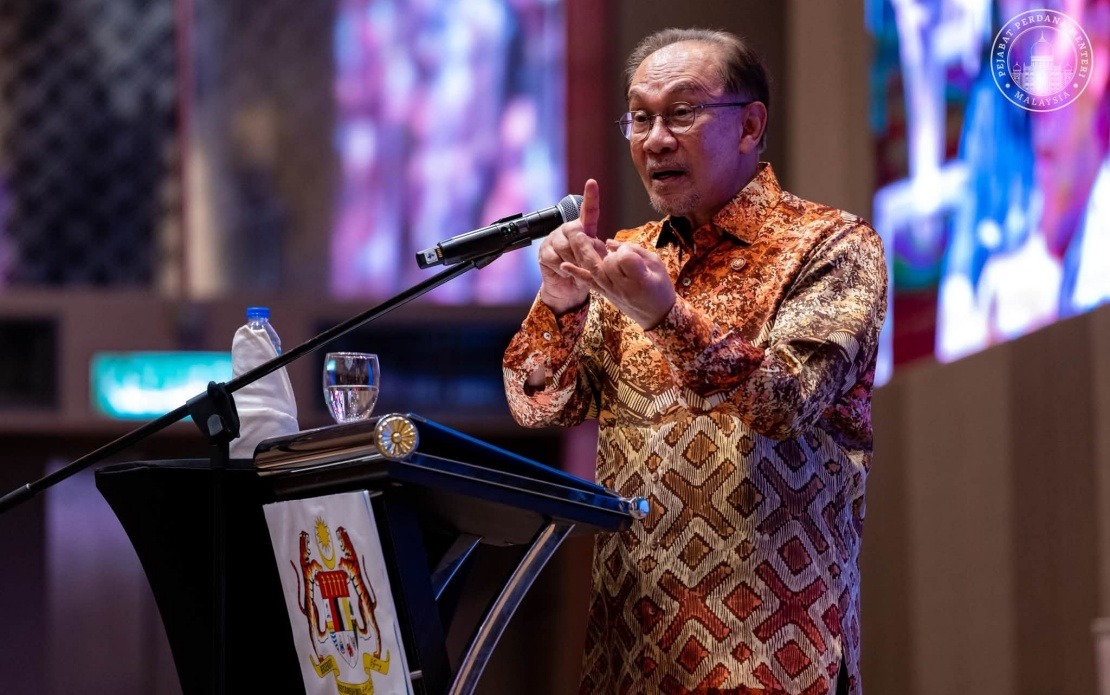
Prime Minister Datuk Seri Anwar Ibrahim has reaffirmed the government's commitment to supporting Malaysia's youth population in addressing the complex array of problems they confront in an increasingly intricate global landscape. Speaking after attending engagement sessions with young people in Klang, Selangor, the Prime Minister stressed that while the authorities face inherent limitations in their capacity, they would mobilise available resources to assist the younger generation through various difficulties.
Anwar's remarks came following his participation in a "Temu Anwar" dialogue session and the opening ceremony of the 2026 International Youth Assembly (HAMKA) held in Klang. The Prime Minister acknowledged the significance of directly hearing perspectives and recommendations from young citizens on matters affecting their lives and futures, framing these interactions as integral to policy formulation and governance.
The contemporary youth landscape presents distinctive challenges that differ markedly from those faced by preceding generations. Young Malaysians navigate a world characterised by rapid technological transformation, economic uncertainty, climate anxieties, and unprecedented access to conflicting information sources. The Prime Minister recognised that within this environment, disagreement and intellectual contestation are inevitable and indeed healthy manifestations of a functioning society. However, he emphasised that such exchanges must remain grounded in evidence-based reasoning and civil discourse rather than descending into emotionally-driven exchanges, sectarian divisions, or narrow partisan interests.
Anwar's framing of these issues reflects a broader concern within regional governance circles about maintaining social cohesion while enabling genuine intellectual freedom. The challenge of balancing open debate with responsible communication remains particularly acute in Southeast Asia, where digital platforms have democratised information dissemination while simultaneously creating echo chambers that can amplify divisive narratives. The Prime Minister's emphasis on knowledge, reasoned argument, and respectful engagement offers a roadmap for how young people might navigate ideological differences without fracturing community bonds.
The reference to HAMKA's namesake carries particular symbolic weight. Abdul Malik Karim Amrullah, the historical figure after whom the assembly is named, embodied the synthesis of intellectual rigour, expressive courage, and productive engagement with ideas. This nineteenth and early twentieth-century Islamic scholar and writer demonstrated that rigorous thinking, bold advocacy, and openness to diverse perspectives need not contradict one another. His legacy underscores an important message for contemporary Malaysian youth: intellectual leadership involves both the willingness to challenge prevailing orthodoxies and the capacity to do so through reasoned, articulate discourse.
The Prime Minister's invocation of Hamka's example serves to position knowledge acquisition and critical thinking as central to youth empowerment. In an era where misinformation spreads rapidly and educational standards vary significantly across communities, the emphasis on knowledge as a foundation for civic engagement becomes increasingly urgent. Young Malaysians who possess both factual literacy and the capacity for nuanced analysis represent a crucial resource for navigating the nation's future development challenges, from economic restructuring to environmental sustainability.
The government's pledge to support young people operates within practical constraints that merit acknowledgment. Malaysia's fiscal position, competing budgetary priorities, and the complexity of implementing youth-focused programmes across a diverse nation mean that aspirations must be tempered by realistic assessment of governmental capacity. Nevertheless, the commitment signals a recognition that investment in youth development—whether through enhanced educational opportunities, meaningful employment pathways, mental health support, or platforms for civic participation—constitutes a strategic imperative rather than a discretionary luxury.
The hosting of HAMKA in Klang itself carries regional significance. The industrial city, while economically important, has often been overshadowed in national discourse by the twin capitals of Kuala Lumpur and Putrajaya. By convening a major international youth assembly in Klang, the government demonstrates commitment to decentralising such platforms and acknowledging that youth leadership and innovation emerge from diverse geographical locations throughout the country, not merely from elite urban centres.
For Southeast Asian observers, Malaysia's approach to youth engagement reflects evolving patterns in how regional governments conceptualise their relationship with younger populations. The shift toward dialogue-based engagement, away from purely top-down policy imposition, mirrors developments across comparable democracies in the region. This reflects an implicit recognition that youth increasingly demand voice and agency rather than paternalistic provision alone. The Prime Minister's willingness to publicly commit to listening and responding to youth concerns, even within acknowledged constraints, establishes a baseline expectation for responsiveness that other institutions and officials may increasingly feel pressure to match.
The intersection of knowledge, freedom of expression, and community responsibility highlighted in Anwar's remarks also speaks to concerns about political polarisation evident across Asia-Pacific democracies. Young people confronting entrenched ideological divisions in their societies require models and encouragement for engaging across differences without abandoning principle. The emphasis on manners and knowledge as guides for dispute suggests that the Prime Minister views civility not as a constraint on expression but as a prerequisite for expression that builds rather than destroys social capacity for collective problem-solving.
Moving forward, the tangible expression of the government's commitment to youth will be measured through concrete programmes and policies addressing identified concerns. Whether these take form through enhanced vocational training opportunities, improved access to mental health services, support for youth entrepreneurship, or expanded participation pathways in decision-making processes, the translation of pledges into substantive outcomes will determine whether the Temu Anwar session and HAMKA assembly represent genuine inflection points in government-youth relations or remain largely symbolic gestures. The young people who participated in these forums will undoubtedly be watching closely to assess whether rhetorical commitment translates into material change.

