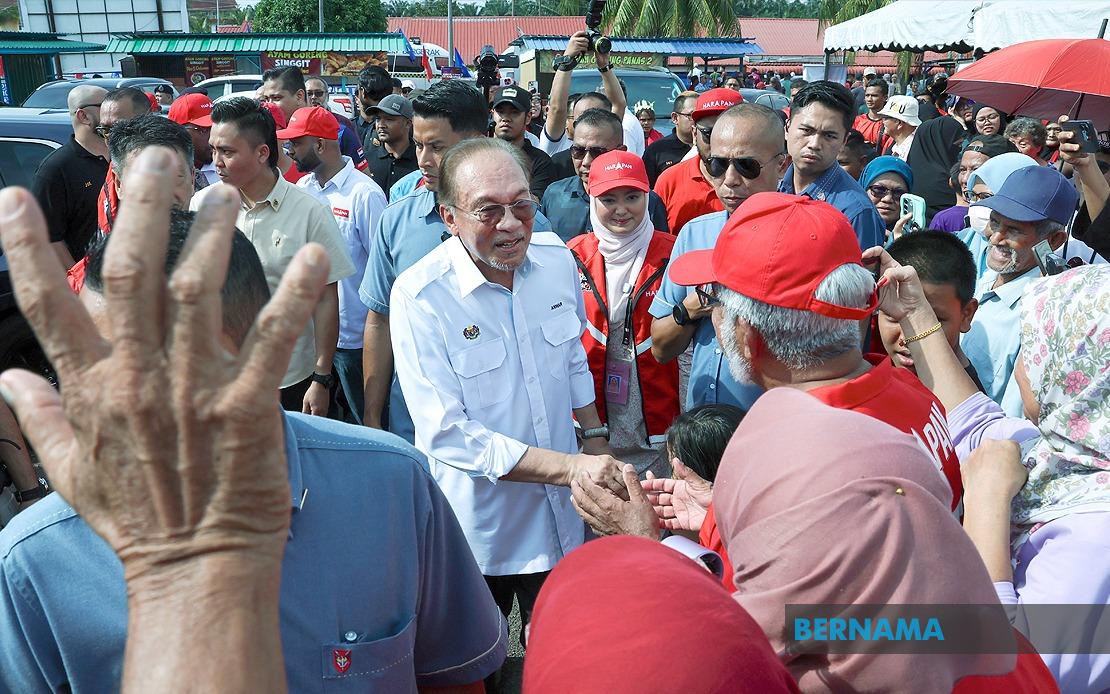
In a touching display of family dedication, a 58-year-old grandmother from Segamat undertook an unconventional journey to realise her grandson's lifelong aspiration. Rosimah Mohammad and nine-year-old Muhammad Afif Ikhwan travelled by motorcycle through an oil palm estate from Kampung Pudu to reach Felda Palong Timur, where the Prime Minister was scheduled to speak. What began as a determined bid to fulfil a child's dream evolved into a moment that would define the boy's early years, creating memories he continues to treasure.
The excitement leading up to the encounter was palpable for young Muhammad Afif, whose admiration for Prime Minister Datuk Seri Anwar Ibrahim had long captured his imagination. His anticipation was so intense that sleep eluded him the night before the journey, his mind occupied entirely with the prospect of meeting his idol. When Rosimah recounted the experience, she conveyed the profound joy her grandson experienced upon finally standing before the person he had idealised for so long. The grandmother's willingness to navigate challenging terrain underscored the lengths to which families in Malaysia will go to support their children's aspirations, regardless of the obstacles involved.
At the event in Felda Palong Timur on a Sunday in July, strategy and positioning played a crucial role in the encounter. Rosimah positioned herself and her grandson near the pathway to the stage, maximising their opportunity to catch the Prime Minister's attention as he made his way through the crowd. When Anwar began his customary greetings to the assembled public, Muhammad Afif seized the moment, pressing through the throng of attendees to extend his hand towards the country's leader. What transpired next exceeded even the grandmother's expectations—the Prime Minister not only acknowledged the young boy's gesture but took an extraordinary step by inviting him onto the stage during his speech.
The spontaneity of this encounter reveals an aspect of Anwar Ibrahim's approach to public engagement that resonates with ordinary Malaysians. Rather than treating the event as a formal, choreographed occasion, the Prime Minister's willingness to accommodate an enthusiastic child demonstrated accessibility to citizens from all walks of life. For Muhammad Afif, the experience transcended a mere handshake; his participation on stage alongside the country's leader represented a validation of his admiration and a tangible connection to the political figures who shape national affairs. Rosimah's description of her grandson's reaction—the surprise and happiness etched across his face—captured a defining moment in a child's formation of civic identity and political awareness.
The impact of this meeting extended well beyond the initial encounter. In the days following the Felda Palong Timur event, Muhammad Afif demonstrated the deep impression the experience had made by preserving a physical memento of the occasion. The shirt he wore during his meeting with Anwar became so precious to him that he has made a nightly ritual of embracing it, a tender habit that speaks to the emotional resonance of the moment for a nine-year-old child. This behaviour illustrates how such encounters can anchor themselves in children's memories, shaping their perceptions of leadership and their place within the political landscape of their nation.
Rosimah's gratitude for the opportunity was evident in her communications with Bernama, yet what unfolded next demonstrated that the Prime Minister's office had taken note of the story and the boy's sincere admiration. Rather than allowing the moment to fade into the background of countless public appearances, Anwar Ibrahim's team initiated a follow-up gesture that would further cement the experience in Muhammad Afif's memory. This decision to proactively engage with the family revealed a deliberate approach to relationship-building with constituents, particularly the younger generation who would inherit Malaysia's political future.
The formal acknowledgment came through PKR deputy information chief Siti Aishah Shaik Ismail, who visited Muhammad Afif's home in Kampung Pudu at the Prime Minister's personal request. This visit represented far more than a courtesy call; it signified institutional recognition of the boy's earnest admiration and his family's effort to facilitate the meeting. The Prime Minister's office provided tangible gifts—a bicycle, school bag, and shoes—items chosen to support the child's daily life and education. By ensuring these contributions came directly at Anwar's behest, the visit underscored the Prime Minister's personal investment in acknowledging the moment he had shared with the young Malaysian.
For residents of Segamat and the broader Johor region, this narrative carries particular significance. It demonstrates that access to national leadership remains feasible for ordinary Malaysians, even those from rural areas traversing through agricultural estates. The story inverts typical power dynamics; rather than the state summoning citizens for carefully controlled encounters, a determined grandmother and her grandson initiated the contact, driven by genuine affection and aspiration. This grassroots agency reflects the democratic principles Malaysia espouses, where citizens retain the ability to approach their leaders outside formal governmental structures.
From a broader perspective, the incident illuminates the role that such personal encounters play in shaping political consciousness among Malaysia's youth. Muhammad Afif's experience will likely inform his understanding of governance, leadership, and civic participation throughout his formative years. When he recalls meeting Prime Minister Anwar Ibrahim, he will remember not merely a political figure but an individual who recognised his enthusiasm and welcomed him onto a platform typically reserved for dignitaries and officials. For young Malaysians, such accessibility—however briefly experienced—can nurture confidence in their ability to engage with national institutions and leaders.
The grandmother's motorcycle journey through the oil palm estate thus represents more than a logistical feat; it embodies the aspirations of Malaysian families seeking meaningful engagement with their nation's leadership. It reveals the willingness of parents and grandparents to support their children's dreams, the capacity of public figures to respond with warmth to citizen initiative, and the enduring power of genuine human connection in political life. As Muhammad Afif grows older, this memory will likely remain vivid—not because he stood beside a Prime Minister, but because both his grandmother and the leader himself honoured his sincere admiration with recognition and kindness.

