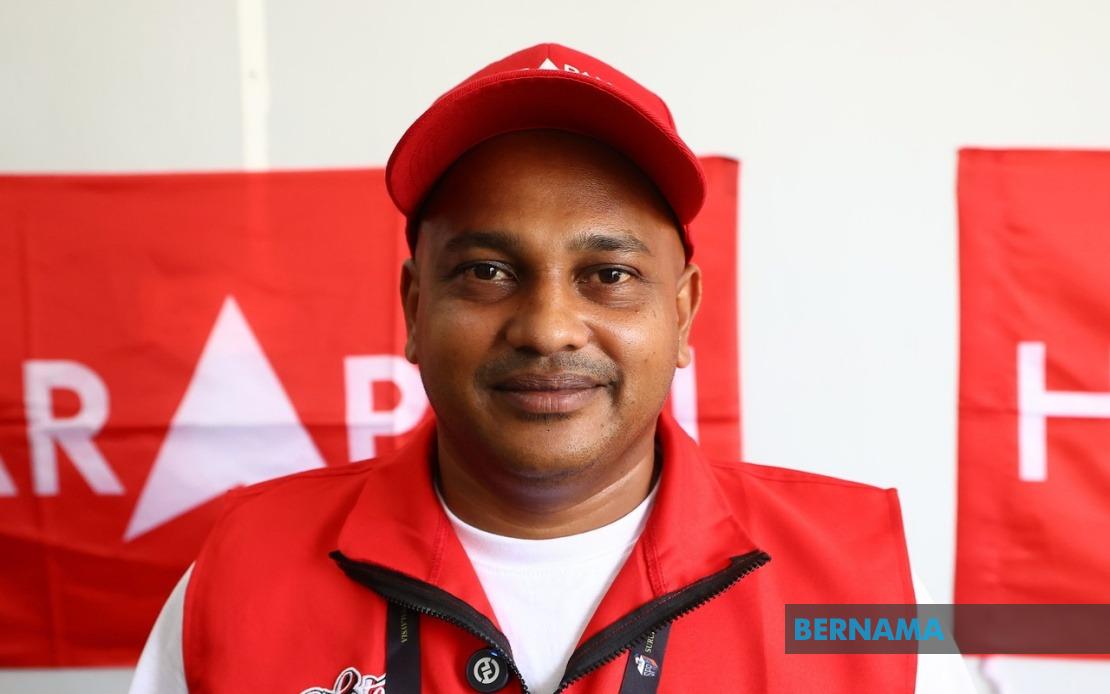
In a bid to secure the Layang-Layang state seat during the upcoming Johor state election on July 11, Pakatan Harapan candidate Guna Balakrishnan is positioning himself as a champion of long-overdue development for the rural constituency. Speaking in Kluang on June 29, Guna outlined his vision to tackle persistent infrastructure deficits while simultaneously driving socioeconomic advancement across the region, signalling a departure from purely political messaging in favour of constituent-focused governance.
The constituency, characterised by FELDA settlements, vast plantation holdings, and scattered farming communities, has been largely overlooked in terms of modern industrial development over the past decade. This stagnation has created a genuine mobility problem among younger residents, many of whom have felt compelled to seek employment opportunities outside the district. Guna's campaign strategy directly addresses this exodus by promising to catalyse local economic activity and create pathways for youth employment without requiring migration to urban centres. Such an approach resonates strongly in rural constituencies where brain drain remains a persistent challenge affecting community vitality and social cohesion.
During his engagement with voters throughout the initial campaign phase, Guna identified two recurring grievances that have accumulated into major quality-of-life issues. Chronic flash flooding, which has plagued the area for over a decade without effective mitigation, and inadequate street lighting are the issues most frequently raised by residents. These are not merely inconveniences but represent genuine hazards that impede daily routines, restrict evening economic activities, and compromise personal safety. The persistence of these problems despite numerous election cycles underscores a governance gap that candidates now feel obliged to address directly.
A comprehensive development framework, Guna argues, must move beyond piecemeal responses to encompass the entire constituency's structural needs. Farmers, smallholders, and petty traders—the demographic backbone of Layang-Layang—require foundational improvements to their environment before they can meaningfully improve their economic circumstances. This argument reflects a pragmatic understanding that infrastructure and economic opportunity are interdependent; without reliable roads, lighting, and flood protection, even the most determined entrepreneur faces unnecessary barriers. The emphasis on farmer welfare particularly carries weight in a region where agricultural livelihoods remain significant but increasingly precarious.
Guna's stated intention to avoid excessive focus on political theatre or rival candidates' tactics distinguishes his campaign from the increasingly personalised nature of Malaysian electoral contests. Instead, he has committed to intensive grassroots engagement, visiting communities throughout the constituency to gather direct feedback on local priorities. This ground-level approach generates genuine intelligence about voter concerns while simultaneously demonstrating accessibility and responsiveness—qualities voters increasingly demand from their representatives. The three-cornered contest against Barisan Nasional's Chua Jian Boon and incumbent Perikatan Nasional's Abd Mutalip Abd Rahim adds competitive urgency to this engagement strategy.
By the third day of active campaigning, Guna reported receiving encouraging moral support from community members, though he acknowledged the need to intensify outreach efforts. Digital platforms and social media have become essential components of modern constituency campaigns, particularly in reaching younger voters and those engaged in non-traditional occupations. The reference to Malaysia MADANI—the government's overarching development philosophy emphasising shared prosperity and inclusivity—suggests an attempt to link constituency-level aspirations with national policy frameworks. This framing allows local concerns about infrastructure and employment to be positioned within a coherent governing vision rather than as isolated demands.
The Layang-Layang contest reflects broader patterns within the Johor election, where rural constituencies increasingly demand concrete deliverables rather than rhetorical promises. Constituencies with substantial agricultural populations and FELDA representation have historically supported different parties across electoral cycles, indicating volatile voter behaviour driven by tangible outcomes rather than party loyalty. Guna's focus on measurable improvements—flood mitigation projects, lighting infrastructure, industrial attraction—appeals to this pragmatic electorate that evaluates candidates primarily through a lens of competence and results.
The industrial development gap that Guna identifies—the absence of processing facilities or semiconductor manufacturing operations—points to deeper regional economic policy questions. While Johor has attracted significant foreign investment in manufacturing and technology sectors, benefits have concentrated in areas near Iskandar Puteri and major urban centres. Peripheral constituencies like Layang-Layang remain locked in agricultural and extractive economies, creating genuine disparities within the state. A candidate promising to reverse this dynamic addresses legitimate structural inequalities that affect resident prosperity and opportunity distribution.
As the July 11 polling date approaches, the Layang-Layang contest will test whether voters prioritise traditional party alignment, incumbent experience, or the reform narrative that Guna represents. The three-way split complicates prediction, as vote division could enable victories based on plurality rather than majority support. Guna's explicit commitment to face-to-face constituent engagement and infrastructure focus may prove decisive in an environment where rural voters have grown accustomed to limited government attention. His campaign represents a broader shift within Malaysian politics toward performance-based accountability and local-level problem solving as central electoral themes.

