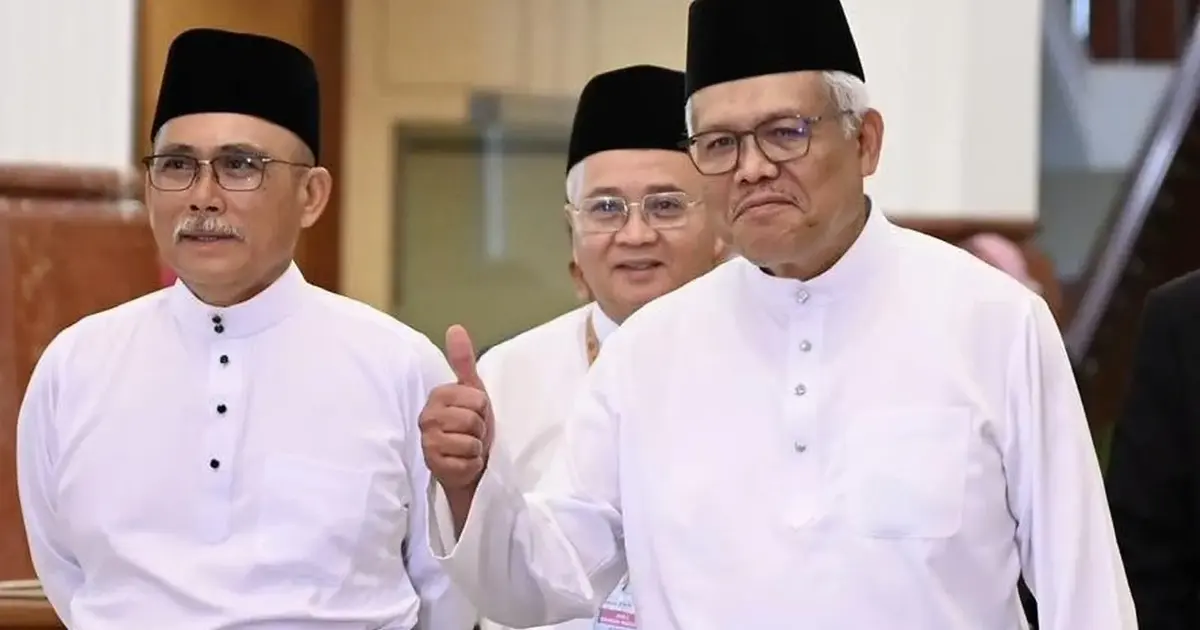
The political reshuffling within Malaysia's opposition coalition has intensified with the appointment of Larut MP Hamzah to the position of opposition leader, a decision that has drawn explanations from within the ruling Bersatu party itself. According to Kiandee, a vice-president of Bersatu who is currently under suspension, the selection of Hamzah was justified by the breadth of support he commands within the opposition ranks, particularly from the organised bloc of PAS representatives and a considerable segment of Bersatu's parliamentary contingent.
The consolidation of support around Hamzah's leadership represents a significant moment in Malaysian parliamentary politics, as it reflects the capacity of opposition leaders to mobilise backing across factional lines within their coalition structure. Kiandee's public articulation of this support base suggests that the decision was not made unilaterally but rather emerged from consultations among key stakeholders within the opposition camp. The emphasis on PAS's collective endorsement is particularly noteworthy, as the Islamic party constitutes one of the largest blocs within the opposition and its unified positioning carries substantial weight in parliamentary mathematics.
Within Bersatu itself, the situation is more complex and reveals underlying dynamics within the party structure. The fact that Kiandee chose to highlight "a majority of Bersatu MPs" rather than stating unanimous support suggests that not all party representatives fell into alignment with Hamzah's appointment. This fragmentation within Bersatu reflects broader tensions within the party regarding its strategic direction and leadership priorities. The party, which has undergone significant internal reorganisation in recent years, continues to grapple with questions of cohesion and unified direction at the parliamentary level.
The suspension of Kiandee himself adds an additional layer of complexity to his public comments defending Hamzah's appointment. His willingness to justify the decision despite his own suspended status indicates either strong conviction regarding the rightness of the choice or a desire to maintain influence over party narratives during a period of personal difficulty within party structures. His intervention in the public discourse suggests that questions surrounding Hamzah's appointment remain contested enough to require explanation and context-setting from senior figures.
For Malaysian readers unfamiliar with recent parliamentary shifts, understanding the significance of opposition leader designation requires appreciation of how shadow cabinets and minority government oversight functions within the Westminster-influenced Malaysian system. The opposition leader carries formal recognition and certain parliamentary privileges, and the position carries symbolic weight in terms of establishing who speaks for the organised alternative to government. In a fragmented political landscape where no single party dominates the opposition, such appointments require negotiated consensus among diverse actors.
The reference to PAS's "bloc" support indicates that the party maintained its unified voting and positioning discipline around Hamzah's candidacy. PAS, as an Islamic party with distinct ideological commitments, has historically maintained stronger internal discipline than some secular-oriented parties in Malaysian politics. This cohesion has often translated into decisive influence when opposition coalitions require demonstrated support for specific appointments or policy directions.
The appointment of Hamzah also reflects the reality that opposition politics in Malaysia increasingly operate on the basis of inter-party negotiation and coalition management rather than single-party dominance. The days when the Democratic Action Party or the People's Justice Party could unilaterally determine opposition positions have substantially diminished, replaced by a more pluralistic model requiring multiple power centers to align around common positions. Hamzah's appointment therefore represents a consensus candidate, someone capable of commanding support across different party loyalties and factional interests.
Kiandee's statement carries implications for understanding Bersatu's current internal power distribution and the contests that remain unresolved within the party structure. The suspension of a vice-president making such public statements about party matters suggests an organisation dealing with significant internal friction regarding both personnel and strategic direction. Yet the fact that such statements are made and reported indicates spaces for internal dialogue and disagreement that have not been entirely closed off by party discipline mechanisms.
For regional observers, these developments in Malaysian opposition politics demonstrate how coalitional politics function in contexts where no single party commands overwhelming parliamentary strength. The negotiation of opposition leadership positions offers insights into how diverse political actors with sometimes competing interests nonetheless manage to establish working relationships and shared positions. The ability to appoint an opposition leader through negotiated consensus, despite underlying factional differences, reflects the maturation of opposition institutions even as individual parties continue wrestling with internal coherence.
The episode also underscores the ongoing salience of PAS within Malaysian political calculations, regardless of which coalition it aligns with at any given moment. The party's ability to deliver bloc support for key opposition appointments demonstrates that Islamic identity and organisational structure continue to shape parliamentary mathematics in ways that cut across conventional left-right or secular-religious political spectrums. PAS's pivotal positioning, whether in government or opposition, reflects demographic and organisational realities that will likely persist across multiple future election cycles.