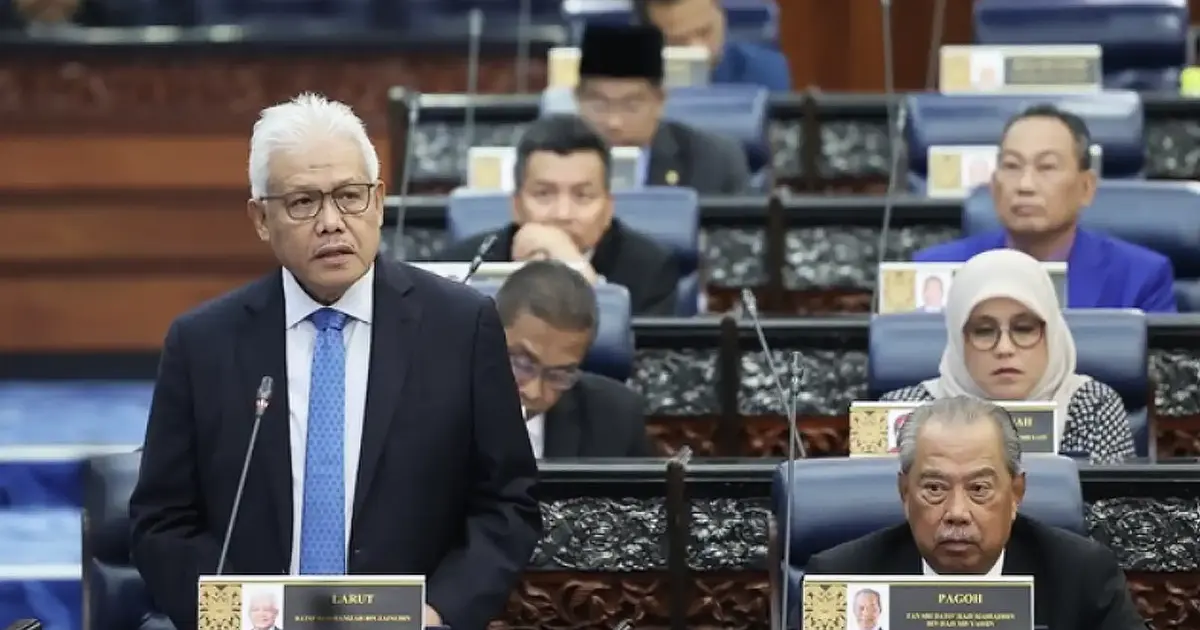
Hamzah Zainudin has reassumed his position as the official opposition leader in Parliament, reclaiming the prominent front-row seat traditionally reserved for that role in the Dewan Rakyat. The seating arrangement shuffle reflects shifting political dynamics within Malaysia's fractious opposition coalition, with Bersatu president Muhyiddin Yassin being moved significantly further back in the chamber—dropping eight positions from his previous location alongside the opposition leader's desk.
The repositioning underscores the changing hierarchy within the opposition bloc, where Hamzah's faction has reasserted its prominence. Hamzah, who leads the parliamentary opposition contingent, is entitled to sit at the front of the chamber in the seat designated for the leader of the opposition, a position that carries considerable symbolic weight and visibility within the legislative process. The change signals a recalibration of influence among opposition MPs and reflects decisions made about parliamentary seating protocols that govern how lawmakers are arranged by seniority, party affiliation, and formal political status.
Muhyiddin's relocation from the immediate vicinity of the opposition leader's desk to a position further back constitutes a notable demotion in terms of parliamentary prominence. Previously, Bersatu's leader had occupied a seat in close proximity to Hamzah, suggesting he held quasi-deputy status or significant standing within the opposition arrangement. The shift of eight seats is substantial within the confined geography of the front rows, where every position carries political meaning and media attention. This change appears to reflect a decision to strictly observe parliamentary protocols that prioritize the official opposition leader's structural importance.
For Malaysian political observers, the seating rearrangement carries implications beyond mere logistical adjustments. The Dewan Rakyat's front rows are among the most visible areas during parliamentary sessions, with cameras frequently capturing the opposition leader during question time, debates, and ceremonial occasions. Hamzah's reinstatement to this prime location enhances his public profile and reinforces his authority as the opposition's parliamentary spokesperson. The position allows for greater visibility when engaging government ministers, raising concerns, and articulating opposition policy positions—all crucial functions that gain amplified attention when conducted from the front bench.
The opposition in Malaysia comprises multiple competing power centres and factions, often struggling to present a unified front against the ruling government. Seating arrangements within Parliament become a practical manifestation of these internal power struggles and negotiated hierarchies. Hamzah's reassertion of the opposition leader's seat suggests either a consolidation of his authority or a resolution of previous disputes about who holds the primary parliamentary opposition voice. Muhyiddin's Bersatu party, while significant in terms of parliamentary numbers, appears to have accepted a subordinate positioning relative to Hamzah's faction in the formal parliamentary structure.
This reconfiguration may also reflect broader changes in opposition coalition mathematics. Various factors could have prompted the reseating: shifts in party alliances, changes in parliamentary standing orders, decisions by the Dewan's leadership about proper protocol, or internal negotiations among opposition MPs about representation and authority. Understanding which factor drove the change requires examining recent opposition dynamics and any formal announcements from the Dewan's administration regarding parliamentary procedures.
For regional observers, Malaysia's opposition dynamics remain instructive. Southeast Asian democracies frequently navigate complex opposition coalition management, and the Malaysian case demonstrates how institutional arrangements—including symbolic elements like seating—interact with political power. The visibility and prestige attached to front-bench opposition positions illustrate how parliamentary architecture influences political messaging and public perception of leadership authority.
Hamzah's return to the opposition leader's conventional seat also standardizes parliamentary protocols after a period where arrangements may have reflected transitional political circumstances. Establishing clear, protocol-based seating arrangements reinforces institutional stability and prevents ongoing disputes about parliamentary precedence. This regularization may be welcomed by the Dewan Rakyat's administration as it provides clearer guidance for arranging lawmakers and their access to parliamentary resources and speaking opportunities.
The practical implications extend to parliamentary procedures and opportunities for engagement. The opposition leader's seat typically offers advantageous positioning for raising questions, participating in debates, and gaining the Speaker's recognition for parliamentary business. Hamzah's repositioning therefore not only represents symbolic authority but also provides functional advantages in parliamentary participation. His visibility during proceedings will increase, along with opportunities to shape parliamentary discourse and hold the government accountable.
Muhyiddin's movement down the front row, while significant, does not eliminate Bersatu's parliamentary influence. The party retains its MPs and its capacity to contribute to opposition positions through other means. However, the formal seating hierarchy signals that within Parliament's structured environment, Hamzah's opposition leadership is now unambiguously primary. For Muhyiddin and Bersatu, the adjustment represents an acceptance of this hierarchical arrangement, at least in the parliamentary setting.
Looking forward, this seating reconfiguration may influence coalition dynamics and internal negotiations within the opposition bloc. Formal recognition of Hamzah's leadership position could strengthen his hand in opposition coordination efforts or, alternatively, prompt Muhyiddin to seek alternative avenues to assert Bersatu's influence within broader opposition activities outside Parliament. The relationship between these two leaders will continue shaping opposition effectiveness and credibility in challenging government policies and proposing alternatives.
The episode illustrates how Malaysian parliamentary conventions and physical arrangements encode political relationships and hierarchies. What might appear to international observers as a minor administrative adjustment carries significant meaning within Malaysia's political context, reflecting genuine shifts in authority, coalition composition, and the formal recognition of leadership positions. As the opposition continues to organize itself for maximum effectiveness against the government, such institutional clarifications about roles and precedence become essential foundations for coordinated political action.

