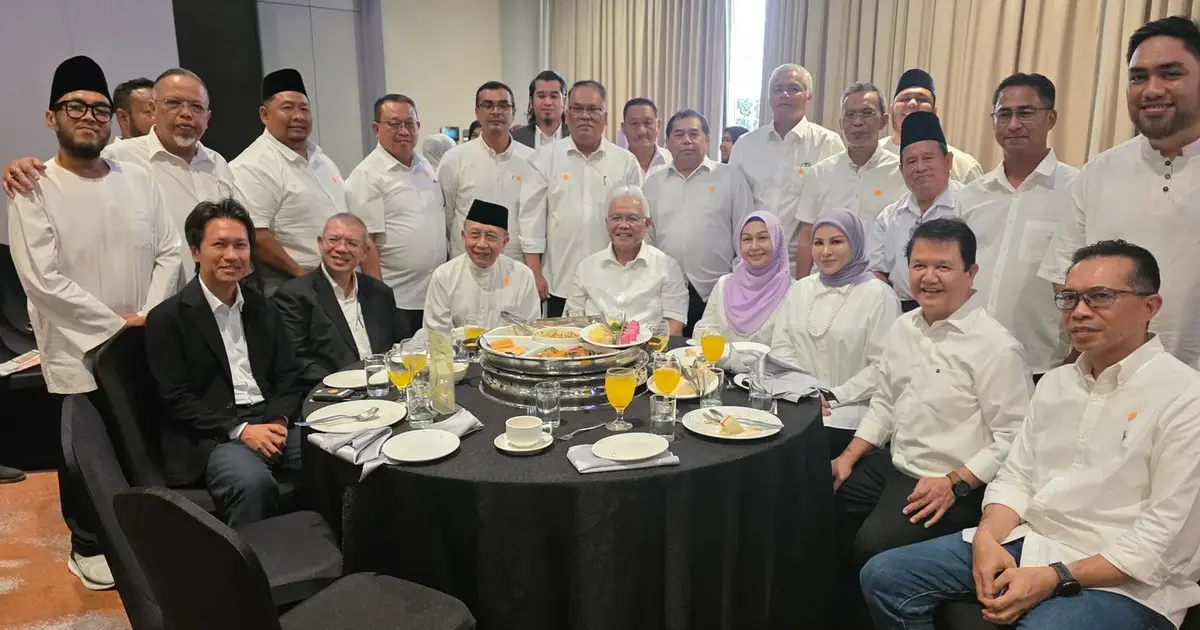
Hamzah has been elevated to the presidency of Wawasan, marking a pivotal moment in the political movement's evolution and signalling fresh strategic direction for the organisation. The appointment reflects confidence in his leadership at a time when Malaysian politics continues to experience significant realignment across the nation's political landscape.
Accompanying Hamzah's appointment is the placement of Rais Yatim as chairman, a position that leverages decades of governmental experience accumulated through his previous ministerial roles. Rais Yatim brings institutional knowledge spanning multiple administrations, providing the organisation with continuity and credibility grounded in his long tenure within Malaysia's political establishment. His appointment suggests Wawasan is positioning itself as a politically substantive entity capable of engaging meaningfully with policymaking circles.
Indera Mahkota MP Saifuddin Abdullah has been designated secretary-general, a role that typically requires strong organisational acumen and the ability to manage party machinery effectively. As the Member of Parliament representing his constituency, Saifuddin Abdullah brings parliamentary experience and direct connection to grassroots representation, elements essential for a secretary-general overseeing administrative and operational functions.
This restructuring occurs within the broader context of Malaysia's fragmented political environment, where coalitions and alliances constantly recalibrate to reflect changing electoral and ideological realities. Wawasan's leadership reorganisation mirrors a pattern observed across multiple political movements seeking to strengthen institutional frameworks and clarify organisational hierarchies. The clarity provided by defined roles at the apex may help the organisation communicate its positioning more effectively to both members and the voting public.
The appointment of individuals with ministerial backgrounds like Rais Yatim demonstrates Wawasan's ambitions to operate beyond mere organisational activism, instead positioning itself as a serious participant in high-level political discourse and potential governance participation. Such strategic appointments often precede broader political negotiations or coalition discussions where experience at ministerial level becomes valuable currency in deliberations.
For Malaysian political observers, the structural changes within Wawasan merit attention given the current fragmentation across the political spectrum. The party's evident preference for experienced figures suggests stability and measured governance over radical populism, potentially appealing to voters fatigued by political volatility. Regional political movements across Southeast Asia have similarly attempted to project competence and institutional maturity through appointing seasoned administrators to leadership positions.
The implications extend to Wawasan's electoral strategy and coalition positioning. With Hamzah at the helm, the organisation signals willingness to pursue active political engagement, whether through eventual electoral contests or participation in broader political alliances currently reshaping Malaysia's governance landscape. The secretary-general's role, particularly when held by a sitting parliamentarian like Saifuddin Abdullah, suggests simultaneous emphasis on both grassroots mobilisation and engagement with legislative processes.
Challenges facing the newly constituted leadership include establishing Wawasan's distinct policy platform in an increasingly crowded political marketplace and building organisational capacity to rival established parties with deeper resources and historical legacies. The appointments address legitimacy and experience but must be complemented by effective communication strategies and concrete policy positions to attract and retain membership.
Regionally, Wawasan's evolution reflects broader trends within Southeast Asian politics where traditional party structures adapt to accommodate new political movements. Malaysia's experience mirrors similar dynamics in Thailand, Indonesia, and the Philippines, where established operators frequently shift between organisations seeking to navigate fragmented party systems. The appointment of figures like Rais Yatim and Saifuddin Abdullah illustrates how political capital and experience transcend organisational boundaries in the region's fluid political environment.
The success of these appointments ultimately depends on whether Hamzah, Rais Yatim, and Saifuddin Abdullah can effectively mobilise Wawasan's membership around coherent objectives and generate sufficient political momentum to influence Malaysia's direction. Their collective experience provides institutional foundation, yet the real test lies in translating administrative appointments into meaningful political influence and public resonance.
Moving forward, observers should monitor whether this leadership configuration enables Wawasan to forge strategic political alliances or establish itself as an independent force capable of influencing electoral outcomes. The Malaysian political landscape continues evolving rapidly, with new leadership combinations regularly emerging to challenge established patterns. Wawasan's restructured leadership represents one more iteration in this ongoing process of political reorganisation defining contemporary Malaysian governance.

