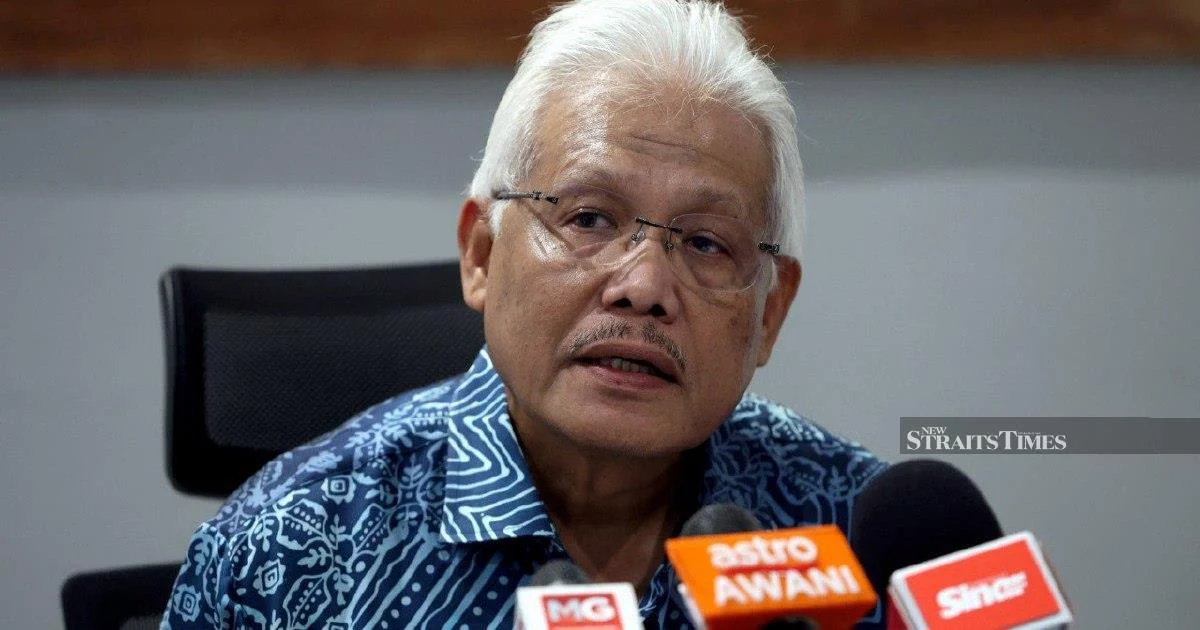
Parti Wawasan Negara, the newly rebranded incarnation of what was formerly known as Parti Cinta Malaysia, has articulated a strategic ambition to function as a stabilizing intermediary between Malaysia's two dominant Malay-Muslim political parties, PAS and UMNO. The repositioning reflects Hamzah Zainudin's calculated effort to carve out meaningful political space for his party amid the ongoing tensions that have characterised the relationship between these established political heavyweights, tensions that periodically threaten the broader cohesion of Malay-Muslim political representation in the country.
The timing of this initiative carries considerable significance within the context of Malaysia's volatile political landscape. Both PAS and UMNO, historically the twin pillars of Malay political hegemony, have experienced cycles of alliance and estrangement that have fundamentally shaped national politics. Their relationship has oscillated between periods of cooperation within formal coalitions and episodes of competitive antagonism, each shift producing downstream consequences for government stability and policy direction. The rebranding and repositioning of Hamzah Zainudin's party represents a recognition that these tensions create openings for smaller political actors to assert relevance by presenting themselves as honest brokers capable of facilitating dialogue and reducing destructive friction.
Hamzah Zainudin's explicit focus on preserving Malay political unity contains both pragmatic and ideological dimensions. The emphasis on preventing divisions that could prove detrimental to the Malay-Muslim community speaks to longstanding concerns about the fragmentary effects of intra-community conflict on collective bargaining power within the Malaysian federation. When Malay-Muslim political actors fail to present a united front, the reasoning goes, they risk diluting their influence over national direction and resource allocation, to the potential benefit of other communities. This narrative has proven persistently powerful in Malaysian political mobilization, and Hamzah Zainudin's invocation of it signals an attempt to position Parti Wawasan Negara as a party concerned with collective welfare rather than narrow factional advantage.
The structural position that Hamzah Zainudin's party aspires to occupy reflects lessons drawn from Malaysia's political history. Third parties that have successfully established themselves in the Malaysian system have frequently done so by identifying gaps in the competitive landscape and filling them—whether through appeals to neglected constituencies, policy innovation, or, as in this case, the provision of mediation services between larger rivals. By marketing itself as a bridge-builder, Parti Wawasan Negara seeks to differentiate itself from both PAS, which has increasingly positioned itself as the guardian of Islamic orthodoxy and Malay-Muslim interests, and UMNO, which continues to project itself as the indispensable custodian of Malay political power and stable governance.
The capacity of Parti Wawasan Negara to fulfill this bridging function will depend substantially on its ability to maintain credibility with both potential partners. Historical precedent suggests that mediators in Malaysian politics must carefully cultivate reputations for impartiality while simultaneously possessing sufficient autonomy and resources to render their involvement meaningful. A party perceived as too close to either PAS or UMNO would lose utility as an intermediary; conversely, a party lacking genuine political weight would find its mediation efforts dismissed as peripheral. The path Hamzah Zainudin must navigate is accordingly narrow and demanding.
The broader implications of this positioning for Malaysian political development warrant consideration. If Parti Wawasan Negara succeeds in establishing itself as a genuine bridge between PAS and UMNO, it could contribute to more constructive dialogue between these parties during periods of tension, potentially reducing the frequency of coalition breakdowns and the electoral instability they generate. Alternatively, if the party is perceived as merely seeking to profit from divisions between its larger rivals without contributing substantively to their resolution, it may find itself marginalized or subject to competitive pressure from other parties making similar claims. The success of Hamzah Zainudin's strategy will ultimately hinge on demonstrated results rather than rhetorical positioning.
From a Southeast Asian perspective, Malaysia's capacity to manage internal Malay-Muslim political divisions shapes the country's broader stability and regional standing. The kind of mediation work that Parti Wawasan Negara proposes is therefore consequential beyond narrow party-political calculation. Regional observers and analysts frequently note that Malaysia's political system functions most effectively when major communal blocs maintain internal coherence while competing constructively. Initiatives that facilitate such coherence, even when undertaken by relatively minor political actors, thus merit attention as potential contributors to systemic stability.
The rebranding from Parti Cinta Malaysia to Parti Wawasan Negara itself signals an attempt to project a more institutional and professional image—one potentially more amenable to the role of responsible mediator. The new name suggests a vision transcending narrow partisan interest, which Hamzah Zainudin evidently calculates will strengthen his party's credibility as a neutral party capable of engaging productively with both PAS and UMNO. Whether this symbolic shift translates into substantive political repositioning and expanded influence remains to be seen through the unfolding of actual political events.
Looking forward, the credibility of Hamzah Zainudin's overture will be tested through concrete opportunities for mediation. Malaysia's political dynamics will almost certainly generate moments of heightened tension between PAS and UMNO, particularly around electoral competition and coalition negotiations. How Parti Wawasan Negara positions itself during these moments, and whether it can offer sufficiently valuable services—whether intelligence, diplomatic channels, or policy compromise frameworks—to both parties will determine whether its bridging ambitions translate into genuine political influence or remain aspirational rhetoric.

