Johor is set to deepen its educational ties with one of the world's leading institutions through a landmark collaboration that will expose secondary students to internationally-recognised leadership and science frameworks. Under a partnership between the Johor State Government and Harvard University, approximately one hundred pupils from Sekolah Menengah Kebangsaan Tasek Utara and SMK Seri Kota Puteri 2 will gain access to the Program for Scientifically-Inspired Leadership (PSIL), a curriculum designed to cultivate competencies increasingly valued in the global economy.
The initiative represents a deliberate effort by state leaders to internationalise the educational experience of young Malaysians while maintaining alignment with national policy frameworks. According to Aznan Tamin, chairman of the State Education and Information Committee, the programme structure originated at Harvard in 2019 and centres on four pillars: active learning methodologies, development of critical thinking skills, enhancement of communication abilities, and cultivation of leadership qualities. The choice of these particular competencies reflects global trends in secondary education, where rote learning is being gradually displaced by skills-based curricula that prepare students for tertiary study and knowledge-based employment.
The Johor project is designed as a phased implementation, with the initial cohort commencing in January 2027 through Sekolah Rintis Bangsa Johor (SRBJ), a pioneering institution that has positioned itself as a testbed for educational innovations. This deliberate staging suggests the state is approaching the partnership methodically, allowing time to establish infrastructure, train personnel, and refine delivery mechanisms before potential expansion. The involvement of SRBJ is significant because the school already emphasises bilingual competency—prioritising English proficiency without diminishing Malay language mastery—alongside strengthened science, technology, engineering and mathematics (STEM) capabilities, creating institutional alignment with Harvard's pedagogical values.
Beyond student participation, the programme incorporates a substantial teacher development component that underscores the partnership's depth. Forty educators from SRBJ will participate in active learning pedagogy workshops, an investment in human capital that extends benefits across the institution. By equipping teachers with contemporary instructional techniques, the initiative aims to create more interactive, creative and intellectually stimulating classroom environments. This approach acknowledges that sustainable educational transformation requires capacity-building among educators, not merely exposure for students. Teachers trained in these methodologies can disseminate improved practices throughout their schools and influence pedagogy beyond the initial PSIL cohort.
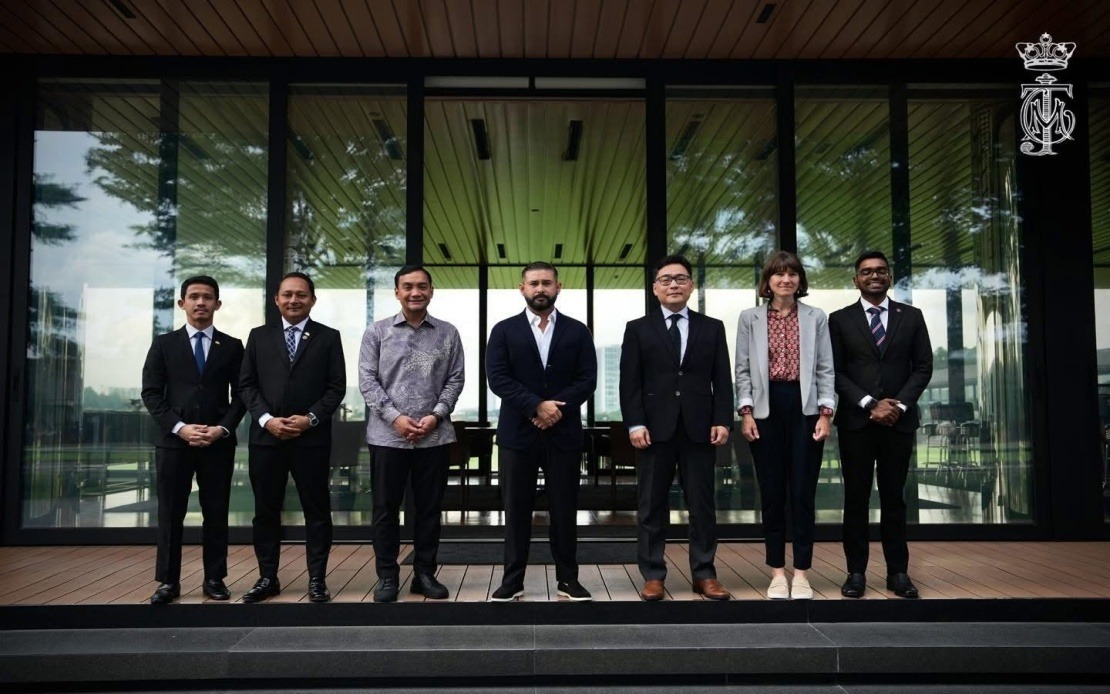
The state government's commitment to this partnership was underscored by direct engagement at the highest levels. The Regent of Johor Tunku Mahkota Ismail received a delegation from Harvard led by Dr Dominic Mao, assistant director of Undergraduate Studies and Lecturer in Molecular and Cellular Biology, alongside Dr Andrea Wright, assistant dean of Harvard College. The presence of senior Harvard academics signals genuine institutional commitment rather than a peripheral initiative, and the audience granted by the Regent reflects the state government's prioritisation of educational advancement. Such high-level interactions typically precede substantial resource allocation and long-term institutional engagement.
For Malaysian students and families, particularly those in Johor, the significance extends beyond immediate curricular content. Exposure to Harvard's educational frameworks at the secondary level creates pathways to deeper engagement with elite international institutions, whether through subsequent undergraduate applications or professional networks formed during formative years. The programme implicitly signals to participating students that their state government views them as candidates capable of engaging with world-class intellectual standards, potentially reshaping educational aspirations within cohorts that might otherwise lack such exposure.
The initiative also reflects broader Southeast Asian trends in educational policy, where governments increasingly seek strategic partnerships with leading international universities to enhance regional competitiveness. Malaysia has positioned itself as a regional education hub, yet collaboration between state governments and prestigious institutions remains relatively uncommon outside major metropolitan centres like Kuala Lumpur and Selangor. Johor's proactive pursuit of this partnership positions the state as educationally progressive and internationally-minded, potentially attracting expatriate families and skilled workers seeking quality schooling options.
Integration with existing national frameworks demonstrates sophisticated policy thinking. The partnership explicitly adheres to Ministry of Education policies while implementing competency assessments aligned with international standards, suggesting an approach that does not position global engagement as contrary to national objectives. This alignment reduces potential tensions between international and domestic educational philosophies, creating space for innovation within existing institutional structures rather than positioning the programme as an alternative to mainstream education.
The emphasis on student marketability within the PSIL framework acknowledges economic realities facing young Malaysians. By developing leadership, scientific reasoning and communication abilities alongside subject knowledge, participants gain attributes sought by multinational employers and international universities. This practical orientation—equipping students not merely with knowledge but with capabilities valued in competitive global labour markets—represents a sophisticated response to the skills gap frequently cited by Malaysian employers across sectors from technology to finance.
Implementation challenges will inevitably emerge during the programme's execution. Sustaining Harvard-standard pedagogy within Malaysian secondary contexts requires careful attention to contextual factors including class sizes, resource availability and teacher training depth. The success of the January 2027 launch will significantly influence whether this partnership becomes a replicable model for other Johor schools and potentially other Malaysian states seeking similar arrangements. Early outcomes will be scrutinised by education policymakers across the region considering comparable initiatives.