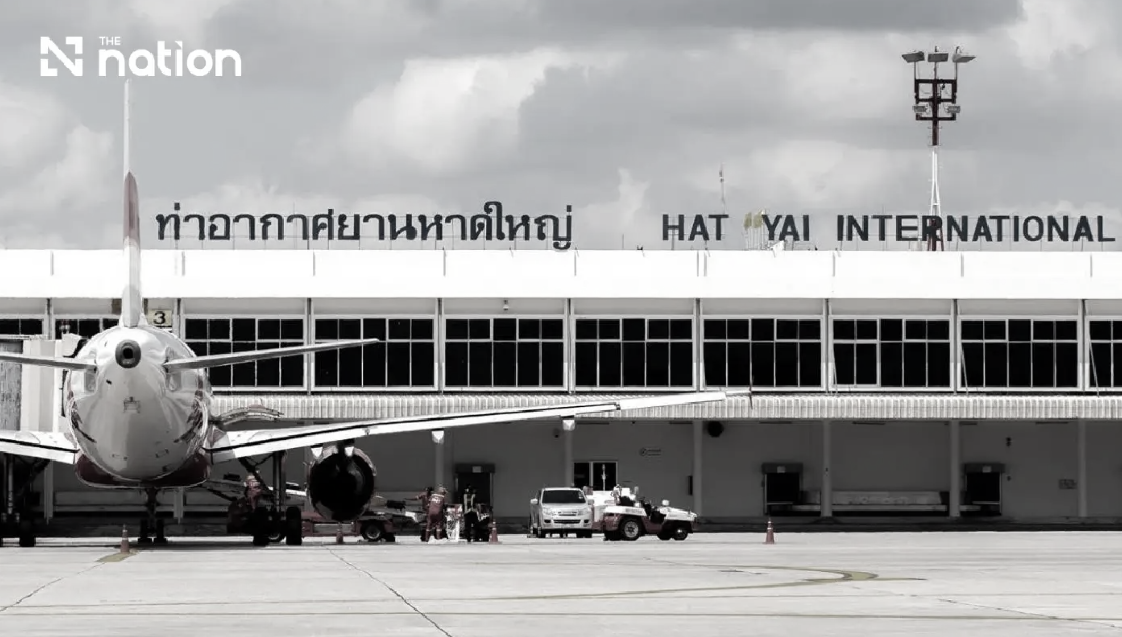
Hat Yai International Airport in Songkhla Province temporarily closed Runway 26 on Wednesday afternoon after an accident involving an airport fire engine disrupted normal operations, forcing multiple inbound flights to be redirected to Krabi Airport. The incident highlighted the operational vulnerabilities faced by southern Thailand's transport infrastructure and the cascading effects that even brief disruptions can have on regional air traffic patterns.
The runway closure was officially announced through a NOTAM—a Notice to Airmen—issued by airport authorities, which specified that Runway 26 would remain inaccessible from 1:55 pm until 4:30 pm on June 17. The roughly two-and-a-half-hour window was deemed necessary to allow airport personnel to safely manage the incident scene and conduct whatever investigations or remediation efforts were required. During this period, the airport lacked sufficient runway capacity to accommodate arriving aircraft, as Hat Yai typically depends on this runway for a substantial portion of its daily flight movements.
The closure immediately rippled through the region's air transport network, with multiple carriers forced to make alternative arrangements for passengers. Flight tracking data from Flightradar24 documented at least two aircraft being diverted from their intended destination: Thai Airways flight TG263 and Thai Lion Air flight SL712 both rerouted to Krabi Airport, located approximately 150 kilometres northwest. Such diversions create complications for passengers, ground staff, and airport operations at the receiving airport, which may not have been prepared for the additional traffic.
For passengers aboard affected flights, the situation created uncertainty and inconvenience. Individuals travelling on these aircraft faced delays in reaching their final destinations, and some may have experienced disruptions to onward connections. Hat Yai Airport advised travellers to maintain constant contact with their respective airlines for updates, as flight schedules could be modified or delayed depending on how the situation developed. The airport acknowledged that affected passengers should anticipate potential changes to their travel plans.
One traveller with a relative aboard Thai Airways flight TG263 contacted Hat Yai Airport directly to understand why inbound aircraft could not land. Airport officials confirmed that an emergency situation had occurred but initially provided no additional particulars. This lack of detailed information reflected the operational protocols during active incident response, when authorities prioritise safety management over comprehensive public communication. The passenger's family member subsequently landed safely at Krabi, demonstrating that despite the disruption, no injuries or catastrophic consequences resulted from the fire engine accident.
The incident underscores the critical importance of ground support vehicle safety at airports. Fire engines and other emergency response vehicles operate in complex airport environments where precision and situational awareness are essential. Any accident involving such equipment can rapidly escalate from a localised vehicle incident into a broader operational crisis affecting hundreds of passengers and multiple airlines. Southern Thailand's airports, while important regional hubs, operate with tighter margins than larger facilities, meaning even brief closures create significant disruptions.
For Malaysian readers and the broader Southeast Asian region, this incident illustrates how interdependent the region's aviation network has become. When a single runway at a secondary airport closes, diversion capabilities are essential. Krabi Airport's ability to absorb the diverted traffic reflects the redundancy that exists across Thailand's southern transport infrastructure, though such redundancy remains limited. Many regional airports lack sufficient alternative facilities, which could lead to more severe consequences if major hubs experienced similar incidents.
The timing of the closure during afternoon hours—peak travel times for many regional routes—amplified its impact. Afternoon closures typically affect more flights than early morning or late evening incidents, as passenger demand concentrates during traditional business and leisure travel windows. Airlines operating routes through Hat Yai would have needed to quickly assess whether to hold aircraft pending runway reopening or commit to diversion, a decision with fuel and financial implications.
Airport safety protocols appear to have functioned appropriately in this instance. The swift issuance of a NOTAM ensured that air traffic control centres and airlines received timely notification, preventing potential safety hazards that could arise from miscommunication. The decision to close the runway for the duration necessary to address the incident demonstrates prioritisation of passenger safety over schedule adherence—a principle fundamental to aviation operations globally.
The incident also reflects broader questions about ground operations management at busy regional airports. While specifics of what caused the fire engine accident remain unclear, such incidents often stem from congestion, visibility issues, or operational pressures. As air traffic grows across Southeast Asia, ground support operations become increasingly demanding, requiring robust training, maintenance protocols, and situational awareness from personnel operating in these complex environments.
Looking forward, Hat Yai Airport's experience serves as a reminder for all regional aviation facilities in Southeast Asia about the importance of comprehensive emergency preparedness and incident response capabilities. Infrastructure resilience—both in terms of physical assets and operational procedures—becomes increasingly valuable as aviation networks grow more interconnected. Airlines and passengers traversing these routes should maintain realistic expectations about occasional disruptions, while supporting investments in safety systems and backup infrastructure across the region's aviation ecosystem.