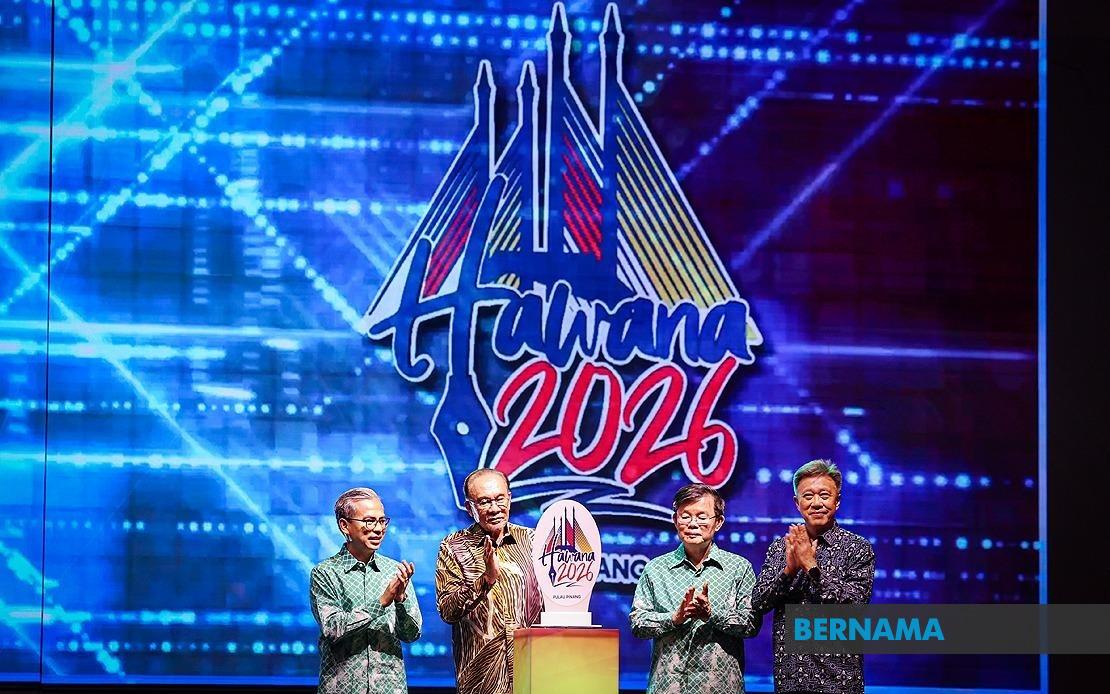
Malaysia's journalism community marked the conclusion of National Journalists' Day (HAWANA) 2026 with a three-day celebration in Penang that brought together close to 1,000 media professionals from Malaysia and neighbouring ASEAN nations. The event, held at the PICCA@Arena Butterworth Convention Centre, demonstrated the country's ongoing commitment to honouring journalists and strengthening their role as custodians of public information. Delegations from Indonesia, Cambodia and Timor-Leste participated alongside Malaysian media practitioners, underscoring the regional dimensions of professional journalism challenges and opportunities.
The gathering operated under the theme "Media Integrity Strengthens Credibility," a concept that Prime Minister Datuk Seri Anwar Ibrahim reinforced during his address at the main ceremony on Saturday. The chosen theme reflects persistent concerns about journalistic standards and public trust in news media across Southeast Asia, where misinformation, resource constraints and political pressures continue to challenge newsrooms. By positioning integrity as foundational to credibility, the organisers signalled that Malaysian journalism seeks to differentiate itself through adherence to professional principles even as the industry navigates rapid digital transformation.
A significant announcement came when the Prime Minister pledged an additional RM1 million to the Tabung Kasih@HAWANA welfare fund, bringing renewed attention to the economic realities facing media workers. This fund, established in 2023, has already assisted 773 media practitioners with total disbursements reaching RM2.26 million, addressing a critical gap where journalists facing personal hardship or retirement challenges often lack safety nets. The allocation recognises that journalism's sustainability depends not merely on institutional viability but on ensuring practitioners can sustain themselves and their families. Anwar also committed to continuing the Media Innovation Fund, signalling government willingness to finance digital transformation across local media organisations, a necessity in an era when traditional revenue models have collapsed globally.
Communications Minister Datuk Fahmi Fadzil expanded the welfare fund's support network by announcing Telekom Malaysia as a strategic partner contributing RM500,000, demonstrating how private sector engagement can complement public commitment. This partnership model reflects broader trends where telecommunications and technology companies increasingly invest in media sustainability, recognising that a healthy information ecosystem benefits their business interests. The involvement of such corporate partners also raises questions about editorial independence that Malaysian newsrooms must carefully manage, particularly given the interconnected interests between media platforms and the companies supporting them.
The ceremony included poignant recognition of individual journalists' contributions and sacrifices. Prime Minister Anwar presented the main HAWANA Award to former Broadcasting director-general Datuk Suhaimi Sulaiman, honouring his years of service to broadcasting standards. More emotionally, he conferred a Special HAWANA Award 2026 posthumously on Azlan Idris, the late former head of Bernama Radio who passed away in January at age 57. The presentation to Azlan's widow, Wan Syahrina Wan Abdul Rahman, highlighted how journalism claims its practitioners through demanding work and often modest compensation. Azlan's career trajectory—spanning Bernama Radio, TV3, NTV7 and Channel 9—exemplified the breadth of expertise required in Malaysia's diverse media landscape, while his instrumental role in establishing Bernama Radio in 2007 underscored individual journalists' contributions to institutional memory.
Beyond welfare and recognition, HAWANA 2026 functioned as a professional development platform where Malaysian media organisations and industry bodies convened to address shared challenges. The Malaysia Media Retreat 2.0, organised by the Malaysian Federation of Media Clubs, the Communications Minister's dialogue session, and the Malaysian Press Institute's town hall titled "2035: Will Journalists Still Exist?" all grappled with the profession's future viability. This last session in particular addressed anxieties widespread across the industry about automation, artificial intelligence and shrinking newsrooms. Such forums matter because they create space for practitioners to collectively contemplate structural threats and collective solutions beyond individual organisational responses.
Regional cooperation expanded tangibly through a memorandum of understanding exchanged between Bernama and Timor-Leste's national news agency, Agência Noticiosa de Timor-Leste (TATOLI). Formalised by Communications Minister Fahmi Fadzil and Timor-Leste Secretary of State for Social Communication Expedito Loro Dias Ximenes, with Prime Minister Anwar witnessing, the agreement creates pathways for news sharing, professional development and institutional learning. For Malaysia, such arrangements position Bernama as a regional news hub and standard-setter while diversifying coverage of Southeast Asian developments. For Timor-Leste, partnering with Malaysia's established national news agency provides access to professional expertise and technology infrastructure that smaller regional players often struggle to maintain.
The celebration extended beyond professional forums into public cultural engagement through the RIUH Pi HAWANA Carnival, which concluded Sunday evening with performances by local artists including Bunkface, Exists and Chelsea Ng. Organised collaboratively by the Communications Ministry through the RIUH platform, the carnival attracted over 24 creative brands and 20 food and beverage vendors alongside interactive workshops. This carnival dimension transformed HAWANA from an industry-exclusive conference into a civic celebration, introducing broader audiences to journalism's cultural dimensions while showcasing Malaysia's creative sector. The three-day format allowed spontaneous engagement rather than the formal-only structure of previous years, potentially building public appreciation for journalism during an era when media literacy and institutional trust remain concerning.
Penang's role as host carried economic and reputational dimensions beyond ceremonial function. The state's Governor, Tun Ramli Ngah Talib, hosted a dinner honouring media practitioners from across Malaysia and ASEAN, bringing together nearly 350 guests including veteran journalists, senior executives and state leaders. This pre-summit engagement recognised the media's contribution to nation-building while showcasing Penang's capacity to host significant national events. For the state government, hosting HAWANA generated tourism revenue, demonstrated logistical capabilities and provided opportunities for media exposure of Penang's infrastructure and leadership. The symbiotic relationship between media and government hosting—where each benefits from the other's platform—illustrates how journalism institutions increasingly function within political and economic ecosystems that shape their operational possibilities.
Bernama's execution of HAWANA 2026 demonstrated institutional maturity and technical capability, particularly through producing the first live television broadcast in HAWANA's history. This achievement, accomplished using in-house expertise, signified that Malaysia's national news agency possesses production capabilities comparable to major regional and international broadcasters. The scale of coordination required—managing nearly 1,000 participants, international delegations, multiple simultaneous professional forums and a concurrent public carnival—stretched organisational resources substantially. Successfully delivering this scope establishes Bernama as capable of hosting future regional journalism events and suggests Malaysian media infrastructure has advanced considerably since HAWANA's inception.
The ceremonial dimensions culminated in television coverage and media reporting that amplified HAWANA's messages beyond the Penang venue. By creating newsworthy announcements—the welfare fund increase, the Telekom Malaysia partnership, the international MoU with TATOLI, award presentations—the organisers ensured sustained media attention throughout the three days. This recursive process, where media organisations covered an event celebrating journalism itself, created visibility that reinforced journalism's institutional importance. However, it also raises questions about whether such self-celebratory coverage adequately interrogates journalism's actual performance in holding power accountable or serving diverse communities, particularly outside urban centres and vernacular media spheres.
Looking forward, HAWANA 2026's emphasis on integrity and credibility suggests Malaysian journalism recognises reputational challenges requiring deliberate institutional response. The event's scale, official endorsement and investment in practitioner welfare signal that government and industry leadership view journalism as requiring active support rather than market-determined sustainability. This approach differs markedly from some democracies where media independence implicitly requires distance from governmental backing. Malaysia's model—combining professional autonomy with government support mechanisms—reflects specific historical and constitutional contexts where media's developmental role remains explicitly acknowledged. Whether this framework adequately protects journalistic independence during politically contentious moments remains a question that professional forums like HAWANA should continue examining rigorously, as journalism's credibility ultimately depends on demonstrated commitment to truth-telling above institutional interests.

