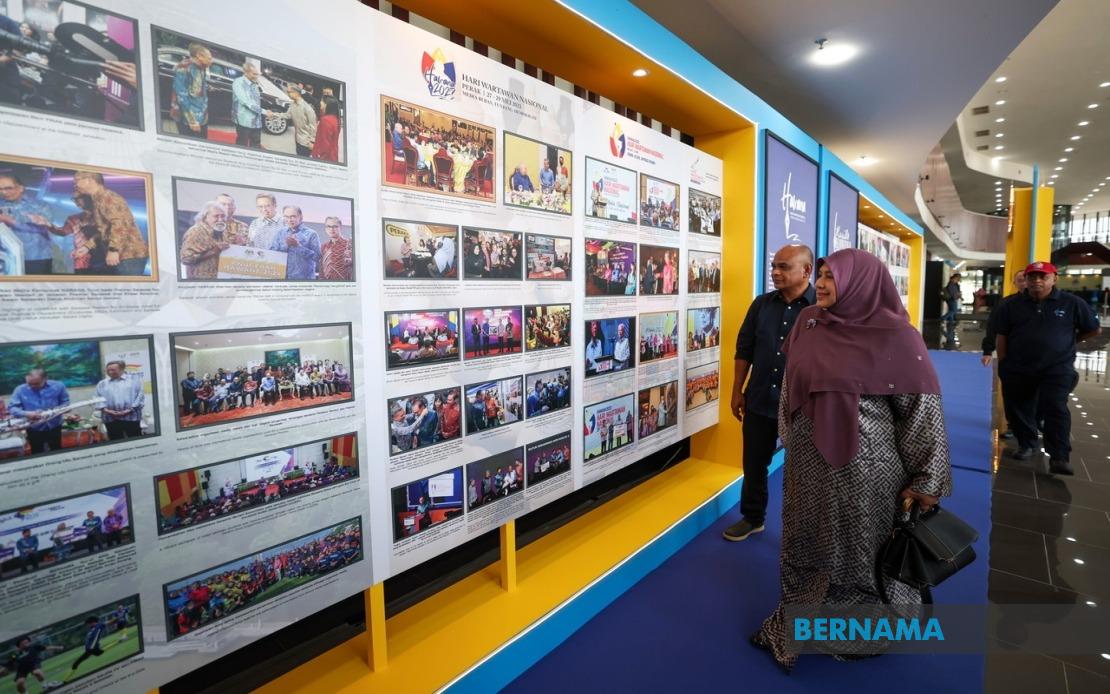
The National Journalists' Day summit, known as HAWANA 2026, enters its final countdown with organisers putting the finishing touches on arrangements at the PICCA@Arena Butterworth Convention Centre. The event, scheduled to launch tomorrow afternoon, marks an important gathering for Malaysia's journalism community and represents a significant shift in how the country's premier media recognition platform operates.
Datin Paduka Nur-ul Afida Kamaludin, who chairs the HAWANA 2026 Working Committee and serves as chief executive of Bernama, disclosed that preparations have reached approximately 80 per cent completion. The committee has conducted multiple rehearsal sessions over the past three days to guarantee seamless execution of the summit, reflecting the meticulous planning required for an event of this scale and importance.
Hosting the summit in Penang rather than the traditional Kuala Lumpur location presented distinctive logistical considerations that demanded careful attention. The relocation necessitated comprehensive coordination with accommodation providers across Penang state to secure sufficient lodging and facilitate smooth transportation for participating journalists and delegation members. This geographical shift required organisers to rethink conventional arrangements and establish new operational frameworks.
Nur-ul Afida acknowledged that moving the event outside the capital would inevitably influence attendance patterns compared with previous editions. The Kuala Lumpur setting historically enabled easier participation, whereas the Penang venue may present obstacles for journalists juggling professional commitments and personal responsibilities. Travel time, accommodation costs, and scheduling conflicts could discourage some potential attendees despite the event's professional importance.
Prime Minister Datuk Seri Anwar Ibrahim will officially launch the summit tomorrow at 3 pm, underscoring the government's recognition of journalism's role in national development. His presence signals that media integrity and professional standards occupy a central position in the administration's agenda. The attendance of Malaysia's chief executive lends considerable prestige to the proceedings.
Organised by the Ministry of Communications with Bernama as the implementing agency, HAWANA functions as Malaysia's flagship platform for acknowledging media practitioners' contributions, commitment, and professionalism. The event brings together approximately 1,000 journalists from within Malaysia and international visitors, creating a concentrated gathering of media expertise and perspective. This assembly serves as a crucial venue for the profession to reflect on its trajectory and establish collective priorities.
The summit carries the thematic focus of 'Media Integrity Strengthens Credibility', framing journalism fundamentally around trustworthiness and ethical practice. This emphasis resonates deeply across Southeast Asia, where media outlets face mounting pressure from misinformation, political polarisation, and declining audience confidence. By centering on integrity, Malaysian journalists signal their commitment to maintaining professional standards amid challenging media environments.
Beyond the main summit, the Malaysian Media Council, the Federation of Malaysian Media Clubs (GKMM), and the Malaysian Press Institute (MPI) will conduct complementary side events alongside HAWANA 2026. These auxiliary programmes expand the summit's intellectual reach and allow specialist topics to receive focused attention. Such concurrent activities transform the gathering into a comprehensive forum rather than a single ceremonial occasion.
The Penang location, whilst presenting logistical challenges, offers symbolic significance for Malaysia's media community. The northern economic hub has established itself as a growing media centre, and hosting HAWANA there acknowledges this evolution beyond the centralised Kuala Lumpur media landscape. The shift potentially signals organisational thinking about distributing major professional events more equitably across the country's regions.
For Malaysian journalists and media organisations, HAWANA 2026 represents an essential opportunity to engage with peers, explore emerging professional challenges, and reaffirm shared commitment to quality reporting. In an era marked by rapid technological disruption and transformed consumption patterns, such gatherings provide rare space for the profession to collectively contemplate its future direction and ethical foundations.
The summit arrives at a consequential moment for journalism globally and in Southeast Asia specifically. News organisations navigate declining advertising revenue, changing audience expectations, and questions about digital distribution models. Malaysian media practitioners will find in HAWANA 2026 a platform to exchange strategies, debate best practices, and strengthen professional networks that sustain quality journalism across the region.

