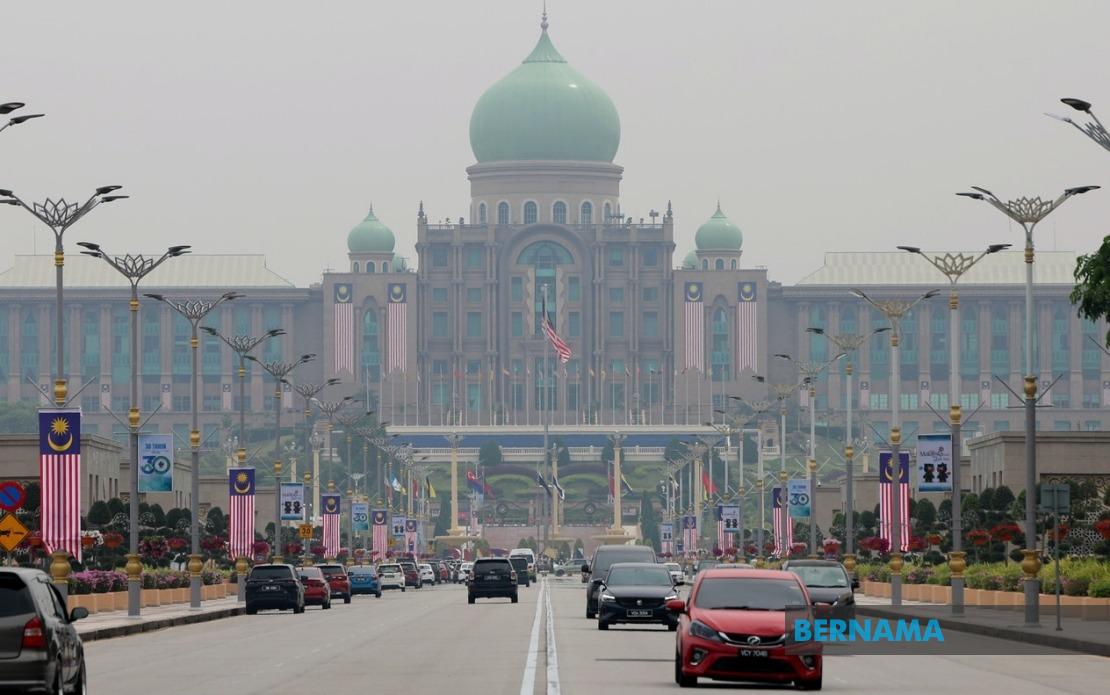
Prime Minister Datuk Seri Anwar Ibrahim will tackle the region's mounting haze problem when he sits down with the Sultan of Brunei, Sultan Hassanal Bolkiah, for high-level bilateral talks starting tomorrow. The environmental crisis is set to feature prominently at the 27th Malaysia-Brunei Annual Leaders' Consultation (ALC-27), underscoring how transboundary air pollution has become a critical diplomatic issue demanding immediate attention at the highest political level.
Malaysia's High Commissioner to Brunei, Datuk Mohd Aini Atan, confirmed that the deteriorating air quality gripping swathes of Southeast Asia will dominate discussions between the two leaders. He stressed that the presence of Sarawak Premier Tan Sri Abang Johari Tun Openg and Sabah Chief Minister Datuk Seri Hajiji Noor at the consultation underscores the urgency with which Malaysia's eastern states view the problem. Sarawak has borne the brunt of the pollution, with multiple districts recording hazardous air pollutant index readings that pose significant health risks to residents and disrupt economic activity.
The timing of Anwar's journey to the sultanate reflects the intensity of the crisis. Real-time data from the Malaysian Air Pollutant Index Management System (APIMS) painted a grim picture on Tuesday evening. Serian in Sarawak registered a "very unhealthy" API reading of 204, breaching the danger threshold that triggers public health warnings. The situation across Sarawak remained dire, with Kuching recording 195, Samarahan 182, Sri Aman 179, Sarikei 158, and Sibu 152—all classified as "unhealthy" levels that can trigger respiratory problems, particularly in vulnerable populations including children, the elderly, and those with pre-existing lung conditions.
The Malaysia-Brunei Annual Leaders' Consultation mechanism serves as the formal conduit for addressing bilateral matters of strategic importance. The annual gathering represents the highest rung of diplomatic engagement between the two nations, reserved for issues that require prime ministerial and monarchical attention. By elevating haze discussions to this platform, Malaysia signals that environmental pollution is no longer a technical or environmental matter alone but a political priority demanding coordinated regional action.
Sarawak's predicament illustrates the complexity of the haze challenge. Though the state lies in Malaysian territory, transboundary wind patterns carry pollutants from neighbouring regions across territorial boundaries. The presence of provincial leaders at the consultation enables direct communication about ground-level impacts and allows them to advocate for bilateral cooperation on environmental monitoring and fire prevention. This multi-level engagement—combining national leadership with state-level expertise—strengthens Malaysia's negotiating position and demonstrates comprehensive understanding of the crisis.
Brunei, despite its smaller size and population, remains a stakeholder in regional air quality. The sultanate's location means it too experiences spillover effects from regional pollution sources. Including Brunei in the conversation reflects the principle that environmental challenges transcend borders and national boundaries, requiring collective solutions. Bilateral talks provide an opportunity to align monitoring systems, share real-time air quality data, and coordinate disaster response measures when pollution spikes occur.
The scale of Sarawak's challenge cannot be overstated. API readings above 200 constitute a public health emergency. Schools have curtailed outdoor activities, construction sites have adjusted schedules, and vulnerable individuals have been advised to remain indoors. The economic implications are equally significant, affecting tourism, agriculture, and general productivity. When such severe conditions persist, they demand attention from the highest levels of government and immediate diplomatic efforts to address root causes, whether domestic or transnational.
Anwar's two-day visit extends beyond environmental concerns, but the haze issue's inclusion signals Malaysia's commitment to regional collaboration on shared challenges. The consultation format allows both nations to review bilateral cooperation across multiple sectors while addressing immediate crises. For Malaysian policymakers, gaining Brunei's support and cooperation strengthens their diplomatic hand in broader regional forums where environmental issues are increasingly prominent.
The involvement of Sarawak's and Sabah's leaders at the ALC-27 ensures that frontline perspectives inform national diplomatic strategy. State governments managing real-time health and environmental impacts bring crucial ground knowledge that elevates the conversation beyond generalised statements. Their participation indicates that Malaysia approaches the haze challenge with integrated governance, combining central authority with state-level input to craft coherent responses.
Looking forward, the consultation may yield commitments to enhanced data sharing, joint environmental monitoring initiatives, or coordinated fire prevention campaigns. Such measures, while seemingly technical, represent significant diplomatic progress when environmental crises strain regional relationships. The fact that haze now commands space in the highest bilateral forum reflects how climate and environmental challenges have become inseparable from traditional diplomatic agendas in Southeast Asia.
The haze issue also underscores broader regional vulnerabilities. As economies develop and land-use patterns shift, transboundary environmental impacts intensify, making diplomatic coordination essential. Malaysia's proactive approach—raising the matter at the prime ministerial level and ensuring comprehensive state representation—models how nations can treat environmental challenges as legitimate diplomatic priorities worthy of executive attention and collaborative action.

