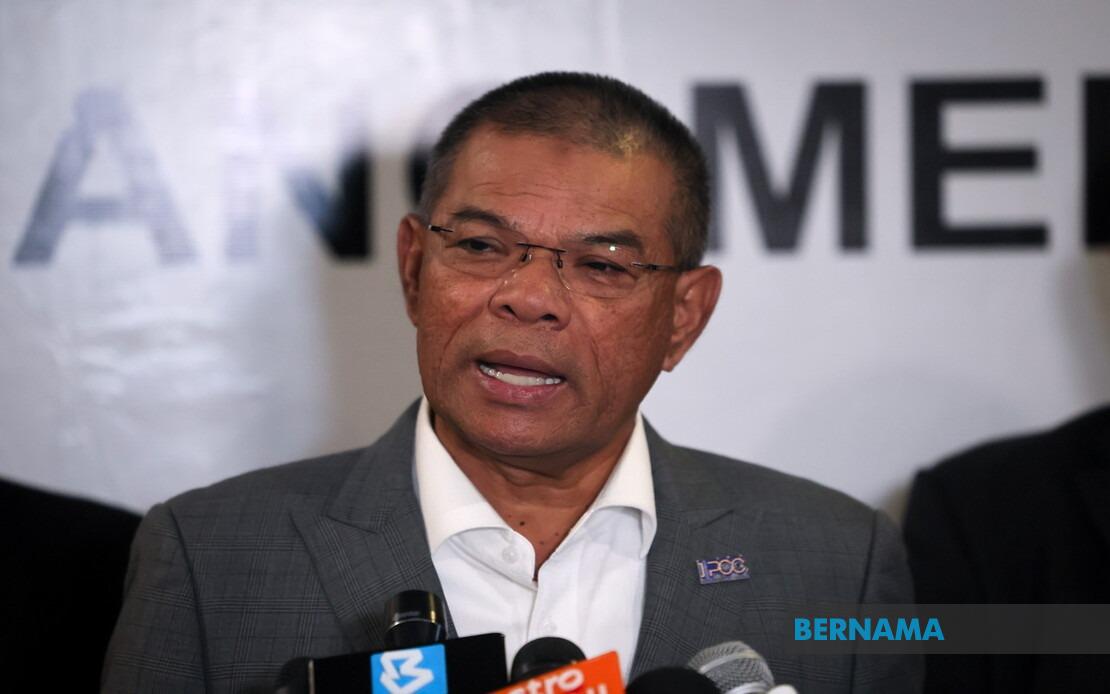
Home Minister Datuk Seri Saifuddin Nasution Ismail has issued a directive to the Malaysian Immigration Department to ensure complete cooperation with investigating authorities examining a catastrophic vehicle collision that resulted in the deaths of three family members in the early hours of the morning. The minister's intervention signals the seriousness with which the government is treating the incident and underscores the need for accountability in such tragic circumstances involving a government agency.
In a statement released on social media, Saifuddin Nasution emphasised that should investigators uncover any elements of carelessness, misconduct, or legal violations, those culpable must face appropriate consequences. This unambiguous position reflects the administration's commitment to maintaining public confidence in government institutions and ensuring that negligence does not go unaddressed, particularly when innocent lives have been lost.
The minister extended formal condolences to the bereaved family, acknowledging the profound sorrow surrounding the tragedy. Both the broader Ministry of Home Affairs and the Immigration Department offered their sympathies and prayers that the victim's family would find the emotional fortitude and support necessary to navigate the devastating aftermath of losing three loved ones in such a sudden and violent manner.
According to initial reports, the collision occurred around 1 am on Jalan Sultan Ismail when a black Immigration Department lorry, officially known as a Black Maria van and operating empty of detainees, struck four pedestrians belonging to the same family. A fifth individual, occupying a separate Inokom Matrix vehicle, was also caught in the chain of events that followed. Three of the pedestrians were pronounced dead at the scene, whilst another sustained serious injuries requiring urgent medical attention.
The Immigration Department vehicle was reportedly en route to Chow Kit to conduct a planned enforcement operation targeting individuals residing in Malaysia without valid documentation. The nature of the operation itself—a routine immigration raid—adds a layer of complexity to public perception of the incident, as it involves a government function that residents associate with law enforcement and security operations.
Circumstances surrounding the collision reveal a sequence of events that raises serious questions about vehicle operation and intersection management. The Immigration lorry reportedly proceeded through the Maju Junction intersection whilst the traffic signal governing its direction showed red, despite having its emergency beacon lights and siren activated. Simultaneously, a Proton Saga automobile was lawfully traversing the intersection on a green light in the perpendicular direction. The Proton driver reportedly had insufficient time and distance to avoid collision with the larger government vehicle.
The impact of the collision generated tremendous force, causing the Immigration lorry to lose directional control and skid violently across the roadway. This loss of control resulted in the vehicle striking the pedestrians and the Inokom Matrix, suggesting that the initial impact between the two vehicles produced a secondary cascade of destruction affecting multiple parties who had no involvement in the primary collision.
Investigating authorities have initiated proceedings under Section 41(1) of the Road Transport Act 1987, which governs serious traffic offences and vehicle-related incidents. This legal framework provides the investigative basis for determining whether traffic violations, driving standards violations, or other regulatory breaches contributed to the tragedy. The investigation will likely examine vehicle maintenance records, driver qualifications, the operational necessity for emergency light activation, and adherence to intersection protocols.
The incident raises broader concerns about the operation of large government vehicles in urban environments, particularly during early morning hours when visibility may be compromised and traffic patterns less predictable. Questions emerge regarding training standards for drivers operating specialised government vehicles, protocols for emergency light usage at intersections, and whether operational urgency may have influenced decision-making at the fatal moment.
For Malaysian road safety advocates, the collision underscores persistent challenges in enforcing traffic regulations consistently across all vehicle categories, including government-operated ones. The apparent running of a red light by a government vehicle—even with emergency signals active—illustrates how operational priorities can sometimes override traffic safety protocols, with devastating consequences for ordinary citizens.
The fatality count and injury toll place this incident among Malaysia's more serious traffic accidents in recent memory, particularly notable for involving a government agency vehicle in a densely populated urban area. The incident will likely prompt reviews of operational procedures, driver training standards, and intersection management protocols within the Immigration Department and potentially across other government agencies operating large vehicles in similar contexts.
As investigations proceed, public attention will focus on whether accountability measures match the severity of consequences experienced by the victims' family and the broader community. The Home Minister's explicit warning that misconduct will result in firm action sets the tone for expectations regarding transparency and justice in what has become a highly visible case involving government responsibility for loss of civilian life.

