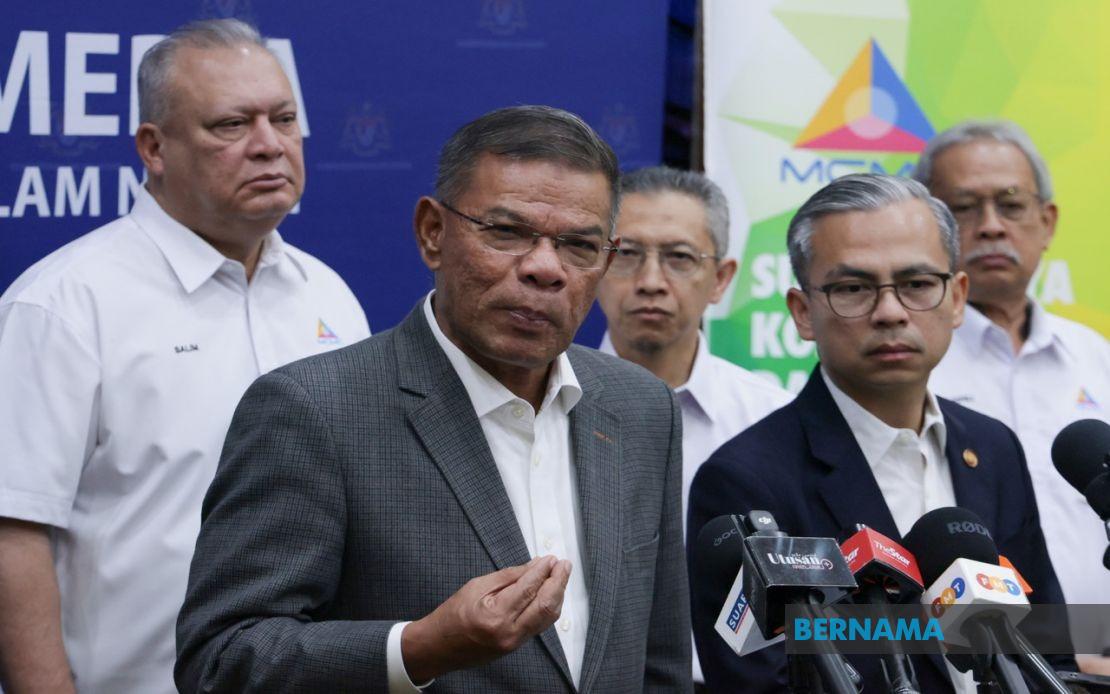
Malaysia's Home Ministry has received explicit instructions to present a comprehensive dataset of verified refugees to the relevant Cabinet Committee before the year concludes. The directive, announced by Home Minister Datuk Seri Saifuddin Nasution Ismail during a press conference in Putrajaya, marks a significant milestone in the government's efforts to establish precise figures on refugee populations currently within the country. The submission will encompass individuals whose refugee status has been formally confirmed through the Refugee Registration Document programme, a structured initiative designed to manage asylum seekers with greater transparency and accountability.
The DPP programme represents a systematic departure from ad-hoc refugee management practices, establishing clear procedural frameworks for status verification across Malaysia's detention facilities and immigration processing centres. Saifuddin Nasution explained that the Home Ministry's Immigration Department is actively conducting interviews with individuals held in detention depots throughout the nation, a labour-intensive process aimed at distinguishing genuine refugees from other categories of irregular migrants. This granular approach acknowledges the complexity inherent in Malaysia's irregular migration landscape, where the lines between asylum seekers, economic migrants, and immigration offenders often blur in practical enforcement scenarios.
The verification exercise carries substantial implications for Malaysia's policy formulation. Authorities must determine whether individuals claiming refugee status genuinely flee persecution or conflict, or whether they represent other categories requiring different legal treatment. Simultaneously, immigration officials are tasked with identifying foreigners who have contravened Malaysia's immigration framework through passport misuse, unauthorised stay extensions, or clandestine entry. These distinctions matter enormously, as they determine whether individuals qualify for humanitarian protections, face deportation proceedings, or become subject to criminal prosecutions under the Immigration Act. Without accurate baseline data, the government cannot design evidence-based policies addressing irregular migration comprehensively.
When queried about whether verified Myanmar refugees encompass the Rohingya population, Saifuddin Nasution confirmed their inclusion within the broader Myanmar refugee cohort. This acknowledgment carries weight given Malaysia's complicated history with the Rohingya issue. Since the 2017 Myanmar military crackdown displaced over 700,000 Rohingya into Bangladesh, Malaysia has hosted significant populations of these stateless minorities, though precise figures remain contested. The DPP programme's final data will clarify how many Rohingya currently reside within Malaysia's borders, information essential for bilateral discussions with Myanmar and coordination with international humanitarian organisations operating in the region.
The initiative aligns with National Security Council Directive No. 23 (Revision 2023), indicating that refugee management now receives elevated status within Malaysia's national security framework. This integration reflects evolving thinking about irregular migration's nexus with broader security considerations, though it also raises questions about whether securitised approaches adequately balance humanitarian obligations with border management. The inclusion of refugee issues within security directives suggests policymakers view unverified migrant populations as presenting potential risks warranting systematic documentation and classification.
The memorandum of understanding signed today between the Malaysian Communications and Multimedia Commission and the Immigration Department indicates technological integration into the DPP process. Both Communications Minister Datuk Seri Fahmi Fadzil and MCMC chairman Tan Sri Mohamad Salim Fateh Din witnessed the MoU exchange, suggesting information systems and digital infrastructure will facilitate refugee data compilation and verification. Such technological integration could enhance efficiency, though it simultaneously raises data protection and privacy considerations for individuals undergoing status verification.
For Southeast Asian policymakers, Malaysia's methodical approach offers instructive lessons. The region hosts substantial refugee and irregular migrant populations stemming from Myanmar's ongoing conflict, Bangladesh's hosting burden, and cross-border population movements. Malaysia's decision to establish definitive baseline figures through structured verification exercises demonstrates recognition that effective policy requires accurate data foundations. The approach contrasts with less systematic regional responses, potentially influencing how neighbouring states manage analogous populations.
The year-end deadline creates operational urgency within Malaysia's immigration apparatus. Completing interviews across multiple detention facilities nationwide within compressed timeframes demands resource allocation and procedural efficiency. Any bottlenecks or delays could compromise data quality or leave verification processes incomplete, potentially delaying Cabinet decisions on refugee policy frameworks. Immigration officials must balance thoroughness with timeliness, ensuring verification processes maintain integrity whilst meeting government deadlines.
The Cabinet Committee's subsequent role remains to be determined, though the submission of verified data will likely trigger policy discussions regarding long-term refugee management, humanitarian assistance, international coordination, and bilateral relations with origin countries. Malaysia's approach to the final dataset could influence regional refugee governance precedents and shape how ASEAN nations collectively address displacement crises emanating from Myanmar and beyond.

