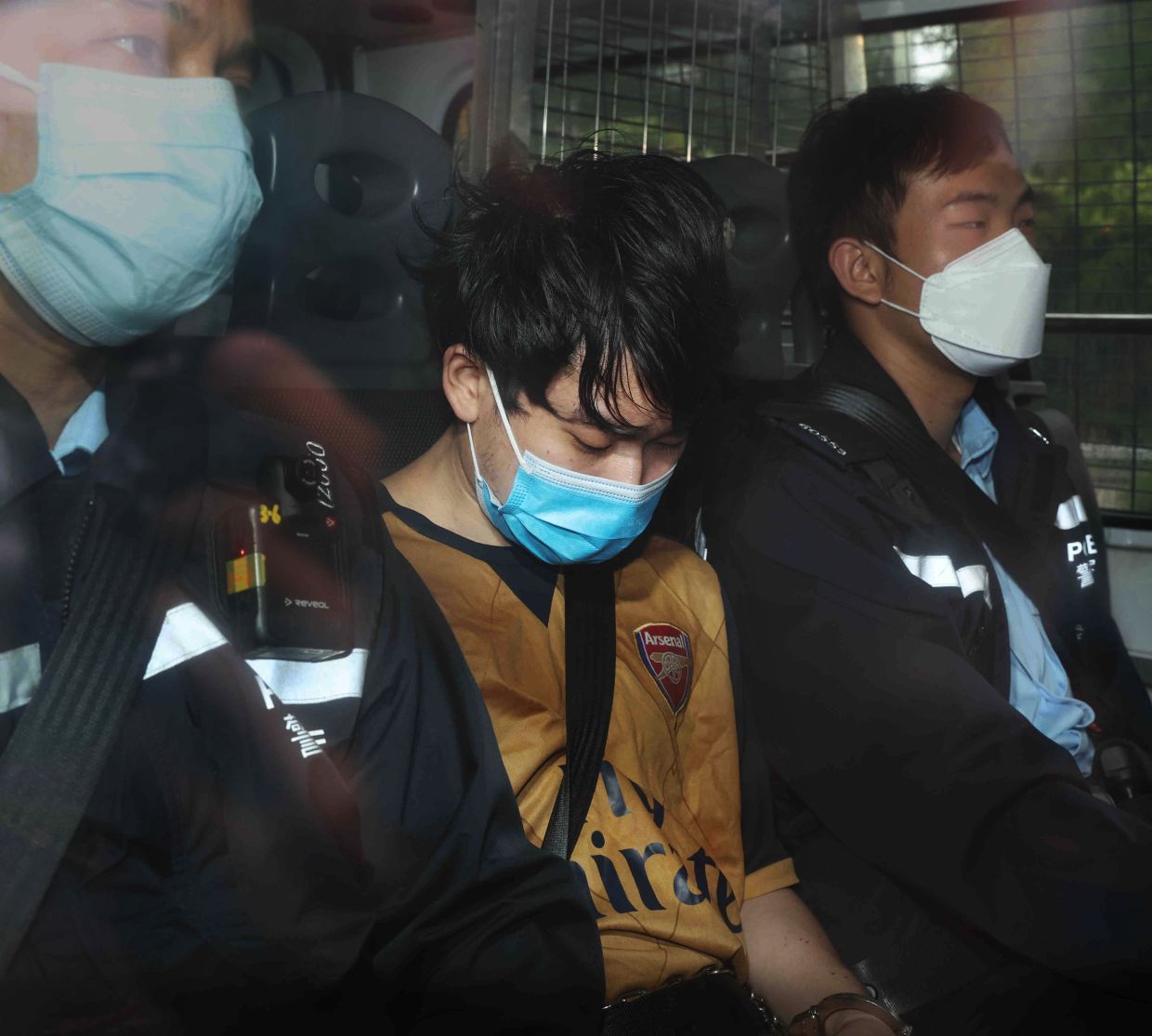
A Hong Kong man accused of beating his girlfriend to death and illegally disposing of her body has presented a startling defence: he claims the fatal injuries were inflicted accidentally while attempting to help her lose weight by keeping her awake at night. Ng Ka-sing, 29, faces a murder charge in the High Court over the death of his 30-year-old partner Yip Tsz-ching at their modest 700 square-foot flat in Galore Garden in Hung Shui Kiu in late April 2022. The case has drawn attention not only for its tragic circumstances but also for the peculiar nature of the defendant's stated intentions, which prosecutors have questioned throughout the opening stages of the trial.
The prosecution presented compelling evidence during the trial's opening that challenges Ng's narrative at almost every turn. Senior public prosecutor Audrey Parwani outlined how Yip suffered extensive corrosive burns covering 55 per cent of her body, alongside numerous blunt-force injuries, establishing a pattern of harm that extends far beyond what Ng's defence suggests was accidental. Parwani told the seven-member jury that Ng has provided multiple conflicting explanations to police regarding how his girlfriend sustained these injuries, and that the prosecution fundamentally rejects his account of events. The prosecutor's firm stance signals the strength of the evidence marshalled against the defendant, setting the stage for a contested trial expected to last 18 days before Mrs Justice Judianna Barnes.
According to Ng's own cautioned interview with police, he struck Yip repeatedly with a rod beginning late on April 27, continuing intermittently until the early morning of April 28. His stated purpose was to prevent her from falling asleep, based on a belief that sleep deprivation would facilitate weight loss. During this brutal period, Ng allegedly ceased only to ask his sworn sister—whose family occupied the same flat—whether he should stop. Rather than intervening, the sworn sister reportedly encouraged him to "continue for a bit longer", a detail that raises questions about the household dynamics and whether others present were complicit in or aware of the escalating violence. The beating resumed in two separate intervals: from 10pm until 1.30am, and again from 3am to 5.30am, according to Ng's own admissions to authorities.
The defendant's explanation for the severe chemical burns adds another layer of implausibility to his defence. Ng claims that Yip poured drain cleaner on herself, while he splashed the liquid on the floor merely to "stimulate" her feet. He further asserted that she inflicted additional injuries by striking herself against a wall seven to eight times after slipping on the wet floor. These claims strain credulity given the extensive nature and distribution of the burns across her torso and limbs, which a government pathologist would later characterise as consistent with having been deliberately applied. The narrative of self-inflicted harm becomes progressively harder to sustain when confronted with forensic evidence and the sequence of events as reconstructed by authorities.
By approximately 5am on April 28, Yip informed Ng that she was experiencing severe pain and believed she might not survive. Her condition rapidly deteriorated, and she lapsed into a coma after speaking for the last time at 7.21am that morning. These final hours underscore the severity of her injuries and the critical moment when intervention could have saved her life. Instead, Ng proceeded with his plan to conceal evidence of what had occurred, wrapping her body in a quilt and layers of plastic film and transporting it on a wheelboard through the streets of Hong Kong in the pre-dawn darkness.
The disposal of Yip's body was discovered when joggers spotted a protruding leg from the rolled-up quilt on Ng's wheelboard at around 6am on April 29, 2022. Lau Kwok-yan, the jogger who reported the discovery to police, testified that Ng displayed a remarkable lack of distress or panic while waiting for officers to arrive, standing motionless on the street as if entirely detached from the gravity of the situation. Street cleaner Wong Ah-sum corroborated details of the discovery, recalling that when he questioned Ng about the contents of the wheelboard, the defendant calmly acknowledged it was a "corpse" and stated his intention to transport it to a police station. Upon his arrest at 6.36am, Ng made a statement that partially contradicts his later trial testimony, telling officers: "This was my girlfriend. I hit her to death with a rod by mistake." This spontaneous utterance may prove consequential, as it represents his earliest acknowledgement of culpability.
Forensic evidence revealed the meticulous nature of the body's concealment. Forensic evidence specialist Lo Man-hung discovered that Yip's body was secured to a toppled wooden chair using black rubbish bags and wrapped in a quilt, with her head encased in multiple layers of cling film and adhesive tape. This careful wrapping and binding suggests deliberate concealment rather than panic-driven disposal, contradicting any suggestion of accidental death followed by confused action. Government pathologist Dr Foo Ka-chung estimated that Yip had been deceased for between 12 and 24 hours at the time of discovery, placing her death firmly within the timeframe Ng himself has acknowledged.
The pathologist's findings paint a stark picture of the injuries Yip sustained. Dr Foo identified multiple bruises, abrasions, and lacerations distributed across her head and other parts of her body, injuries consistent with blunt-force trauma from punching and kicking rather than accidental contact. The corrosive burns on her chest, abdomen, and limbs indicated chemical exposure. Critically, Dr Foo determined that the cause of death was suffocation resulting from head injuries and the extensive burns, establishing a direct causal link between the violence Ng inflicted and Yip's death. This medical evidence forms the cornerstone of the prosecution's case and contradicts any characterisation of the death as accidental or unintended.
Ng had previously offered to plead guilty to the lesser charge of manslaughter, a significant admission that prosecutors rejected in favour of pursuing the more serious murder conviction. This rejection reflects the prosecution's confidence in their evidence and their assessment that the circumstances warrant the higher charge. The distinction between murder and manslaughter hinges on intent and knowledge, and the evidence of planning, concealment, and the severity of injuries sustained suggests deliberate infliction rather than accidental harm. For Malaysian and Southeast Asian observers, this case underscores the serious consequences of domestic violence and the importance of intervention mechanisms when warning signs emerge.
The trial has exposed troubling questions about the household environment in which these events unfolded. The presence of Ng's sworn sister and her family in the same flat raises the question of why no one intervened during the hours of violence, and whether their encouragement to "continue for a bit longer" constitutes complicity. The case also highlights how unconventional or pseudoscientific beliefs about health—in this instance, the notion that sleep deprivation aids weight loss—can be weaponised within abusive relationships to justify escalating violence. The fact that Ng maintained relative composure during and immediately after the discovery of the body, showing no apparent distress to witnesses, suggests a disturbing detachment from the enormity of his actions.
As the trial progresses through its scheduled 18 days, the jury must weigh Ng's claims of accidental death against forensic evidence, medical testimony, eyewitness accounts of his demeanour, and the deliberate nature of the body's concealment. The outcome will turn on fundamental questions of credibility and whether the totality of evidence supports a conclusion of intentional murder or a tragic accident gone catastrophically wrong. For the broader community, the case serves as a sobering reminder of the vulnerabilities faced by those in abusive relationships and the critical role that bystanders and authorities play in prevention and intervention.

