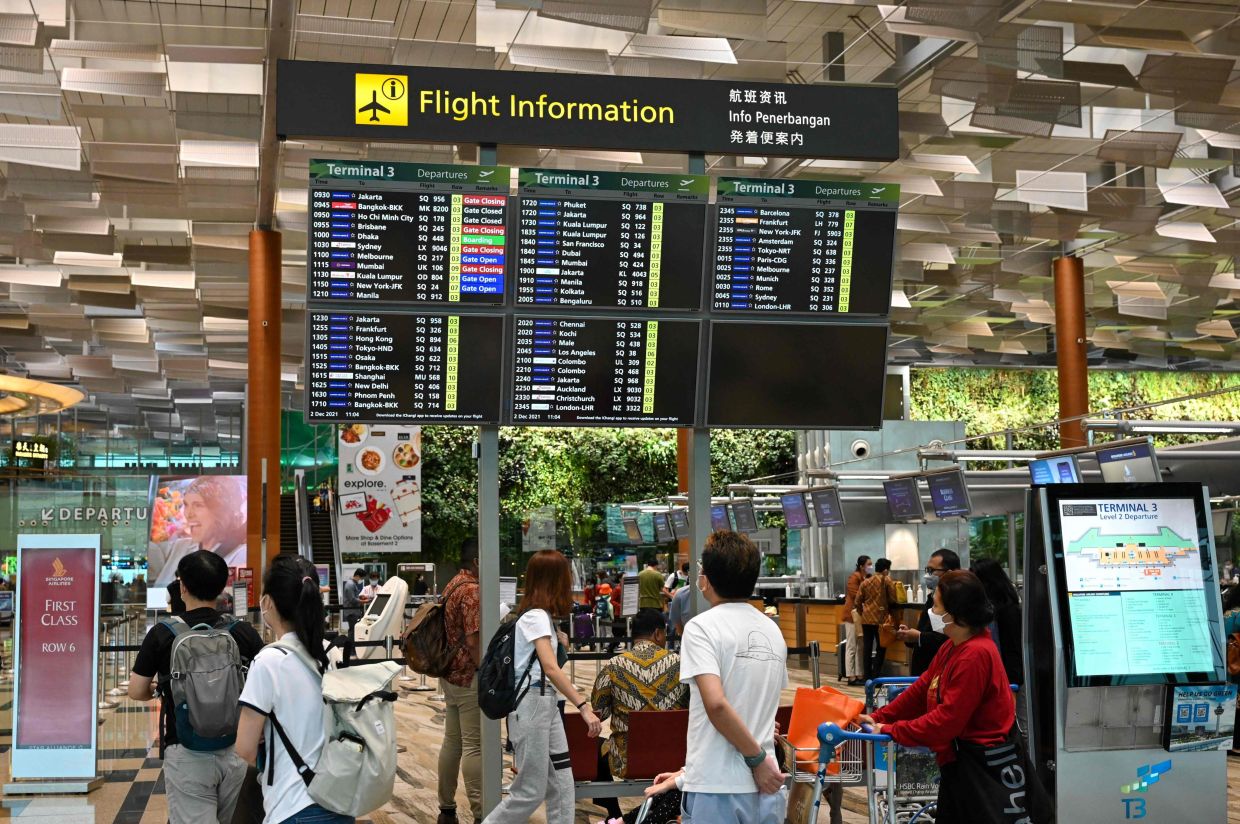
A Singapore court has handed down jail sentences to a Hong Kong mother and her adult son following a chaotic and violent altercation at Changi Airport's Terminal 3 that resulted in injuries to both a member of the public and a police officer. Chan Sui-kwan, 65, received a six-month custodial sentence for voluntarily causing hurt with the intent to deter a public servant from performing his official duties, while her son Chan Wing-kwan, 42, was sentenced to ten days' imprisonment on the charge of voluntarily causing hurt. The sentences were delivered this week, culminating a legal process that stretched across several months following the initial incident in late June 2024.
The confrontation began in the afternoon of June 30, 2024, when Chan Wing-kwan became increasingly agitated inside the terminal. Court documents reveal that the son had misinterpreted the actions and words of nearby bystanders, believing they were deliberately mocking him. His growing distress manifested in aggressive behaviour directed towards his mother, whom he kicked during this initial outburst. The escalating tension drew the attention of a 69-year-old bystander who intervened out of concern for the woman's safety. However, rather than de-escalating the situation, his attempt at assistance was rebuffed when Chan Sui-kwan told him to leave, while her son simultaneously became confrontational and provocatively challenged the man to a physical fight.
Within minutes, the volatile situation deteriorated further when the pair moved to another level of the terminal. Chan Wing-kwan again kicked his mother, prompting the concerned bystander to take action by attempting to alert authorities to the unfolding crisis. This decision to contact police triggered a dramatic escalation when the son aggressively advanced toward the man. A physical struggle ensued in which Chan Wing-kwan repeatedly struck the bystander with his fists, inflicting significant injuries including a head haematoma—a pooling of blood beneath the skin caused by blunt force trauma—along with abrasions to the knee and bruising on the fingers.
Initial police response was measured and procedurally correct. Officers who arrived at the scene documented the incident and recorded the passport details of both the mother and son before returning their travel documents, seemingly treating the matter as a relatively contained incident. However, the situation took a dramatic turn later that same afternoon when police encountered the pair again, this time in the departure hall of the terminal. Chan Sui-kwan's behaviour had not improved; she refused to comply with officers' requests to surrender her passport and created a further disturbance that necessitated her arrest.
The mother's resistance to arrest proved physically confrontational. As officers moved to apprehend her, she fought back forcefully against the restraint. During the struggle, she bit a police officer on his right forearm, an attack that penetrated through his clothing and left a visible one-centimetre mark along with accompanying bruising. This assault on a law enforcement officer transformed the legal nature of the case and set the stage for more serious charges to be pursued against her, explaining why she faced the additional charge of assaulting a public servant performing his lawful duties.
The court proceedings that followed reveal considerable delays and complications in the administrative handling of the case. Chan Wing-kwan was formally charged on April 24 of last year, establishing the timeline for the legal process. Chan Sui-kwan, however, did not appear before the court until November 18, 2024—a gap of several months that suggests either procedural delays or difficulties in locating the defendants. The situation became further complicated when both defendants failed to appear for a scheduled court date on July 22 this year, an absence that triggered the issuance of an arrest warrant. They were subsequently convicted on July 29 before receiving their sentences this week.
The case highlights the serious consequences that travellers face when violent behaviour erupts in international transit hubs like Changi Airport, one of Asia's busiest aviation gateways. Singapore courts have demonstrated a consistent approach to such offences, treating attacks on police officers and public disturbances at critical infrastructure sites with considerable gravity. The six-month sentence for Chan Sui-kwan reflects the seriousness with which Singaporean courts regard assaults on law enforcement personnel, while the relatively light ten-day sentence for her son suggests the court acknowledged the lesser charge and possibly mitigating circumstances related to the mental state or provocation involved in his actions.
For Malaysian and Southeast Asian readers, the case underscores the importance of maintaining composure during travel emergencies and the potential legal jeopardy that awaits those who resort to violence at international airports. Changi Airport is a major transit point for travellers throughout the region, and the incident demonstrates that authorities enforce strict standards of public behaviour and safety protocols regardless of a visitor's nationality or the circumstances of their distress. The extended legal timeline also illustrates that Singapore's court system can take considerable time to process such cases, with lengthy gaps between incidents and formal proceedings.
The case further reflects broader questions about mental health and family conflict management in high-stress situations such as air travel. The initial trigger for the confrontation—the son's misinterpretation of bystander behaviour—suggests possible underlying psychological distress, though no court documents indicate any mental health assessment or testimony was presented. This raises regional questions about how airports and law enforcement agencies address situations where emotional or mental health crises intersect with public safety concerns, particularly when family members become involved in escalating conflicts.
Beyond the immediate sentences imposed, the convictions carry implications for the defendants' future travel and residency status. Such convictions can affect visa applications, entry permissions to other countries, and professional licensing in certain jurisdictions. For Hong Kong residents, the incident and subsequent conviction in Singapore may have consequences for their ability to travel freely throughout Southeast Asia, where regional security cooperation among immigration authorities continues to deepen. The case also serves as a reminder to travellers about the importance of seeking proper assistance through official channels when conflicts arise, rather than attempting to resolve matters independently or through confrontation.

