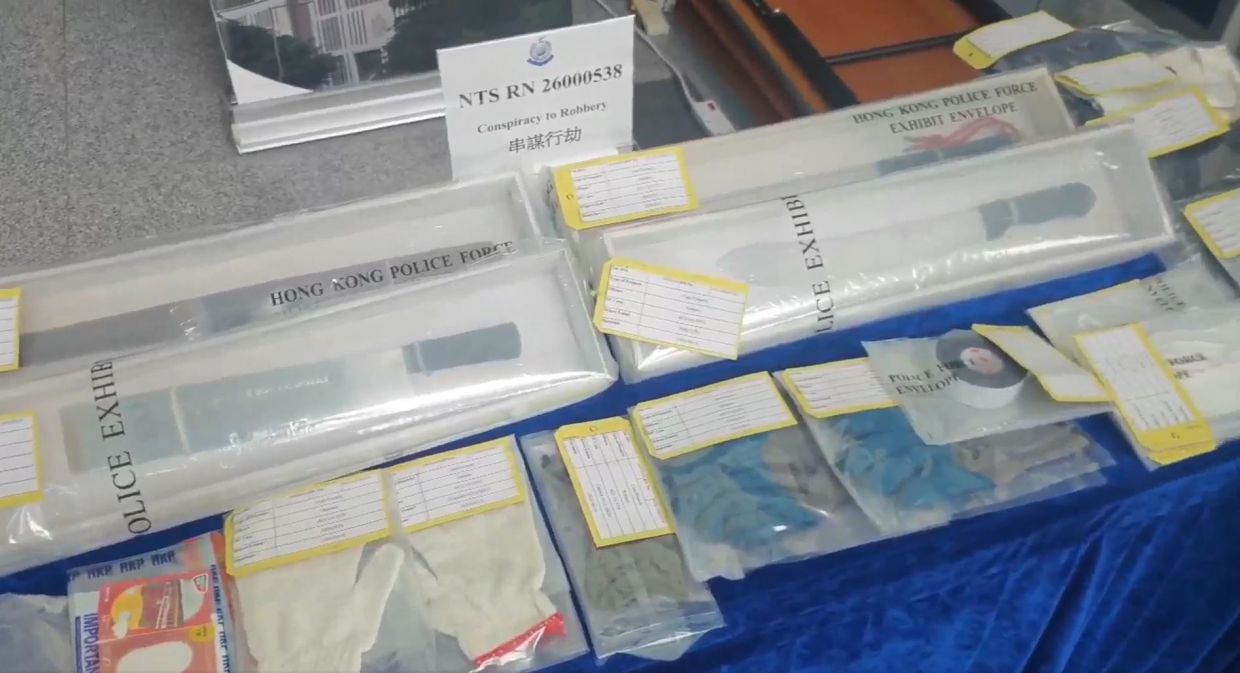
Hong Kong authorities have arrested seven suspects following a brazen daylight robbery and stabbing incident at Hong Kong International Airport's car park, where an individual was assaulted and relieved of gold bars valued at HK$7 million. The swift police response led to the detention of four men and three women aged between 20 and 39, all facing charges related to conspiracy to commit robbery and criminal abetting, just 12 hours after the incident occurred on Thursday, June 18.
The targeted victim had touched down at the airport early that morning after travelling from Bali, Indonesia. He was transporting six gold bars inside his backpack, intended as cargo for a businessman based on the mainland. As he made his way toward car park 3 to retrieve his vehicle, three masked assailants emerged and launched a coordinated attack that investigators now believe was far from opportunistic or random in nature.
The assault itself was violent and calculated. Armed with knives, the three attackers stabbed the victim in his left hand and foot during the confrontation, inflicting injuries severe enough to require hospital treatment. After incapacitating their target, the assailants grabbed the backpack containing the gold and made their escape in a seven-seater vehicle, disappearing into Hong Kong's traffic with their stolen merchandise.
Police investigations have uncovered criminal elements connected to organized crime syndicates. Several of the detained suspects carry known triad affiliations, suggesting potential involvement of organized criminal networks in planning and executing the heist. However, the investigation remains ongoing as not all individuals believed responsible for the robbery have been apprehended. Intelligence gathered by authorities indicates that additional suspects have likely fled to mainland China, prompting Hong Kong police to request formal assistance from their counterparts across the border in tracking and potentially apprehending the fugitives.
One of the most significant findings from the police inquiry concerns the apparent inside knowledge the robbers possessed about their victim's movements and precise location within the sprawling airport facility. The attackers demonstrated knowledge of the victim's flight schedule and even his designated parking spot, suggesting coordination with someone working within the airport or connected to the intended recipient of the gold shipment. This revelation has elevated initial suspicions among investigators that an insider may have provided critical information to facilitate the robbery, transforming what might otherwise appear as a high-risk street crime into a carefully orchestrated heist with logistical planning.
In the hours following the assault, law enforcement moved swiftly to secure evidence and locate the getaway vehicle. Officers recovered the seven-seater vehicle used by the perpetrators in the Tsuen Wan district, along with the knives that were used as weapons during the attack. These recoveries represent crucial physical evidence that will support prosecution efforts and potentially yield forensic material linking suspects to the crime.
The victim of the stabbing was transported to Princess Margaret Hospital for emergency treatment. Medical staff assessed his injuries and confirmed that despite the severity of the assault, his condition had stabilized, suggesting the wounds, while painful and requiring hospitalization, were not life-threatening. His recovery will be monitored closely as police continue to gather his detailed account of the attack.
This incident raises significant security concerns about the protection of high-value cargo movements at one of Asia's busiest aviation hubs. Hong Kong International Airport handles millions of passengers annually and facilitates substantial volumes of precious metals and valuable goods transiting through the territory. The fact that a courier carrying HK$7 million in gold could be attacked so brazenly within the airport precinct has prompted questions about security protocols governing valuable shipments and the vetting procedures for individuals with airport access who might potentially serve as informants for criminal enterprises.
The involvement of potential triad connections underscores how organized crime networks in Hong Kong continue to adapt traditional criminal methodologies to target modern commerce flows. Rather than focusing solely on street-level robberies, sophisticated criminal organizations are now leveraging intelligence and insider information to intercept high-value commercial shipments at critical junctures like airport transfers, where victims may be vulnerable and escape routes are readily available.
For Malaysian readers and Southeast Asian observers, this case illustrates the cross-border security implications of criminal activity in the region. The suspected flight of perpetrators to mainland China highlights how geography and jurisdictional boundaries can complicate law enforcement efforts, requiring enhanced cooperation between Hong Kong and mainland authorities—a model that Southeast Asian nations increasingly rely upon when pursuing suspects across porous borders. The incident also serves as a cautionary tale for businesses and individuals involved in precious metals trading and transport, emphasizing the necessity of sophisticated security arrangements when moving valuable cargo through major hubs.

