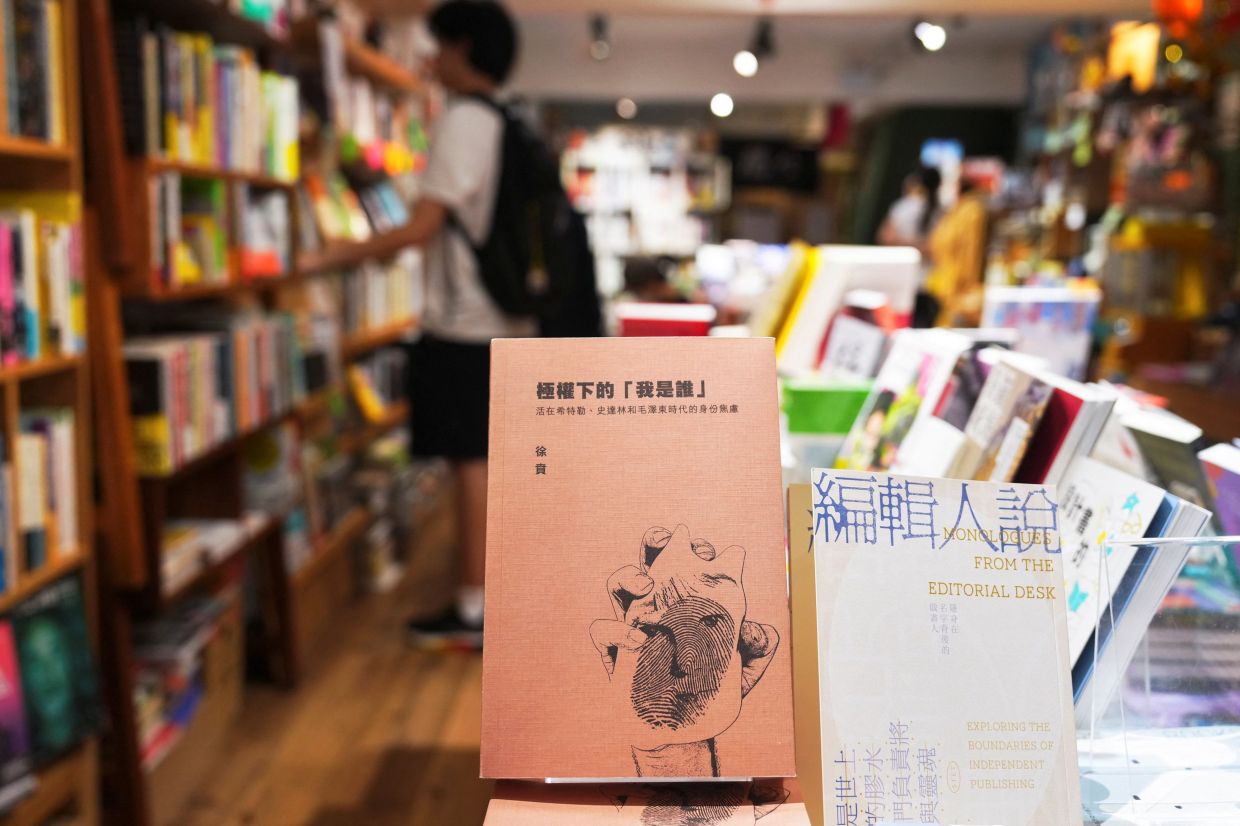
Hong Kong's top security official has placed booksellers on notice to screen their inventories for publications that could threaten national security, marking an intensification of pressure on the city's independent publishing sector. Secretary for Security Chris Tang made the directive public on Thursday, a day after police arrested five individuals connected to two bookstores in what represented the third major law enforcement operation targeting independent retailers in four months.
Tang's framing of the issue drew comparison to food safety regulation, suggesting that booksellers bear responsibility for preventing harmful content just as vendors must ensure food products are safe for consumption. He insisted the legal framework governing such determinations was already sufficiently clear, dismissing suggestions that authorities needed to establish formal guidance or maintain a compiled list of prohibited titles. His comments reflected government confidence that existing legislation provided adequate parameters for booksellers to understand their obligations without additional clarification, a position that stands in sharp contrast to industry concerns about ambiguous enforcement criteria.
The latest police action targeted Have A Nice Stay, a bookshop established by former journalists, and Greenfield Book Store, a long-established retailer. Police characterized the arrested individuals as suspects in displaying and distributing seditious materials, with authorities alleging the publications stirred animosity toward Hong Kong's government, court system, and law enforcement agencies. Two of those arrested were subsequently released on bail by Friday morning, though the broader implications for the bookstore sector remained uncertain.
Have A Nice Stay had already announced its closure scheduled for August 30, with management citing financial strain and confusion over undefined regulatory boundaries as contributing factors. The bookstore's statement highlighted a central concern troubling the independent publishing community: the inability to definitively determine which titles crossed into prohibited territory. Management acknowledged the practical impossibility of individually vetting every volume in their collection and the absence of reliable criteria for identifying "problematic" content, underscoring the dilemma facing retailers operating under vague enforcement standards.
The current enforcement wave follows a pattern established earlier in the year. March brought the arrest of the proprietor and staff at Book Punch, another independent outlet, following similar allegations of trafficking in seditious publications. That operation gained particular attention because seized materials allegedly included a biography of Jimmy Lai, the former media entrepreneur and pro-democracy advocate who received a 20-year prison sentence in a national security case. The selection of this specific title for enforcement action signalled authorities' particular concern about biographical works and materials connected to prominent pro-democracy figures.
June saw authorities pursue a different angle, apprehending two booksellers on suspicion of selling seditious publications and receiving financial support from foreign political organisations. This dual-charge approach suggested officials were investigating whether international funding streams might be financing the distribution of sensitive materials, introducing cross-border accountability concerns into what had previously appeared as primarily domestic regulatory matters.
The pattern of arrests and intensifying official pressure has prompted broader concern across the region regarding Hong Kong's trajectory on fundamental freedoms. Taiwan's President Lai Ching-te directly addressed the situation through social media, framing independent bookstores as essential guardians of intellectual liberty and free thought. His intervention represented more than symbolic solidarity; it reflected Taipei's strategic interest in contrasting its own democratic model with developments across the Taiwan Strait, particularly as cross-strait relations remain fraught.
Taiwan's Mainland Affairs Council deputy minister Liang Wen-chieh reported that Taiwanese publishers participating in Hong Kong's book fairs have begun voluntarily restricting their catalogues, effectively implementing self-censorship in anticipation of potential enforcement action. This preventive measure demonstrates how enforcement uncertainty produces chilling effects extending beyond direct legal consequences, as commercial actors adjust behaviour to minimise regulatory risk. Publishers and retailers are making decisions to limit available materials without waiting for explicit prohibition, suggesting that vague enforcement frameworks accomplish content restriction even before authorities formally identify problematic titles.
Tang's rejection of the possibility of publishing a banned books list deserves particular scrutiny. His rationale—that such a compilation would undermine effective law enforcement against titles "intended to harm the country"—inverts conventional understandings of legal transparency and due process. Typically, prohibition lists provide clarity and enable stakeholders to understand which materials are prohibited; their absence instead creates uncertainty that incentivises conservative decision-making and broader self-restriction than formal rules would impose. This approach maximises regulatory pressure while maintaining plausible deniability about the scope of restrictions.
For Malaysian observers, Hong Kong's experiences offer instructive parallels to ongoing debates about content regulation, national security legislation, and the relationship between government authority and commercial freedom. Malaysia has its own mechanisms for restricting publications deemed harmful to state security or public order, yet the Hong Kong model—where enforcement remains deliberately imprecise while pressure on retailers intensifies—represents an alternative regulatory pathway worth examining. The question facing both jurisdictions concerns whether security objectives are better served through transparent legal frameworks with predictable boundaries, or through ambiguous standards that extend official discretion while creating broader compliance incentives through uncertainty.
The arrested individuals and affected businesses now navigate a landscape where regulatory definitions remain fluid, enforcement appears escalating, and the boundaries between permissible and prohibited content shift according to official interpretation. Booksellers face the uncomfortable choice between restricting inventory to minimise risk or maintaining diverse collections while accepting heightened vulnerability to official action. This structural tension between commercial operation and regulatory uncertainty will likely shape Hong Kong's publishing sector for years to come, with implications extending throughout the broader region as editors, publishers, and distributors recalibrate their own risk calculations.

