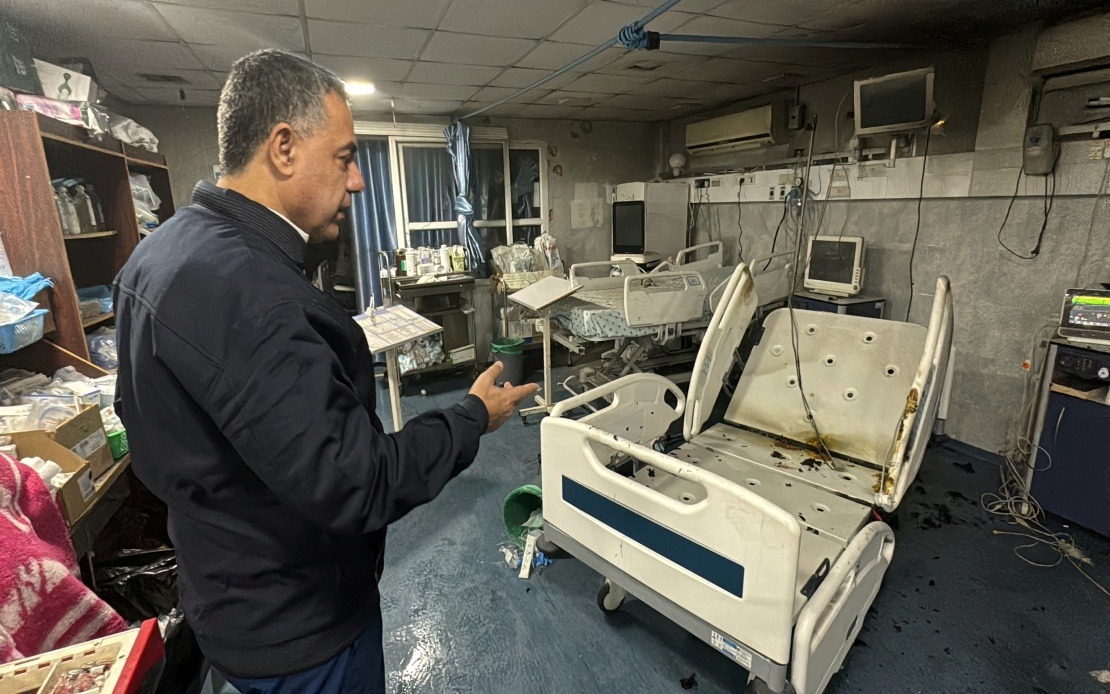
An international human rights advocacy group focused on medical professionals has sounded an alarm over the rapidly declining health of Dr Hussam Abu Safiya, who heads Kamal Adwan Hospital in northern Gaza, following his transfer to Nitzan Prison in Israel. The warning comes after documented observations of serious physical injuries sustained by the detained physician, sparking renewed demands from the organisation for his immediate release.
Physicians for Human Rights, through its legal representative Nasser Odeh, has compiled evidence of concerning medical and physical indicators during a July 2 visit to the hospital administrator. The lawyer's observations revealed fresh bruising and lacerations concentrated on the head, facial area, ears, and neck regions, rendering the physician's appearance substantially altered from his prior condition. Beyond the visible trauma, Dr Abu Safiya exhibited respiratory complications and multiple episodes of temporary unconsciousness during the meeting.
The conditions under which this documentation occurred underscore the restriction of the detainee's movements and agency. Prison authorities maintained heavy security during the lawyer's visit, with Dr Abu Safiya appearing before legal counsel while shackled at both wrists and ankles, positioned amid multiple guards wearing face coverings. This arrangement, typical of high-security detention protocols, reflects the authorities' assessment of the perceived risk profile associated with the hospital director's custody.
The deterioration in Dr Abu Safiya's physical state appears to have accelerated following specific legal proceedings. According to accounts provided by the rights organisation, the hospital director's condition worsened notably after he mounted a court challenge contesting the legitimacy and continuation of his detention. This temporal connection has prompted observers to scrutinise the sequence of events and the possible relationship between his legal actions and subsequent physical decline.
Naji Abbas, heading the Prisoners and Detainees Department at Physicians for Human Rights, characterised the legal counsel's testimony as exceptionally disturbing within the context of the broader conflict. Abbas emphasised that the gravity and specificity of the documented injuries represent some of the most alarming accounts the organisation has received since the commencement of large-scale hostilities. The hospital director himself articulated apprehension regarding his personal safety, expressing fear that his life could be forfeited while under state custody.
The case raises significant questions about detention protocols, medical oversight, and accountability mechanisms in conflict settings. International humanitarian law and prisoner welfare standards establish clear obligations for custodial authorities to maintain detainee health and safety, yet implementation and enforcement mechanisms often face practical and political challenges, particularly during active conflict phases. The apparent absence of formal charges or trial proceedings against Dr Abu Safiya compounds concerns about his legal status and protective safeguards.
Physicians for Human Rights has renewed its call for the unconditional release of Dr Abu Safiya alongside other medical professionals held in custody. The organisation's position centres on the fundamental principle that healthcare workers warrant distinct protections under international law, given their essential role in preserving life and maintaining public health infrastructure. This protection extends to shielding them from detention, harassment, or threats that could impede their professional function during humanitarian crises.
The organisation has pointedly attributed full responsibility to Israeli authorities for ensuring the health, safety, and survival of all individuals within their custody. This framing emphasises that states maintaining control over detained persons incur legal and moral duties to prevent harm, provide adequate medical care, and ensure humane treatment regardless of the circumstances precipitating detention. Breaches of these standards, the rights group argues, constitute violations meriting immediate corrective action and independent investigation.
For Southeast Asian observers and policymakers, this case exemplifies broader questions regarding the protection of medical professionals and civilian infrastructure during armed conflict. Malaysia and neighbouring nations face their own complex humanitarian challenges and maintain positions on international accountability standards. The situation underscores the importance of international oversight mechanisms, documentation of alleged violations, and sustained pressure from civil society organisations to maintain humanitarian standards even in environments of significant geopolitical tension.
The immediate demand articulated by Physicians for Human Rights centres on urgent independent investigation into the circumstances surrounding Dr Abu Safiya's detention, the origin of documented injuries, and compliance with international detention standards. Such investigations require credible external actors capable of accessing detention facilities without political obstruction, examining medical evidence objectively, and issuing findings that inform public accountability discussions. The group's advocacy reflects broader humanitarian community concerns about ensuring that security imperatives do not override basic protections for vulnerable populations, including medical workers and hospital patients.

