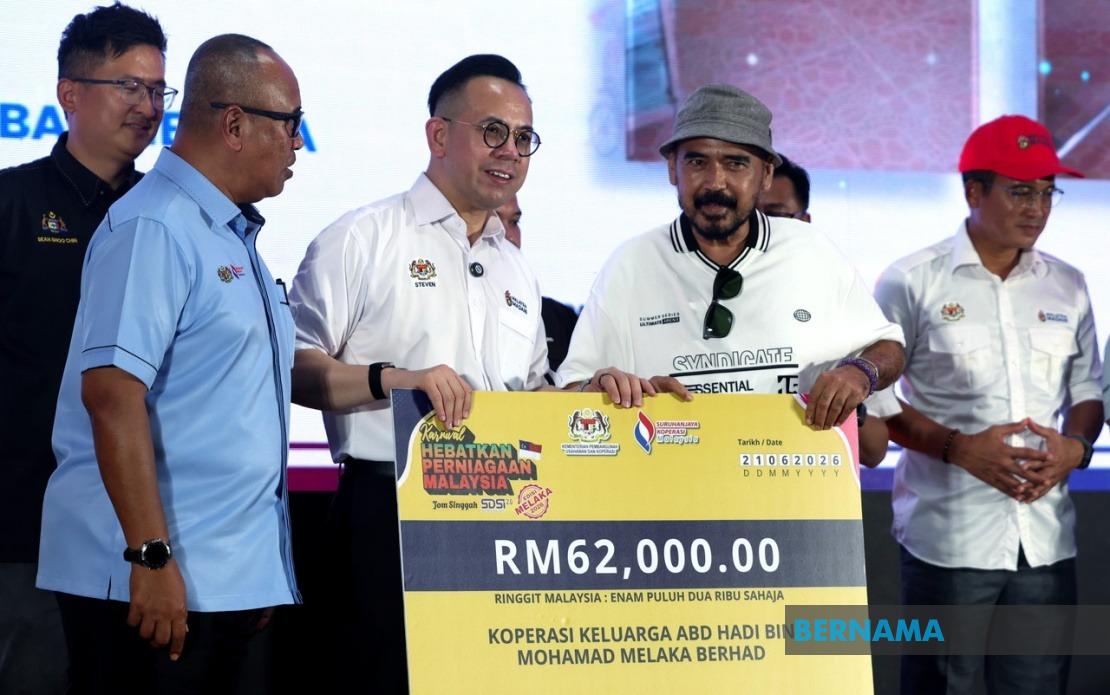
The Empowering Malaysian Businesses Carnival, or HPM 2026, wrapped up a successful three-day run in Melaka with impressive results that underscored growing momentum in Malaysia's entrepreneurial ecosystem. Held from June 19 to 21, the event orchestrated by the Ministry of Entrepreneur Development and Cooperatives (KUSKOP) achieved a combined business matching and financing value of RM8.45 million, signalling robust appetite among local enterprises for expansion and strategic partnerships.
The carnival's footfall exceeded expectations, drawing 70,000 visitors across the three-day period. This substantial attendance reflects heightened interest among Malaysia's business community in accessing structured networking opportunities, particularly for smaller operators seeking visibility and collaboration channels. Beyond mere visitor numbers, the event translated engagement into tangible commercial outcomes, with entrepreneurs recording direct product sales totalling RM532,802.77 during the carnival itself, demonstrating the immediate commercial value of bringing diverse business segments under one roof.
At the heart of the carnival's success lay the business matching component, which generated RM6.4 million in potential collaborations. This figure emerged from 72 dedicated matching sessions involving 25 potential entrepreneurs seeking to expand their operations and establish fresh commercial relationships. The structured matchmaking approach—pairing entrepreneurs with complementary businesses and expansion opportunities—reflects a deliberate strategy to move beyond traditional networking by facilitating concrete, opportunity-driven connections rather than relying on passive networking alone.
Parallel to business matching activities, the carnival's financing session proved equally transformative for the micro, small and medium enterprise segment. Fifty-five MSMEs participated in direct interactions with financial institutions and lending bodies, unlocking RM2.05 million in identified financing potential. This component addresses a persistent pain point for smaller enterprises in Malaysia, which frequently struggle to bridge the gap between capital needs and accessible financing options. By creating a structured environment where MSMEs could present their expansion plans directly to financial decision-makers, the carnival effectively democratised access to capital conversations typically reserved for larger corporations.
The HPM 2026 series represents the third instalment of this carnival initiative, with organisers already announcing the next venue. Penang will host the subsequent edition from July 17 to 19 at the Penang Waterfront Convention Centre, indicating plans to rotate the carnival across Malaysia's key economic zones. This geographical expansion strategy suggests KUSKOP's intent to reach entrepreneurial communities beyond the Klang Valley and major urban centres, extending support to regional business ecosystems that may have limited regular exposure to such comprehensive business development platforms.
The carnival initiative sits squarely within KUSKOP Minister Steven Sim Chee Keong's broader Hebatkan Perniagaan Malaysia agenda, which translates as Empowering Malaysian Businesses. This overarching programme operates under the ABCD framework—Accelerating Productivity, Bureaucracy Reduction, Capital Accessibility and Developing Market Access. The acronym encapsulates the government's multifaceted approach to enterprise development, recognising that growth obstacles for SMEs and cooperatives span operational efficiency, regulatory burden, financial constraints, and market connection challenges simultaneously.
The Accelerating Productivity component targets process improvements and competitive positioning. Bureaucracy Reduction acknowledges that administrative friction consumes disproportionate resources for smaller operations, hampering their ability to compete with larger corporates. Capital Accessibility directly addresses the financing gap that constrains expansion and innovation. Developing Market Access recognises that many capable enterprises remain confined to limited customer bases due to inadequate distribution networks, export mechanisms, or supply chain integration. By bundling these four pillars, KUSKOP signals a holistic understanding of enterprise development challenges rather than siloed interventions addressing single pain points.
The carnival platform itself functions as an integrated ecosystem within this broader mission. It consolidates multiple support mechanisms—business matchmaking, financing connections, product showcasing, and strategic networking—into a single event, reducing friction for entrepreneurs navigating multiple government and private-sector support systems. This consolidation particularly benefits MSMEs operating with limited administrative resources, allowing them to access multiple growth levers simultaneously rather than juggling separate engagements with different agencies and institutions.
For Malaysian policymakers and business leaders, the Melaka carnival results offer encouraging validation that structured, well-designed business development interventions generate measurable commercial outcomes. The RM8.45 million in documented business and financing potential represents not merely bureaucratic metrics but real opportunities entering entrepreneurs' planning cycles. The direct sales revenue of over RM530,000 demonstrates that carnival participants achieved immediate commercial benefit beyond theoretical future partnerships, validating the event's design and execution.
The regional dimension merits consideration for Southeast Asian entrepreneurs and observers. As regional economies compete to attract and retain entrepreneurial talent and investment, Malaysia's systematic approach to enterprise development—combining government support, private-sector engagement, and accessible platforms—positions the country as increasingly business-friendly. The HPM carnival's success, replicated across multiple locations, creates a scalable model that other Southeast Asian governments examining enterprise development strategies might evaluate for adaptation to their own contexts.
Looking forward, the progression from Melaka to Penang suggests momentum that KUSKOP intends to sustain throughout 2026. Each carnival iteration offers opportunities to refine the matching process, expand financial institution participation, and tailor content to regional economic strengths. The scale of visitor attendance and business outcomes achieved in Melaka indicates that subsequent carnivals, benefitting from organisational experience and refined logistics, may generate even more substantial results. For Malaysia's entrepreneurial community, these initiatives represent substantive government commitment to supporting enterprise growth beyond rhetorical endorsement, translating policy objectives into accessible, tangible business development opportunities.

