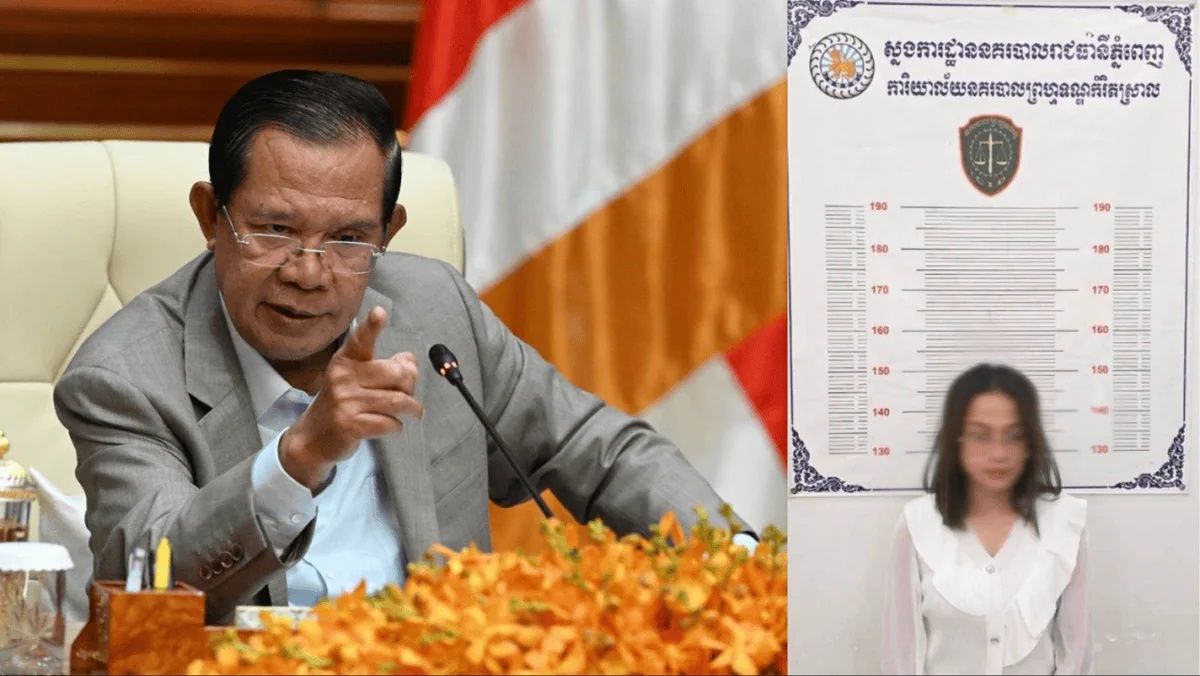
Cambodia's Senate president Hun Sen has ordered the Ministry of Women's Affairs and the National Council for Women to initiate court proceedings against people who deploy abusive language deemed insulting to women and Khmer cultural standards. The directive emerged during a Friday meeting with council representatives, signalling an intensified push to regulate public speech around gender and institutional respect in the Southeast Asian nation.
Hun Sen cited specific incidents as justification for the enforcement push. An unnamed woman recently came under official scrutiny for using profane language to disparage government agencies and public servants, prompting authorities to summon both the woman and her husband to submit a written apology. Additionally, a woman identified as Chenda Sovannary faced legal attention after allegedly using insulting language toward a soldier during a disagreement related to a mobile phone transaction. Hun Sen expressed bewilderment at the incident, questioning why such a trivial commercial dispute should escalate into verbal disrespect for military personnel or any worker.
The Senate president's comments reveal a governance philosophy that extends state protection beyond traditional institutional boundaries. He argued that judicial institutions must rigorously examine cases involving what he termed "destruction of social dignity," suggesting courts should take a more proactive stance in prosecuting language-based offences. This positioning reflects a broadening interpretation of what constitutes legally actionable harm within Cambodia's regulatory framework.
Hun Sen attempted to reframe the initiative as apolitical by drawing parallels to private sector practices. He noted that multinational technology companies enforce community standards and ethical guidelines on their platforms, implying that governments enforcing social norms represents a comparable, legitimate exercise rather than state overreach. This comparison seeks to normalize government involvement in monitoring and prosecuting speech, presenting it as an extension of accepted corporate governance practices.
The directive specifically targets online platforms, with Hun Sen requesting systematic monitoring of what he termed "cursing and insults on Facebook." He tasked officials with establishing a dedicated mechanism to track problematic speech across social media, indicating that digital communications will receive particular regulatory attention. The emphasis on Facebook surveillance underscores growing governmental interest in regulating online discourse throughout Southeast Asia, a region where social media increasingly shapes political and social conversations.
Implementation of the policy will require coordination across multiple governmental bodies. Hun Sen instructed the National Council for Women to work alongside the Ministry of Interior, Ministry of Information, Ministry of Culture and Fine Arts, and Ministry of Post and Telecommunications to design and execute protective mechanisms. This multi-agency approach suggests the government views the initiative as sufficiently important to warrant institutional restructuring and cross-departmental collaboration.
Hun Sen explicitly rejected interpretations of these measures as authoritarian restrictions on freedom of expression. Instead, he characterised them as necessary safeguards for national dignity and the defence of Khmer cultural values. This rhetorical strategy—presenting speech regulation as protection rather than suppression—reflects common governance narratives in the region where authorities frame restrictions as defensive measures against threats to social stability or cultural integrity.
The timing and scope of Hun Sen's directive warrant examination within Cambodia's broader political context. The government has increasingly implemented measures to regulate online speech and public expression under similar rubrics of protecting social values and institutional respect. Previous initiatives have targeted various forms of dissent, criticism, and alternative viewpoints through legal mechanisms that critics argue lack transparent standards for determining what constitutes genuinely harmful speech.
For Malaysian observers, the Cambodian developments offer perspective on evolving approaches to speech regulation across Southeast Asia. While Malaysia maintains its own mechanisms for managing online discourse and protecting institutional respect, the Cambodian model demonstrates how governments throughout the region justify expanding speech restrictions through appeals to cultural protection and social harmony. The involvement of women's affairs ministries in prosecuting speech cases represents a distinctive feature that merits analysis regarding how gender protection frameworks can serve regulatory purposes.
The institutional framework Hun Sen proposes raises questions about due process and clear legal standards. Speech prosecutions require explicit definitions of prohibited conduct, yet the concept of "insulting" women or "destroying social dignity" remains subject to interpretation. Without transparent criteria and appeal mechanisms, such regulations risk becoming tools for silencing legitimate expression and political dissent under the guise of protecting social values.
Cambodia's neighbours should monitor how these directives translate into actual enforcement patterns, particularly regarding digital platforms where regional free expression concerns already run high. The precedent established through systematic monitoring and prosecution of social media speech could influence governance approaches throughout Southeast Asia, making the Cambodian case relevant for understanding regional trajectories on digital rights and governmental regulation.

