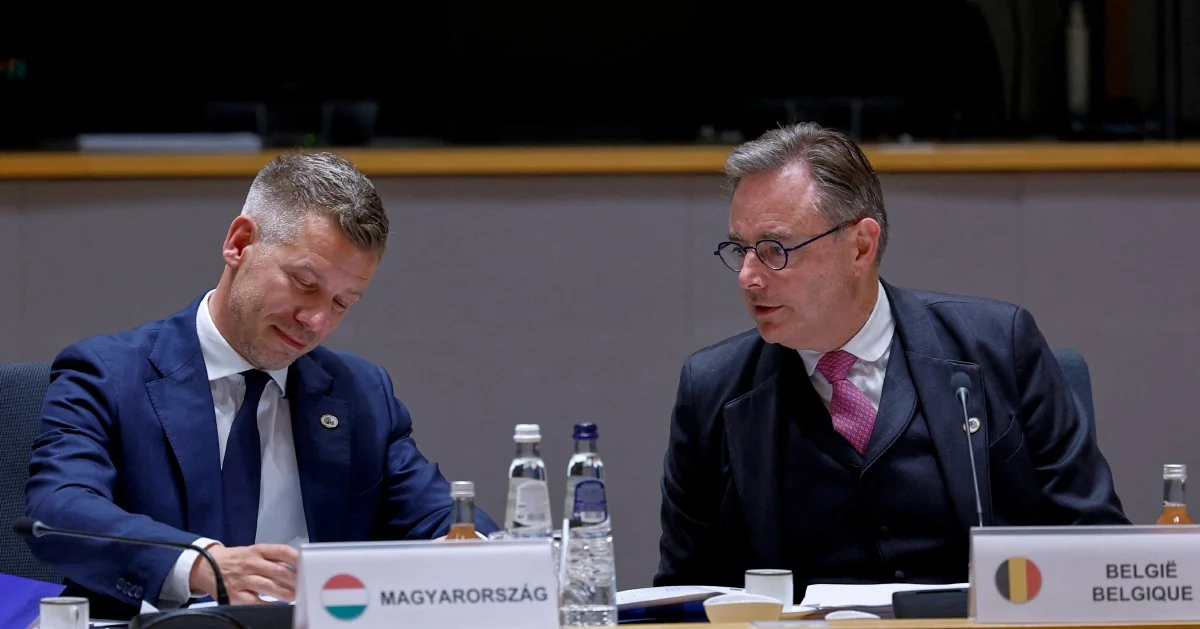
Hungarian lawmakers are preparing to vote on a series of anti-corruption measures on Tuesday, marking a significant step in Prime Minister Peter Magyar's ambitious reform programme designed to restore international confidence in the country's governance and unlock substantial financial support from Brussels that has been held back for months.
The legislative package represents a critical turning point for Hungary, which has faced mounting scrutiny from EU institutions over concerns regarding judicial independence, media freedom, and government accountability. The withholding of funds—a mechanism the EU has increasingly weaponised to enforce democratic standards among member states—has created acute budgetary pressures on Budapest, making the passage of these reforms not merely a symbolic gesture but an economic necessity for the government.
Peter Magyar's administration, relatively new to office, has made tackling corruption a cornerstone of its political messaging, recognising that restoring international credibility is essential for accessing the frozen tranches of EU support. The timing of the parliamentary vote is strategically significant, as it demonstrates to EU decision-makers that Hungary is taking concrete action rather than offering empty promises about institutional reform.
The EU's decision to freeze funding has been contentious within Hungary, with critics arguing that Brussels is overstepping its authority, whilst supporters contend that such measures are justified given documented patterns of governance irregularities. The standoff has effectively placed Hungary in a precarious position, simultaneously seeking to prove its commitment to EU standards whilst managing domestic political sensitivities around the issue of external pressure.
For regional observers, Hungary's situation exemplifies broader tensions between national sovereignty and EU compliance mechanisms. Other Central European states, including Poland and the Czech Republic, have similarly navigated disputes over judicial reform and corruption standards, suggesting that this is not merely a Hungarian problem but rather reflects deeper disagreements about how the EU should enforce its values across disparate member states with different institutional histories and legal traditions.
The specific content of the anti-corruption measures being voted on Tuesday remains crucial to assessing their genuine impact. Symbolic legislation that lacks enforcement mechanisms or real teeth would likely fail to convince EU officials and international observers that substantive change is underway. Conversely, reforms that establish independent oversight bodies, strengthen procurement transparency, and create genuine consequences for misconduct could represent a turning point for Hungarian governance.
From an economic perspective, the stakes are extraordinarily high. Hungary's access to EU funding supports infrastructure development, regional cohesion programmes, and agricultural subsidies that are fundamental to the country's budget. Prolonged exclusion from these resources would force difficult choices regarding public spending and could undermine economic growth in a period when Europe is already facing inflationary pressures and recession concerns.
The success of Magyar's reform agenda will partly depend on implementation and follow-through rather than merely winning parliamentary votes. EU institutions have grown sophisticated in distinguishing between legislative window-dressing and substantive institutional change. Hungarian authorities will need to demonstrate that newly created oversight mechanisms are genuinely independent, that prosecutions of high-level figures proceed without political interference, and that media freedom is respected in practice, not merely guaranteed on paper.
For Southeast Asian readers, Hungary's experience offers instructive lessons about the leverage that multinational bodies can exercise over member states through funding mechanisms. The EU's approach—conditional disbursement tied to governance standards—has become a template that other regional organisations are considering, including ASEAN-affiliated bodies and development banks, as tools for promoting institutional accountability across the region.
The resolution of Hungary's funding dispute will also send signals to other EU members about the seriousness with which Brussels enforces its standards. If the current anti-corruption measures prove sufficient to unlock funds, it may encourage other governments to view reforms as adequate window-dressing. Conversely, if the EU maintains scepticism and demands deeper, more verifiable changes, it will establish a precedent that governance reforms must be genuine and measurable rather than performative.
Magyar's political capital depends significantly on delivering results from the anti-corruption push. If the EU remains unconvinced and continues withholding funds despite parliamentary passage of new legislation, it could undermine domestic support for his reformist agenda and embolden political opponents who argue that engagement with Brussels is futile. The Prime Minister must therefore balance pleasing international audiences with maintaining credibility among Hungarian voters who may view EU pressure with ambivalence.
Looking ahead, observers should monitor not only whether the anti-corruption measures pass on Tuesday but also how rigorously they are implemented over subsequent months. The EU will likely require sustained evidence of reform before releasing the full scope of frozen funds, and this extended process of verification will define the credibility of Magyar's government both domestically and internationally.

