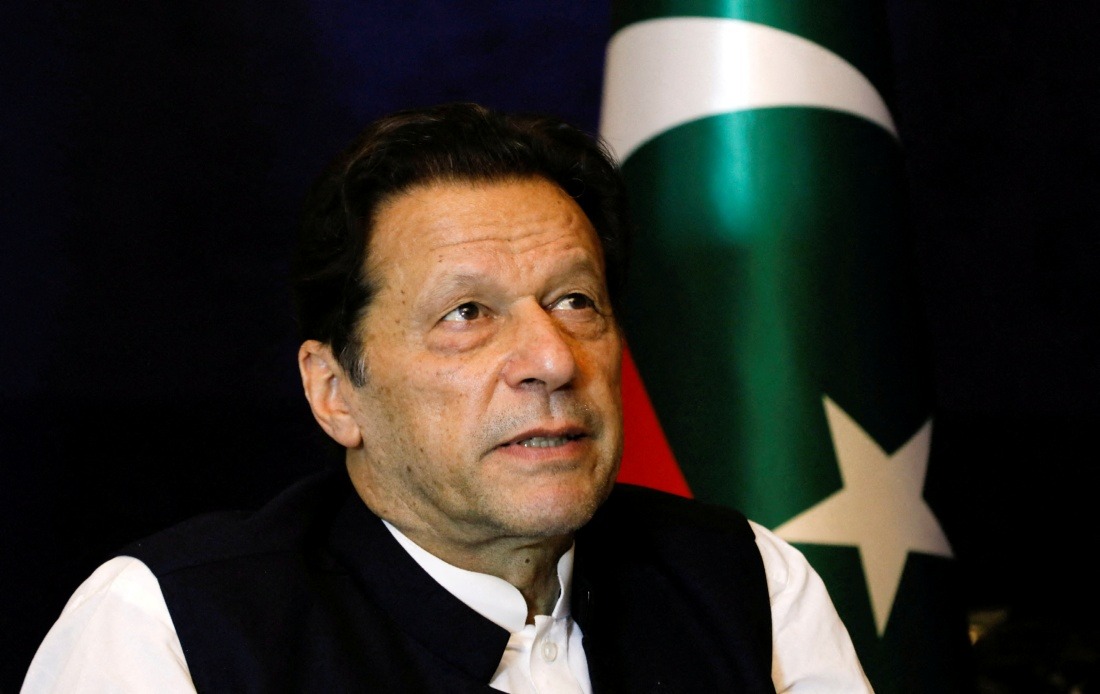
Pakistan's former Prime Minister Imran Khan, the 73-year-old founder of the Pakistan Tehreek-e-Insaf (PTI) party, has been returned to Adiala Jail after completing a court-mandated medical examination in Islamabad. The evaluation, which took place during the intervening night of August 20 and 21, 2026, was conducted under strict security protocols following a Supreme Court directive issued earlier in the week. Khan was transferred back to his prison cell at approximately 5 am local time on Friday, concluding a process that Pakistani authorities say underscores their compliance with judicial oversight of detention conditions.
Information Minister Attaullah Tarar announced the completion of the medical assessment in a statement, confirming that a multidisciplinary team of doctors—including specialists in ophthalmology, cardiology, and general medicine—had thoroughly evaluated the former cricket champion. The examination concluded with medical personnel declaring Khan to be in satisfactory health. The assessment represents a significant procedural moment given Khan's extended incarceration and the intense political sensitivities surrounding his detention, which has drawn international scrutiny and domestic controversy.
The Supreme Court had originally ordered Khan's transfer to Shifa International Hospital in Islamabad for the medical evaluation. However, authorities conducted the examination instead at the Pakistan Institute of Medical Sciences, or PIMS, citing security concerns arising from PTI party activities outside the originally designated facility. Despite this venue change, the government stated that physicians from Shifa International Hospital participated in the examination process, suggesting an attempt to maintain the credibility and scope of the evaluation as envisioned by the court.
Khan's sister, Uzma Khan, was present throughout all stages of the medical examination and treatment, according to Tarar's official statement. This arrangement appears designed to provide family oversight and transparency during a process that might otherwise generate questions about the treatment of a high-profile political detainee. The presence of Khan's sister adds an accountability dimension to proceedings that have been marked by allegations from opposition supporters concerning the conditions of his imprisonment.
The Supreme Court has scheduled the next hearing in Khan's case for September 16, with the judicial body having granted him permission to remain under medical observation at the hospital until that date if deemed necessary. This decision suggests that while authorities have determined Khan's immediate health status, the court intends to maintain jurisdiction over his medical welfare and detention conditions through ongoing reviews. Such judicial involvement in prisoner health matters reflects the prominence of Khan's case within Pakistan's political landscape and the scrutiny his situation attracts.
Khan has occupied a jail cell since August 2023, following multiple convictions across several legal proceedings that both he and his PTI party have consistently characterized as politically motivated. The former world cup-winning cricket captain's detention has become emblematic of what international observers and human rights organizations describe as a pattern of legal weaponization against opposition figures in Pakistan. His imprisonment coincided with his removal from power in 2022, creating a narrative arc that critics argue demonstrates the use of the judiciary as an instrument of political control rather than impartial justice.
The incident reveals the complex interplay between Pakistan's military establishment, judiciary, and civilian political actors. The Supreme Court's intervention to mandate medical evaluations—and the subsequent complications arising from security concerns related to PTI supporter mobilization—illustrates how Khan's case functions as a nexus for broader political tensions. The fact that authorities felt compelled to change the medical venue due to security considerations underscores the volatile nature of Khan's political standing and the depth of popular support he retains despite his incarceration.
For Malaysian and Southeast Asian observers, the Khan situation offers instructive parallels regarding the health and vulnerability of democratic institutions when political competition turns adversarial. The reliance on criminal prosecution to neutralize political rivals, the repeated claims of bias, and the contested legitimacy of convictions represent challenges that regional democracies have grappled with across various contexts. Pakistan's apparent use of multiple simultaneous prosecutions against a single opposition leader reflects strategies sometimes employed elsewhere to isolate and marginalize figures perceived as threats to establishment interests.
The medical examination itself carries significance beyond health assessment. It functions as a public relations exercise demonstrating governmental compliance with judicial orders while simultaneously managing international concerns about detention conditions and prisoner welfare. The carefully documented nature of the examination—with ministerial statements specifying the types of specialists involved, the presence of Khan's sister, and the timeline—suggests a deliberate effort to construct an official narrative of procedural propriety around what remains a contentious detention.
Khan's case continues to generate substantial diplomatic attention, with various countries expressing concerns about due process and the independence of Pakistani courts. The medical examination represents a moment where international pressure and domestic judicial oversight intersect with executive detention authority. Moving toward the September 16 hearing, Khan's legal team and PTI supporters will likely scrutinize any new developments regarding his health status, the conditions of his imprisonment, and the substantive progress of his remaining legal challenges.
The broader implications for Pakistan's political stability remain profound. Khan's detention has energized opposition movements and created cycles of protest and security responses that destabilize governance. His party continues mobilizing supporters despite facing restrictions, suggesting that imprisoning the former prime minister has failed to eliminate his political relevance. As Pakistan navigates multiple institutional crises—including economic instability, security threats, and contested civil-military relations—the Khan situation represents a pressure point where domestic political competition and international scrutiny converge, with potential consequences extending well beyond his individual case.

