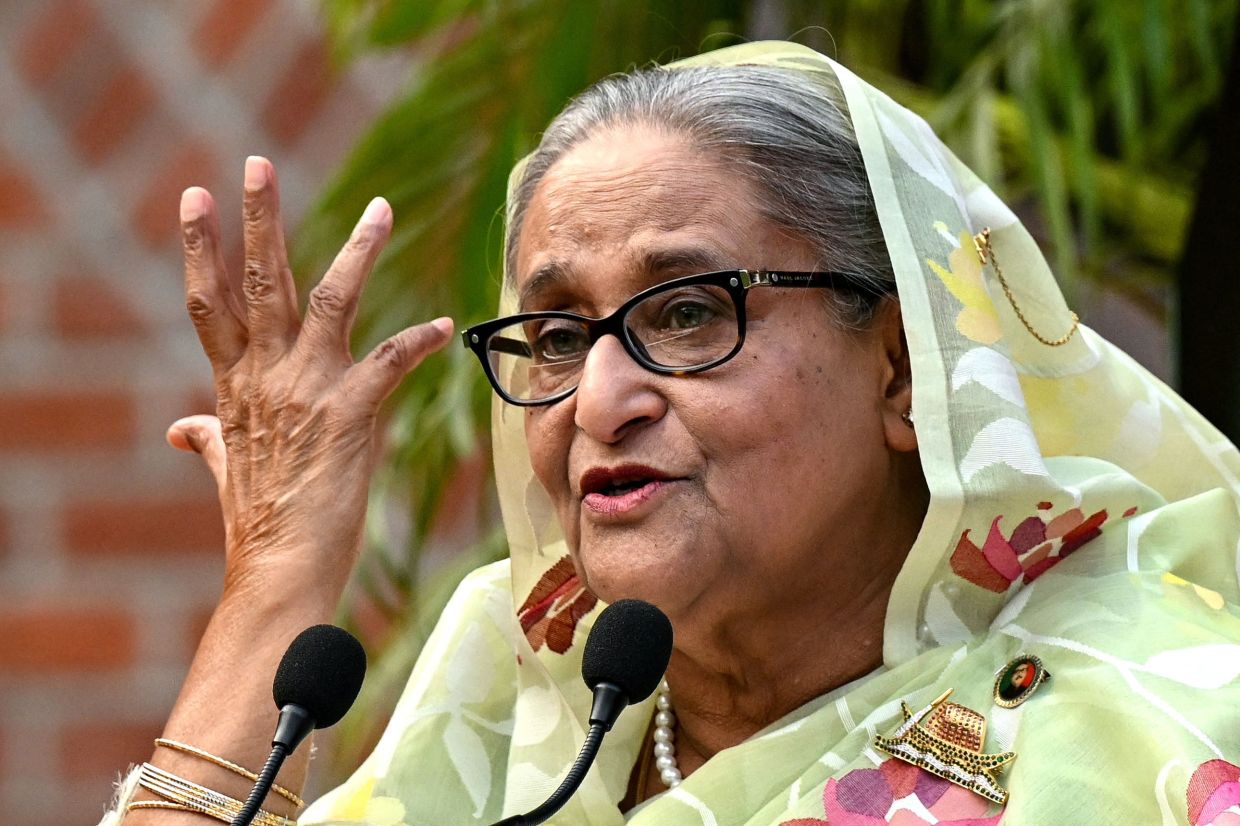
India's government has moved swiftly to distance itself from an upcoming virtual address by exiled Bangladesh former Prime Minister Sheikh Hasina, declaring through its foreign ministry that the event falls entirely under private organisation and carries no official endorsement. The clarification, delivered on Tuesday by Indian foreign ministry spokesperson Randhir Jaiswal, reflects the delicate diplomatic position New Delhi finds itself in as it attempts to maintain balanced relations with both Hasina—who has been granted refuge on Indian soil—and Bangladesh's current administration, which has made clear its displeasure at what it views as political activities by a fugitive operating from Indian territory.
The scheduled address, set to take place on Wednesday from New Delhi via video link through the Foreign Correspondents' Club of South Asia, marks a significant moment for Hasina since her dramatic flight from Dhaka following the student-led uprising that swept her government from power in August 2024. At 78 years old, the former premier has remained largely out of public view during her exile, making this her first public appearance, albeit virtual, since departing Bangladesh. Her participation in the event, which commemorates the second anniversary of the uprising that toppled her administration, underscores her determination to maintain a political voice and presence despite her absence from the country.
Bangladesh's response has been notably stringent, with authorities moving to prevent domestic media outlets from amplifying Hasina's message to local audiences. Information Adviser Zahed Ur Rahman issued a stern warning on Tuesday that any Bangladeshi media organisation that broadcasts, publishes, or publicises Hasina's statements would violate a December 2024 order issued by Bangladesh's International Crimes Tribunal. This tribunal order represents a comprehensive ban extending across traditional and digital platforms, prohibiting the dissemination of Hasina's speeches, statements, interviews, and any audio or video recordings featuring her voice. The restrictions reflect Dhaka's determination to control the narrative surrounding the former prime minister and prevent her from shaping public opinion within Bangladesh itself.
The international dimensions of this dispute highlight the complexity facing South Asian governments in managing exile politics and transnational political activity. Hasina, who was sentenced to death in absentia in 2025 for crimes against humanity related to her government's crackdown on the student demonstrations, has dismissed the conviction as legally invalid. Her resolve to eventually return to Bangladesh appears unshaken, as her aides have indicated plans to exit exile around December and face Bangladesh's courts—a move that would directly challenge Prime Minister Tarique Rahman's government and test how far Dhaka is prepared to go in prosecuting its predecessor. Abu Obaidha Arin, speaking on behalf of Hasina, declared that efforts to silence dissent beyond Bangladesh's borders cannot succeed, suggesting the exiled leadership views the media restrictions as futile attempts at suppression.
The rising tensions between New Delhi and Dhaka over this matter reveal the broader strains that have characterised bilateral relations since Hasina's ouster. Bangladesh had specifically requested that India clarify its position on the address, warning that permitting political activities by a fugitive could undermine the incremental progress both nations have made toward improving ties. State Minister for Foreign Affairs Shama Obaed Islam stressed that Bangladesh has repeatedly raised concerns with India about Hasina and other Awami League leaders conducting political activities from Indian soil. These complaints suggest Dhaka views India's hospitality toward the Awami League leadership as more than humanitarian refuge—potentially as tacit political support that complicates Bangladesh's domestic consolidation of power.
India's official response, delivered through Jaiswal's measured statement that the government has no involvement and endorses no views that may be expressed at the forum, appears designed to satisfy both constituencies. By emphasising the private nature of the event's organisation, New Delhi sidesteps direct responsibility while maintaining its position as a sanctuary for political refugees. However, the very fact that India felt compelled to issue such a clarification suggests that Bangladesh's diplomatic pressure has registered. The statement attempts to establish a clear boundary: India will not officially sponsor or endorse Hasina's political activities, yet neither will it prevent private organisations from hosting her speech on Indian soil.
The episode also illuminates the broader question of how exiled political leaders maintain relevance and influence while separated from their home countries. Hasina's planned virtual appearance, though limited in format, serves multiple purposes: it reasserts her continued leadership of the Awami League, it stakes her claim to future political legitimacy, and it demonstrates that suppression efforts across borders cannot entirely silence her voice. For her supporters, the address represents defiance against what they may view as a politically motivated prosecution. For Bangladesh's new authorities, it encapsulates a persistent challenge—how to govern effectively when a ousted leader retains significant support networks and refuses to accept diminishment.
The broader context of this dispute involves significant institutional and personal stakes. Hasina's threatened return by December would force Bangladesh's government to decide whether to actually execute the death sentence or negotiate some form of political settlement. The fact that her aide explicitly references plans to present themselves in court suggests she may be preparing a legal challenge to the tribunal's jurisdiction or findings. Such moves could destabilise Bangladesh's political landscape and potentially reopen divisions between the Awami League and the current administration. The media ban, therefore, serves not merely symbolic purposes but also attempts to prevent the consolidation of anti-government sentiment through exposure to Hasina's narrative.
For Malaysian and broader Southeast Asian audiences, this situation offers instructive lessons about the persistence of exile politics in South Asia and the diplomatic complexities that arise when neighbouring states must manage the sanctuary of political opponents. The episode demonstrates how digital connectivity allows exiled leaders to maintain public profiles despite geographic separation and official restrictions. It also underscores the challenges facing governments attempting to manage both their relationships with neighbouring states and their internal political management when predecessors remain active politically from abroad.
As both India and Bangladesh navigate these tensions, the underlying question remains unresolved: whether Hasina will genuinely attempt to return and face trial as she has indicated, or whether her exile will extend indefinitely. The bilateral relationship between the two countries, which showed recent signs of stabilisation under Prime Minister Tarique Rahman's government following February's election, continues to be complicated by the outstanding presence of the Awami League leadership on Indian soil. The December 2024 deadline mentioned in her aide's statement will prove crucial in determining whether this emerging diplomatic impasse becomes a more entrenched source of bilateral friction.

