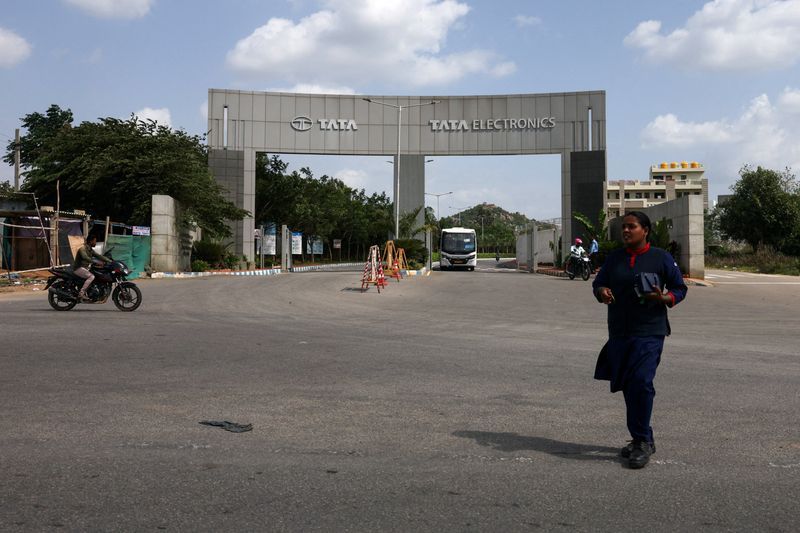
India's Ministry of Electronics and Information Technology has initiated a formal investigation into a significant cybersecurity breach at Tata Electronics, one of Apple's principal manufacturing partners in the region. The incident, which went public in early July, exposed confidential documentation related to Apple's upcoming iPhone 18 Pro models, prompting India's IT secretary S. Krishnan to confirm on Thursday that authorities are actively examining the matter. The breach represents a substantial security incident for a supplier integral to Apple's global manufacturing ecosystem, highlighting vulnerabilities within India's role as a critical hub for smartphone assembly.
The compromised data includes materials that were subsequently distributed across the dark web by a ransomware syndicate, exposing far more than typical corporate espionage. Among the stolen files are detailed component lists specifying which suppliers are manufacturing particular parts destined for the iPhone 18 Pro and Pro Max variants. This information is particularly sensitive because Apple maintains strict confidentiality regarding its supplier relationships, deliberately withholding such details from its publicly available supplier database. The exposure effectively maps Apple's supply chain architecture for devices that are not yet scheduled for commercial release, potentially giving competitors valuable intelligence about manufacturing strategy and component sourcing decisions.
Photographic documentation of the iPhone 18 Pro models themselves was also among the materials posted online, providing unauthorized visibility into the industrial design and physical specifications of unreleased devices. This type of visual intelligence can prove valuable to competitors seeking to understand Apple's design direction and engineering choices before official product announcements. The breach occurred months before Apple's anticipated September launch of these devices, creating a window during which sensitive product information remains exposed to potential misuse by competitors or malicious actors.
Tata Electronics confirmed the incident and has since engaged global forensic consultants to conduct a comprehensive security audit of its systems. This response indicates the severity with which Tata is treating the breach, recognizing that restoring confidence in its security infrastructure is essential to maintaining its position as a trusted supplier to major technology firms. The same ransomware group responsible for the Tata breach has also released stolen documents from other technology sector giants, including Tesla, Qualcomm, and TSMC, suggesting a coordinated campaign targeting multiple nodes within the global semiconductor and electronics supply chain.
India's Computer Emergency Response Team, the nation's primary cybersecurity coordination agency, has been formally notified of the incident and is now involved in the government's investigative response. This engagement underscores how data breaches affecting multinational corporations operating in India now constitute matters of national security interest, particularly when those corporations play pivotal roles in global manufacturing networks. The involvement of India's official cybersecurity body signals that New Delhi is treating the incident as requiring state-level attention rather than permitting it to remain purely a matter between private corporations.
The timing of this breach during the lead-up to Apple's next-generation product cycle creates particular complications for the company. iPhone launches involve intricate choreography of supply chain coordination, marketing strategy, and regulatory preparation across multiple countries. Early exposure of component specifications and supplier relationships can disrupt carefully planned market positioning and may provide regulatory bodies in various jurisdictions with information that could influence approval processes or market access strategies. For India specifically, which aspires to become a global manufacturing hub for consumer electronics, the breach raises questions about the security posture of domestic suppliers tasked with handling confidential international business secrets.
Tata Electronics' handling of the forensic investigation and subsequent remediation efforts will likely influence whether multinational technology companies continue expanding their manufacturing presence in India. Companies contemplating significant supply chain investments in the region will evaluate Tata's response to determine whether Indian suppliers can adequately protect their most sensitive intellectual property and business information. The incident thus extends beyond immediate financial or competitive concerns to encompass broader questions about India's infrastructure readiness for hosting advanced manufacturing operations requiring maximum data security.
Apple's reliance on Tata and other Indian suppliers reflects the company's broader strategy to diversify manufacturing capacity away from concentrations in China and Taiwan. India offers distinct advantages including large technical workforces, government incentives for electronics manufacturing, and geographic hedging against geopolitical tensions in East Asia. However, this breach demonstrates that expanding into new manufacturing regions introduces corresponding security challenges that must be carefully managed. The company has built extraordinary operational security protocols around its product development and supply chain management; this incident suggests those protocols face novel challenges when extended across India's cybersecurity landscape.
The ransomware group's decision to target these specific documents and distribute them publicly reflects evolving threat tactics within the cybercriminal ecosystem. Rather than attempting to sell stolen data exclusively to competitors, the group maximized exposure by posting material on dark web forums accessible to any interested party. This approach increases reputational damage to affected companies and creates cascading security concerns as exposed information becomes potentially actionable by numerous parties simultaneously. For Apple, this means the leaked supplier relationships and component specifications could influence competitive decisions across the entire global smartphone industry.
Looking forward, this incident will likely accelerate discussions within India's government about establishing more rigorous cybersecurity standards for suppliers working with multinational corporations. Current regulations may prove insufficient to protect the confidentiality requirements demanded by major technology manufacturers. Establishing credible security frameworks could help India retain and expand its share of global electronics manufacturing, but requires coordination between government agencies, domestic companies, and international partners. The breach serves as a catalyst for examining whether India's existing cybersecurity infrastructure adequately serves the nation's aspirations to become a global manufacturing powerhouse.

