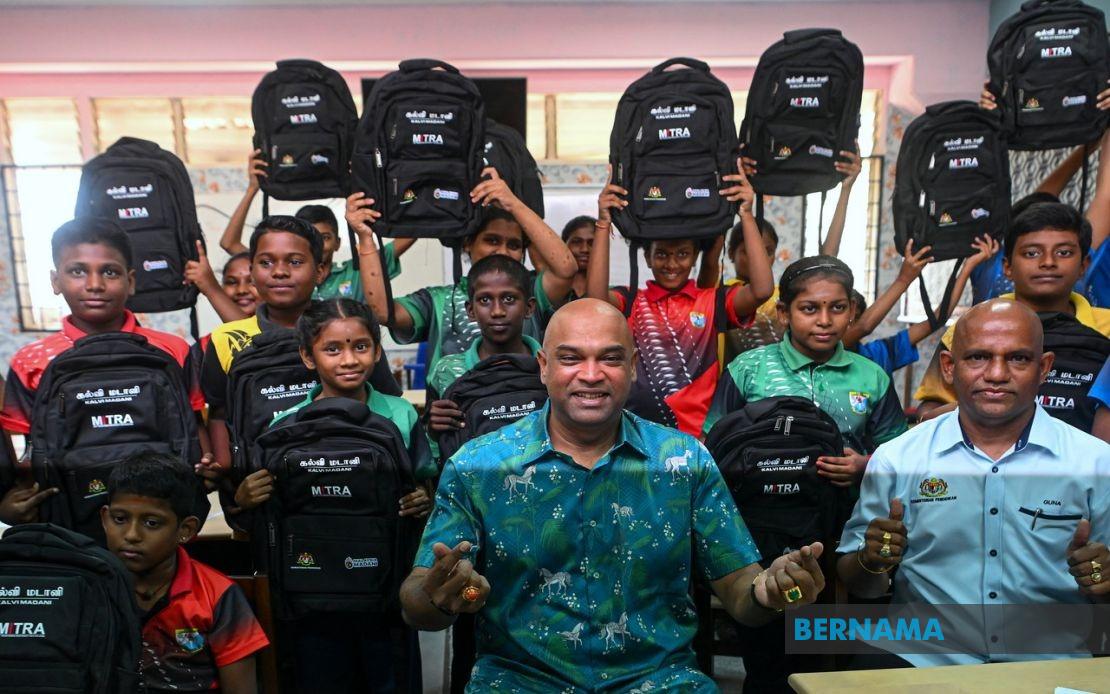
The strength of Pakatan Harapan's support among the Indian community in Negeri Sembilan will be a critical measure of the coalition's overall fortunes in Saturday's state election, according to PKR vice-president Datuk Seri R. Ramanan. Speaking in Seremban on July 28, Ramanan dismissed suggestions by Barisan Nasional's Malaysian Indian Congress that Indian voters are naturally more inclined towards the BN, insisting instead that actual engagement with PH activities tells a more authentic story about community sentiment.
Ramanan's remarks come as the two major coalitions vie for dominance in what has become a closely watched electoral contest. The Human Resources Minister and Sungai Buloh MP challenged observers to look beyond rhetorical claims and examine the tangible evidence of public participation. The turnout and enthusiasm evident at PH-organised events, he argued, provides a more reliable barometer of voter inclination than political posturing from rival parties. This grounding in grassroots engagement reflects the coalition's broader strategy of demonstrating governance effectiveness through direct community interaction rather than merely making electoral promises.
A significant moment in this engagement strategy will occur when Prime Minister Datuk Seri Anwar Ibrahim meets directly with Indian community representatives. Scheduled for the day following Ramanan's comments, this meeting is designed to provide voters with an unfiltered impression of the government's leadership and its responsiveness to community concerns. By creating these face-to-face opportunities, PH aims to consolidate support among a demographic that has historically swung between major coalitions depending on prevailing economic and social conditions.
Ramanan's emphasis on programme response reflects a broader reality in Malaysian politics: voter sentiment can be volatile and difficult to predict. He cautioned against overconfidence based on analyses from political experts or rival parties' assertions. The statement appears directed at commentary from observers who have suggested that Barisan Nasional and Perikatan Nasional would likely emerge victorious in Negeri Sembilan. These forecasts, while based on academic analysis, may not account for the specific political dynamics at play in the state.
The distinction Ramanan drew between the Johor state election and the Negeri Sembilan contest is particularly instructive. While Johor presented a formidable challenge for PH, with its own entrenched political structures and voter preferences, Negeri Sembilan operates under fundamentally different political conditions. Each state possesses unique demographic compositions, historical voting patterns, and local concerns that shape electoral outcomes. What worked as a prediction in one context cannot be mechanically applied to another without accounting for these variations.
The Indian community represents a significant voting bloc in Malaysian elections, comprising roughly eight per cent of the national population but concentrated in certain urban and semi-urban constituencies where their influence can be decisive. In Negeri Sembilan, this community's preferences could prove consequential in multiple seats, making Ramanan's focus on demonstrating government responsiveness strategically sound. The community has historically been a swing vote, shifting between BN and opposition coalitions based on perceptions of economic opportunity and equitable treatment.
With 867,151 eligible voters registered to participate in Saturday's election, every significant demographic group matters to the final outcome. The Indian community, though smaller in raw numbers compared to Malay and Chinese voters, occupies important positions in several constituencies. Their participation rates and preferences can determine margins in closely contested seats, potentially swinging overall state control. This reality explains why both PH and BN invest considerable effort in messaging directly to this constituency.
Ramanan's confidence in grassroots support signals that PH believes its governance record and policy initiatives have resonated with Indian voters. The coalition's approach has emphasised inclusive economic policies, enhanced representation in government positions, and targeted development programmes aimed at addressing longstanding community concerns. Whether these efforts have genuinely converted sentiment into reliable electoral support remains the central question as polling day approaches.
Predictions from political analysts, including commentary from academics like Dr Ong Kian Ming of Taylor's University, provide valuable perspective but cannot be treated as guarantees. Electoral surprises occur regularly in Malaysia, often driven by factors that analytical models struggle to capture—local grievances, late-breaking campaign developments, or unexpected shifts in voter mobilisation. The 2018 general election demonstrated how conventional wisdom about voter behaviour can be dramatically overturned by authentic shifts in public mood.
The upcoming meeting between Anwar and the Indian community represents more than symbolic engagement; it offers a crucial opportunity for the coalition to directly address community concerns and demonstrate leadership accessibility. The quality of this interaction, and how it is communicated through community networks and media coverage, could meaningfully influence voting patterns among Indian voters who remain undecided or are reconsidering their political allegiance.
Looking forward to Saturday's polls, the contest in Negeri Sembilan encapsulates broader tensions within Malaysian politics. The coalition that better succeeds in translating grassroots engagement into sustained voter loyalty will likely emerge victorious. For Ramanan and PH, the Indian community's response to government programmes will serve as both a confidence indicator and a test of whether direct engagement can overcome the structural advantages that Barisan Nasional possesses in certain states.

