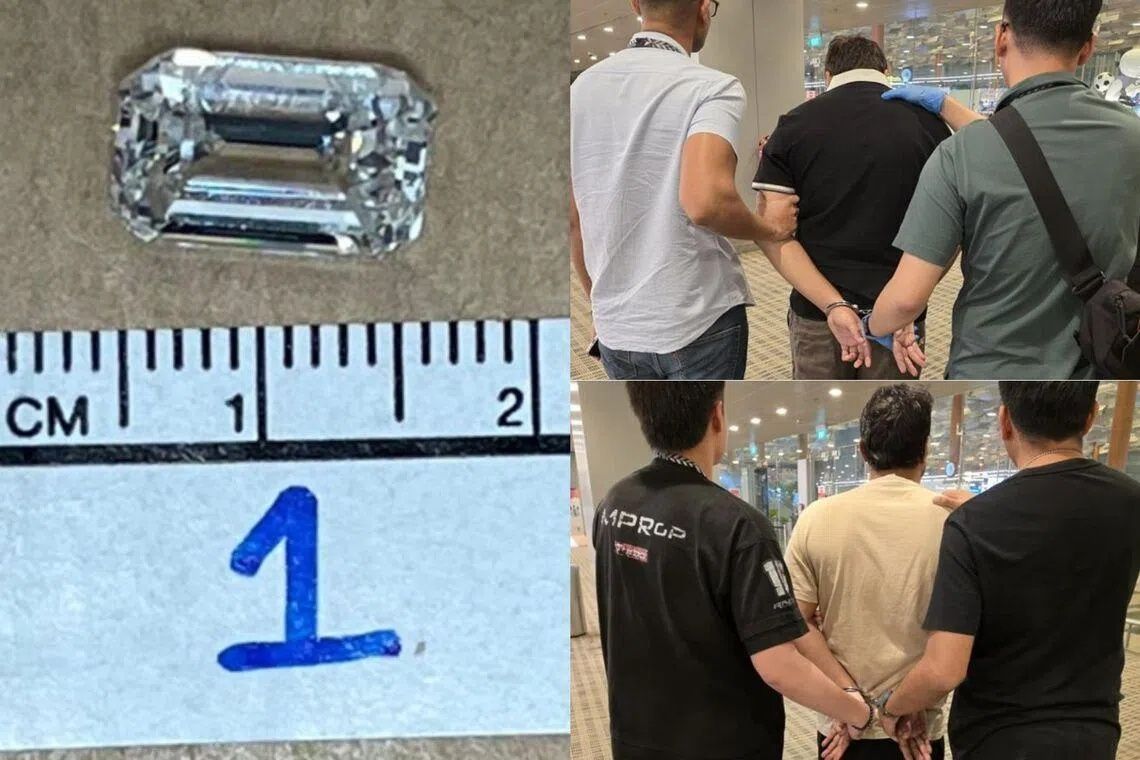
A meticulously planned theft unravelled within hours when Singapore's border authorities intercepted two Indian nationals attempting to flee with a nearly S$200,000 diamond concealed in one man's mouth. Mangroliya Manojkumar Kurjibhai, aged 41, received a sentence of two years, two months and two weeks' imprisonment on Friday, July 17, after entering a guilty plea to the theft charge. His accomplice, Serasiya Milan Ramnikbhai, aged 30, remains awaiting trial. The audacious heist at Dianoche jewellery store in Kreta Ayer Road, located in Chinatown, demonstrates both the sophistication of transnational jewellery theft operations and the effectiveness of Singapore's security apparatus in stopping criminals at points of departure.
The duo's criminal operation began long before their arrival in Singapore, with investigators uncovering extensive premeditation that crossed international boundaries. According to evidence presented in court by State Prosecuting Officer Yip Cheng Yee, the two men organised the commission of a counterfeit diamond while still in India, engineering the fake gem to match not only the physical dimensions of the target stone but also its serial number. This level of forethought suggests the pair may have had advance knowledge of the specific diamond they intended to steal, though court documents remained silent on how they identified and located their target. The planning extended to their travel logistics, with both men arranging return flights to India scheduled for the same evening they would commit the theft, indicating they calculated an escape window of just hours.
On June 19, the two tourists entered Dianoche's showroom at approximately three o'clock in the afternoon, with Serasiya concealing the counterfeit diamond inside his mouth. Mangroliya initiated the theft by requesting to examine a 4.95-carat diamond valued at US$154,000, equivalent to more than S$199,000 at the time. Rather than completing a straightforward transaction, Mangroliya engaged the sales manager in extended conversation, repeatedly asking to view additional items from the store's inventory. Each request necessitated the manager leaving his position, creating the window of opportunity the conspirators required. During one such absence, Mangroliya instructed Serasiya to execute the switch, whereupon Serasiya expelled the fake diamond and transferred the genuine gemstone into his mouth. The pair then casually informed the manager they would consider their purchase and departed the establishment, taking the diamond with them.
The theft initially succeeded in evading immediate detection, as the fake diamond appeared sufficiently convincing to occupy the manager's attention briefly. However, closer examination using an optical gemstone identification machine revealed the counterfeit nature of the stone left behind. By this point, the thieves had already checked out of their hotel and proceeded to Changi Airport to catch their evening flight. The coordinated precision of their plan suggested this was not an opportunistic crime but rather a professionally executed operation. Yet the speed at which they attempted to exit Singapore ultimately proved their undoing. Airport security apprehended both men at Changi Airport Terminal 3 around nine o'clock that evening as they moved through immigration clearance. Officers recovered the authentic diamond from Serasiya's haversack, confirming their guilt before either man could board an aircraft.
For Malaysian readers and regional observers, this case illustrates the vulnerability of jewellery retail operations to organised theft despite security measures. The Chinatown incident demonstrates that even establishments equipped with CCTV surveillance and trained staff can fall victim to perpetrators who understand psychological manipulation and timing. The reliance on a sales manager's distraction rather than direct confrontation or violence represents a calculated approach that minimises risk to the perpetrators while maximising their operational success rate. This technique has echoes across Southeast Asia, where jewellery stores remain attractive targets for cross-border criminal networks that view regional airports as their primary exit points.
The legal consequences facing Mangroliya reflect Singapore's stringent approach to theft crimes. Under the relevant statute, persons convicted of theft face potential imprisonment of up to seven years alongside monetary fines. Mangroliya's sentence of two years, two months and two weeks, while substantially below the maximum threshold, demonstrates the judiciary's recognition of the premeditation involved and the substantial value of the stolen property. The fact that Serasiya remains uncharged despite his central role in the actual theft suggests prosecutorial discretion may be exercised differently once his case reaches resolution, potentially reflecting his age or perceived level of culpability. His trial outcome remains pending, adding uncertainty to the final accounting of this operation.
This case carries significance for broader Southeast Asian security frameworks and the tourism industry across the region. The incident underscores how organised criminal networks exploit international travel corridors to execute carefully planned financial crimes. For Malaysia, which maintains substantial tourist flows through its own airports and shopping districts, the parallels are evident. Jewellery retailers operating in tourist-heavy areas must confront the reality that sophisticated perpetrators will invest considerable resources in planning theft operations. The willingness of the Indian nationals to commission a counterfeit diamond specifically matched to their target indicates the involvement of organised networks with access to specialised counterfeiting capabilities and reliable intelligence about high-value inventory in distant locations.
The rapid interdiction at Changi Airport also highlights the importance of intelligence sharing and coordinated border security. Singapore's authorities operated with sufficient situational awareness to identify these two individuals among thousands of departing passengers, suggesting either direct communication from the jewellery store or systematic monitoring protocols that flagged their movements. Regional cooperation frameworks allowing Malaysia's authorities to benefit from similar intelligence networks could enhance the capacity of Malaysian jewellery retailers and airports to identify and intercept similar operations. The fact that the crime was solved within hours rather than remaining unsolved demonstrates what focused investigation and coordination can achieve when criminal activity is identified at international boundaries.
Looking forward, this case may prompt jewellery retailers across Southeast Asia to reassess their vulnerability to bait-and-switch operations. The psychological element of the crime—inducing the sales manager to repeatedly leave his position through seemingly legitimate inquiries—proves as important as the physical execution of the switch itself. Enhanced protocols requiring multiple staff presence during high-value transactions, stricter handling procedures for premium inventory, and improved staff training in recognising suspicious customer behaviour patterns may become industry standards. Technology solutions, including real-time gemstone verification devices and enhanced CCTV systems with automated alerts, could serve as additional layers of protection.
The case also reflects evolving patterns in transnational organised crime, where operatives increasingly source counterfeit items of sophistication sufficient to temporarily fool trained professionals. The fact that the fake diamond matched the serial number of the genuine stone suggests access to detailed specifications that would normally be confidential. This raises questions about information security within the jewellery trade and whether insider knowledge facilitated the crime. Whether Dianoche experienced a security breach or the perpetrators relied on publicly available information remains unclear from available court documents. Regardless, the incident underscores the multi-faceted nature of modern retail crime, requiring responses that address not only physical security but also information security and staff training.

