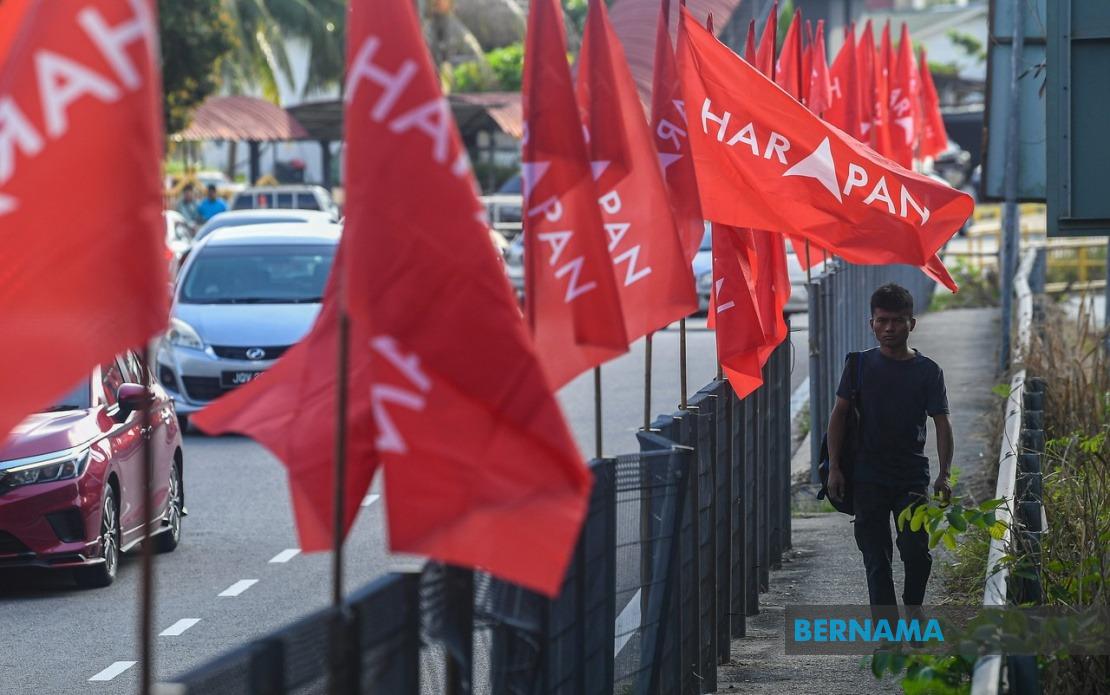
The Indian community in Johor, though numerically smaller than other demographic groups, represents a pivotal voting bloc in the state's competitive legislative districts, according to Parti Keadilan Rakyat (PKR) Central Leadership Council member Dr Gunaraj George. Speaking ahead of the Johor state election scheduled for July 11, the Sentosa Assemblyman emphasized that minority communities can wield decisive influence across approximately 25 mixed and marginal constituencies, where victory margins typically prove narrow and shifting voter preferences can alter outcomes decisively.
Dr Gunaraj framed the forthcoming poll as a referendum on Malaysia's political trajectory rather than a routine electoral exercise. He presented voters with a binary choice: endorsing the continuation of Pakatan Harapan's (PH) MADANI reform agenda with its demonstrated track record of institutional reform and inclusive governance, or reverting to the political unpredictability that characterized earlier administrations. This framing carries particular resonance given Malaysia's history of political instability and coalition fragmentation, which have repeatedly disrupted policy implementation and investor confidence across the region.
The PKR leader contextualized his appeal within the broader regional economic landscape, pointing to compounding global uncertainties, escalating geopolitical tensions, and mounting cost-of-living pressures affecting households nationwide. These macroeconomic headwinds render political predictability increasingly valuable, he argued, as businesses and foreign investors require stable governance frameworks to justify capital deployment. Economic stagnation resulting from prolonged political turmoil would disproportionately harm working-class communities, including the Indian population, through reduced job creation and suppressed wage growth.
Central to Dr Gunaraj's pitch were tangible allocations directed toward Indian community institutions and welfare programmes during the MADANI Government's tenure. Most prominently, the Malaysian Indian Transformation Unit (MITRA) received a substantial injection, with annual allocation rising from RM100 million to RM150 million—a level that had remained static under previous administrations for nearly a decade. Prime Minister Datuk Seri Anwar Ibrahim has signaled further progressive increases to align funding with contemporary requirements, acknowledging the insufficiency of historical budgetary levels relative to evolving community needs.
Beyond headline funding figures, Dr Gunaraj highlighted structural improvements in MITRA's operational governance, emphasizing enhanced transparency, systematic monitoring, and parliamentary accountability mechanisms. These institutional refinements address longstanding concerns about fund deployment efficiency and targeted benefit distribution, reflecting broader MADANI commitments to anti-corruption architecture and governance professionalization that extend beyond ceremonial reform rhetoric.
Educational support mechanisms have similarly expanded under the current administration. Tamil National-Type Schools (SJKT) received augmented allocations, addressing chronic underfunding that had constrained physical infrastructure development and pedagogical resource provision at these institutions. Technical and Vocational Education and Training (TVET) programmes underwent expansion to broaden pathways for students from economically disadvantaged backgrounds, many within the Indian community, to acquire market-relevant skills and access employment at semi-professional and technical grades.
The government's religious and cultural support framework additionally underwent refinement, with maintenance assistance directed toward temples and other places of worship across denominational categories. This represents a departure from previous paradigms where such allocations either lacked systematization or faced inconsistent implementation, allowing community institutions to undertake essential preservation and renovation works previously deferred due to budgetary constraints.
Cash transfer programmes introduced during the MADANI period—specifically Sumbangan Tunai Rahmah (STR) and Sumbangan Asas Rahmah (SARA)—have provided direct income support to households below specified income thresholds, ameliorating acute financial pressures for vulnerable segments within the Indian community. These initiatives complemented microcredit and small enterprise development support targeting marginalized entrepreneurs seeking capital for business establishment or expansion, addressing structural exclusion from conventional banking sector financing.
Dr Gunaraj's appeal carries implications extending beyond Johor's boundaries, as state electoral outcomes frequently shape national coalition dynamics and establish precedents influencing subsequent federal political calculations. A decisive PH victory in Johor would consolidate the ruling coalition's parliamentary majority while signaling voter endorsement for MADANI governance continuity. Conversely, setbacks in Johor could embolden opposition mobilization and destabilize PH's internal cohesion, potentially reopening destructive succession contests and factional realignments.
The composition of Johor's electorate renders Indian community mobilization strategically significant beyond raw demographic proportions. Mixed constituencies incorporating substantial Indian populations often feature fragmented voter preferences across multiple communities, where minority group turnout and directional voting can prove decisive in plurality-based single-member district contests. Campaign messaging aimed at demonstrating tangible policy achievements targeting specific communities represents a sophisticated electoral strategy acknowledging these ground-level realities.
For Malaysian readers, the Johor contest illustrates broader dynamics within Malaysia's consociational democracy, where coalition-building across ethnic and religious lines remains fundamental to governmental legitimacy and policy implementation. Pakatan Harapan's explicit outreach to Indian voters acknowledges their electoral significance while implicitly recognizing that MADANI governance requires demonstrated commitment to inclusive development benefiting all communities rather than majoritarian concentration.
The upcoming vote provides Indian voters with concrete metrics for evaluating governmental performance—quantifiable budget allocations, programme beneficiary numbers, infrastructure improvements—rather than abstract pledges. This empirical foundation enables informed electoral choice grounded in lived experience and measurable policy outcomes, particularly salient given historical precedents where minority communities received electoral attention concentrated within campaign cycles rather than sustained policy engagement.
Pakatan Harapan contests all 56 Johor state seats in the July 11 election, with outcomes determining whether the coalition consolidates its recent federal comeback or faces erosion in a strategically important state that serves as economic gateway to Singapore and ASEAN's broader commercial network.

