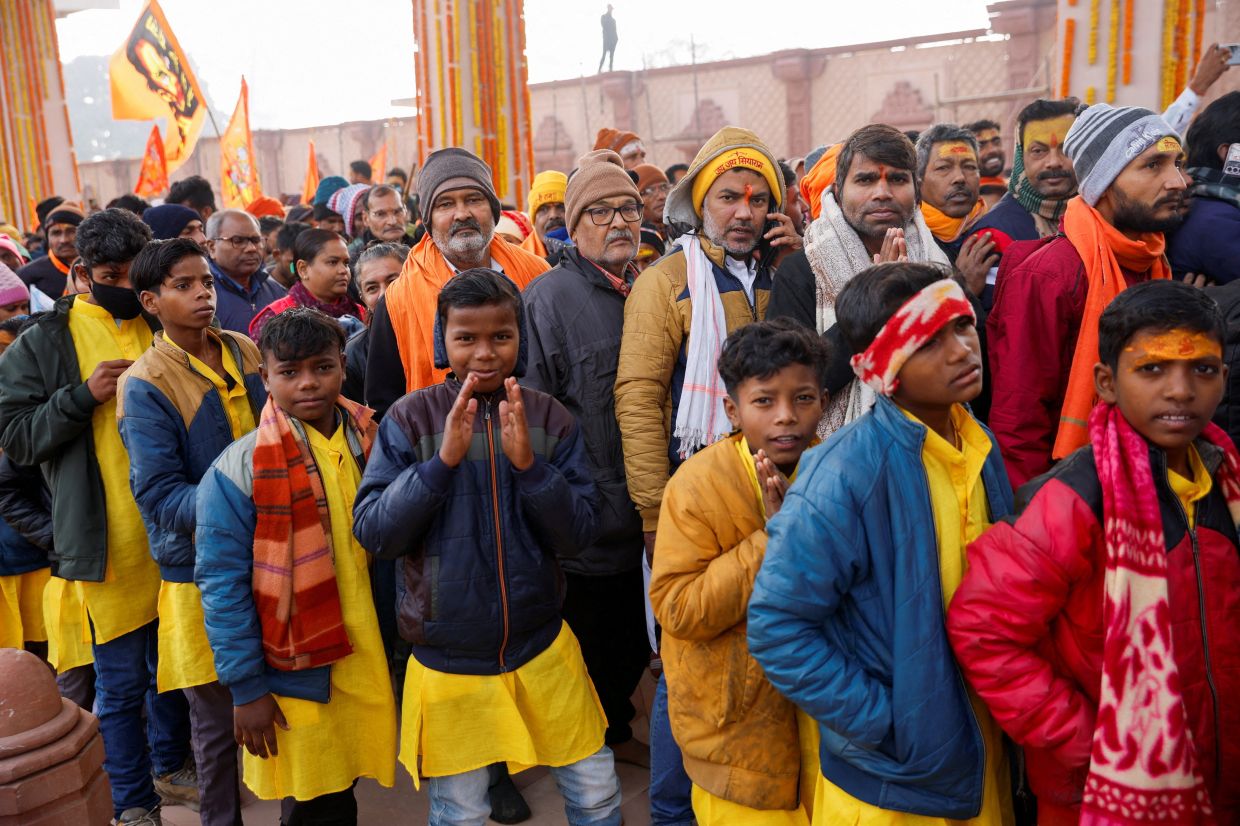
An investigation into allegedly misappropriated donations at the Ram temple in Ayodhya has cast uncomfortable light on the financial management practices of India's most significant religious institutions. Law enforcement launched a probe in June and has arrested eight individuals connected to the handling of offerings at the northern shrine, with preliminary estimates suggesting losses could exceed 30 million rupees, equivalent to approximately US$314,000. The case has become a flashpoint in a broader conversation about how temples, many functioning on corporate-scale operations, safeguard the contributions entrusted to them by millions of devotees across South Asia.
For ordinary worshippers, the breach represents a profound betrayal of faith. Ashok Prasad Kushwaha, an auto-rickshaw driver from Delhi who has made three pilgrimages to the Ram temple in as many years, articulated the emotional weight of the scandal. He explained that devotees contribute regardless of their financial circumstances, viewing their donations as participation in divine work. When such hard-earned contributions vanish through negligence or theft, the impact transcends mere monetary loss—it strikes at the spiritual foundation upon which temple-devotee relationships rest. This emotional dimension adds particular gravity to what might otherwise be dismissed as a standard embezzlement case.
The Ram temple incident represents merely the latest chapter in a troubling pattern. Previous controversies have engulfed major pilgrimage destinations including the Badrinath shrine and Tirumala Tirupati Devasthanams, an institution commanding assets valued at approximately US$31 billion and ranked among the world's wealthiest temple trusts. The frequency of these scandals suggests not isolated criminal acts but rather systemic deficiencies embedded within how large religious organizations operate. As these institutions have evolved into sprawling enterprises managing budgets rivalling those of substantial corporations, their administrative infrastructure has failed to evolve alongside their financial responsibilities.
Hindu activist and scholar Rahul Easwar, whose family lineage includes a former chief priest at Kerala's prominent Sabarimala temple, identifies the fundamental problem as organisational rather than merely criminal in character. He argues that institutional opacity and the absence of meaningful accountability mechanisms create environments where misappropriation flourishes. His assessment reveals that the challenge extends beyond individual dishonesty to encompass structural governance failures. Easwar advocates for comprehensive reforms including mandatory donation receipts, computerised accounting systems, sophisticated CCTV infrastructure focused on donation processing zones, and genuinely independent external oversight—measures that have become standard in comparable large organisations across both profit and non-profit sectors.
Examination of the Ram temple situation specifically reveals vulnerabilities in operational procedure and security. The accused individuals allegedly exploited inadequate counting protocols and surveillance blind spots within the donation management process. These gaps suggest that the temple's administrative systems, despite overseeing the collection and safeguarding of substantial resources, had not implemented protections commensurate with the scale of financial activity occurring daily. The fact that such oversights persisted at a facility that inaugurated in 2024 under the watch of Prime Minister Narendra Modi and has achieved iconic status within Hindu communities underscores how recently these institutions have scaled up operations without corresponding investment in governance infrastructure.
The Ram temple's trajectory illuminates the pace of change affecting India's religious sector. Since its formal inauguration two years ago, the temple has attracted approximately 90,000 daily visitors, each potentially contributing cash, gold, silver ornaments, and other valuables. This volume generates an essentially continuous stream of incoming donations requiring secure handling, counting, verification, and storage. Prior to opening, the temple's construction had been underwritten by a nationwide fundraising campaign that mobilised approximately US$341 million across Indian communities, demonstrating the capacity of religious institutions to marshal extraordinary financial resources.
The broader economic context surrounding India's temple sector deserves consideration by Malaysian policymakers and religious institution administrators across Southeast Asia. Market analysis by consultancy firm IMARC valued India's religious and spiritual economy at US$70.14 billion in 2025, with projections reaching US$135.41 billion by 2034. These figures underscore that religious institutions operate within increasingly substantial financial ecosystems, commanding resources that demand professional-grade oversight mechanisms. The scale of projected growth means that governance shortcomings will only expand in consequence unless addressed preemptively.
Governance fragmentation compounds these challenges significantly. Legal scholar Sonam Chandwani observes that India's religious institutions operate under a patchwork of overlapping regulatory frameworks and tax regimes, with no unified national standard prescribing consistent financial transparency requirements across all religious organisations. This regulatory inconsistency permits wide variation in accountability standards depending on an institution's jurisdiction, religious tradition, and historical precedent. The absence of a coherent national framework means religious institutions can claim legitimacy for operating under dramatically different levels of financial disclosure than peers, creating competitive disadvantage for organisations attempting voluntary reform.
Special attention deserves the challenge posed by mass pilgrimage events such as the Kumbh Mela festivals, which periodically attract millions of devotees and generate enormous volumes of offerings within compressed timeframes. Rahul Easwar highlights these occasions as particularly prone to management difficulties, given the scale of people, the velocity of transactions, and the compressed operational window. The logistical complexity of processing donations from crowds numbering in tens of millions creates distinct vulnerabilities that routine daily operations at static temples may not fully prepare administrators to address.
Political analyst Anurag Naidu articulates a perspective increasingly shared among governance experts: temples operating at scale have fundamentally transcended their historical identity as purely devotional spaces. Instead, they function as major institutional actors requiring administrative systems, financial controls, and independent oversight comparable to large public institutions. This reconceptualisation of temples as hybrid organisations—simultaneously spiritual centres and significant economic entities—demands corresponding evolution in governance philosophy and practice. Religious administrators must accept that institutional legitimacy now depends partly on demonstrable financial integrity, not merely on spiritual authority or devotional tradition.
For Malaysia and broader Southeast Asian contexts, the Ram temple scandal offers instructive lessons. As Islamic waqf institutions, Buddhist temples, and Hindu shrines across the region continue expanding their footprint and financial scale, governments and religious community leaders should consider whether existing governance frameworks adequately protect both institutional integrity and devotee interests. The Indian experience demonstrates that problems emerge not from malevolence alone but from mismatch between an institution's financial scale and its administrative sophistication. Proactive implementation of transparent accounting, regular independent audits, and clearly defined donation management protocols represents prudent institutional management rather than an affront to religious autonomy or spiritual authenticity.

