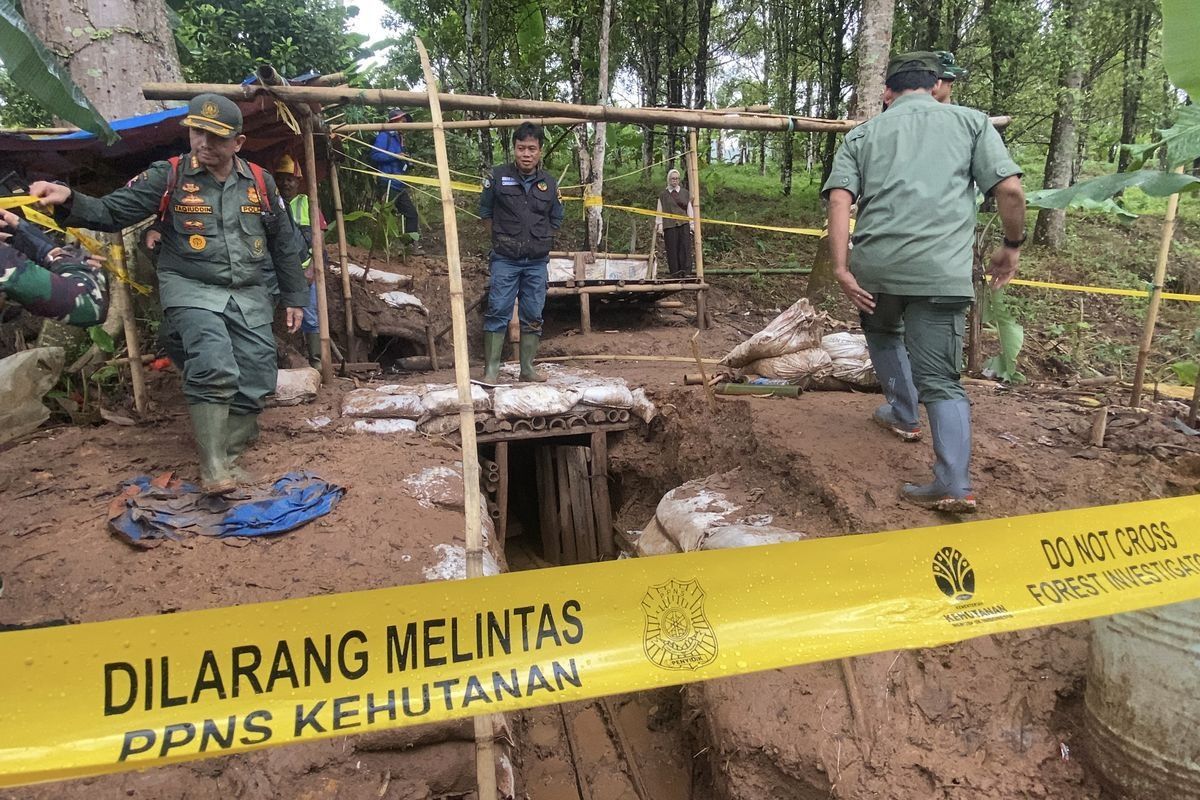
Indonesia's energy ministry has escalated its enforcement efforts against unauthorized mining operations, charging 24 foreign nationals as criminal suspects in connection with an extensive illegal gold extraction network operating in the Maluku region. The action represents a significant move by authorities to combat what appears to be a sophisticated, transnational mining scheme that authorities say involved the deliberate construction of mining infrastructure across the Gunung Botak area.
According to energy ministry official Jeffri Huwae, the suspects were instrumental in establishing the operational backbone of the illegal mines, constructing roads and processing facilities that would allow gold extraction and refinement to proceed on an industrial scale. This level of infrastructure development suggests the operation was not a small-scale endeavour but rather an organized enterprise designed for sustained production. The Gunung Botak district in Maluku has emerged as a hotspot for such activity, attracting criminal networks seeking to exploit the region's mineral wealth outside official regulatory channels.
The criminal charges carry substantial legal consequences for those convicted, with Indonesian law providing for maximum prison sentences of five years for violations related to illegal mining operations. This sentencing framework underscores the government's determination to treat such offences seriously, though enforcement has proven inconsistent given the ongoing challenges authorities face in apprehending and prosecuting offenders across Indonesia's vast archipelago.
State news agency Antara reported last month that authorities had detained 24 individuals identified as Chinese nationals at the Gunung Botak site. These workers had reportedly been sponsored by a local company registered as PT Harmoni Alam Manise, suggesting a partnership or subcontracting arrangement between foreign operators and domestic entities. Such arrangements are common in illegal mining cases across Southeast Asia, where local companies provide operational cover and facilitate access to mining sites while foreign nationals supply capital, expertise, or labour.
The current status of the suspects remains divided, with authorities confirming that 12 foreign nationals have been detained within Indonesian jurisdiction and remain in custody for prosecution. However, the other 12 suspects have managed to flee the country and now operate beyond Indonesia's legal reach, a situation that illustrates persistent enforcement challenges facing mining regulators throughout the region. These individuals may have travelled to neighbouring countries or returned to their home nations, complicating any potential extradition proceedings.
Beyond the foreign nationals, Indonesian authorities have also identified two domestic accomplices as criminal suspects. These local partners likely played crucial roles in facilitating site access, liaising with officials, and ensuring the operation's logistical continuity. The involvement of Indonesian nationals in the scheme highlights how illegal mining often depends on local connections and corruption, with domestic actors providing the essential bridge between foreign operators and the physical mining locations.
The energy ministry's statement did not disclose the nationalities of all suspects involved, nor did it quantify the volume of gold extracted through the operation. Such omissions are not uncommon in preliminary public announcements, as authorities often withhold operational details during ongoing investigations or to avoid compromising prosecutorial strategies. The absence of productivity figures makes it difficult to assess the economic scale of the enterprise or its impact on Indonesia's legitimate mining sector and government revenues.
Illegal gold mining represents a persistent challenge throughout Southeast Asia, driven by strong regional and global demand for gold and the substantial profit margins available to operators willing to circumvent regulations and environmental protections. In Indonesia specifically, the practice has generated environmental damage, labour exploitation, and revenue losses for the state. The involvement of foreign nationals in such operations often indicates the presence of transnational criminal networks with access to capital and logistical resources.
Previous enforcement actions demonstrate the recurring nature of this problem. Last year, authorities in Papua, Indonesia's easternmost province, apprehended four Chinese nationals engaged in illegal mining activities in Senggi district. That case, like the current Maluku investigation, illustrates how foreign actors repeatedly attempt to establish unauthorized mining operations across different regions of Indonesia, suggesting either insufficient deterrence or lucrative enough conditions to justify the legal risks involved.
The Maluku operation's discovery and subsequent charges represent a tactical victory for Indonesian enforcement agencies, yet the escape of half the suspects and the likely ongoing existence of undetected illegal operations elsewhere highlight the scale of the challenge. Effective response will require sustained coordination between energy ministry officials, police, local authorities, and possibly international partners. For Malaysia and other Southeast Asian nations with similar mining sectors, the case underscores the vulnerability of resource-rich regions to organized transnational exploitation and the importance of robust monitoring and prosecution mechanisms.
The broader implications extend beyond Indonesia alone. The persistence of illegal mining across Southeast Asia suggests that regional cooperation mechanisms and information sharing arrangements remain underdeveloped. Enhanced coordination among mining regulators, intelligence agencies, and law enforcement bodies could help disrupt transnational networks before they establish operational capacity. As demand for gold continues rising globally, the economic incentives driving such operations will likely remain strong, necessitating equally determined enforcement responses from governments throughout the region.

