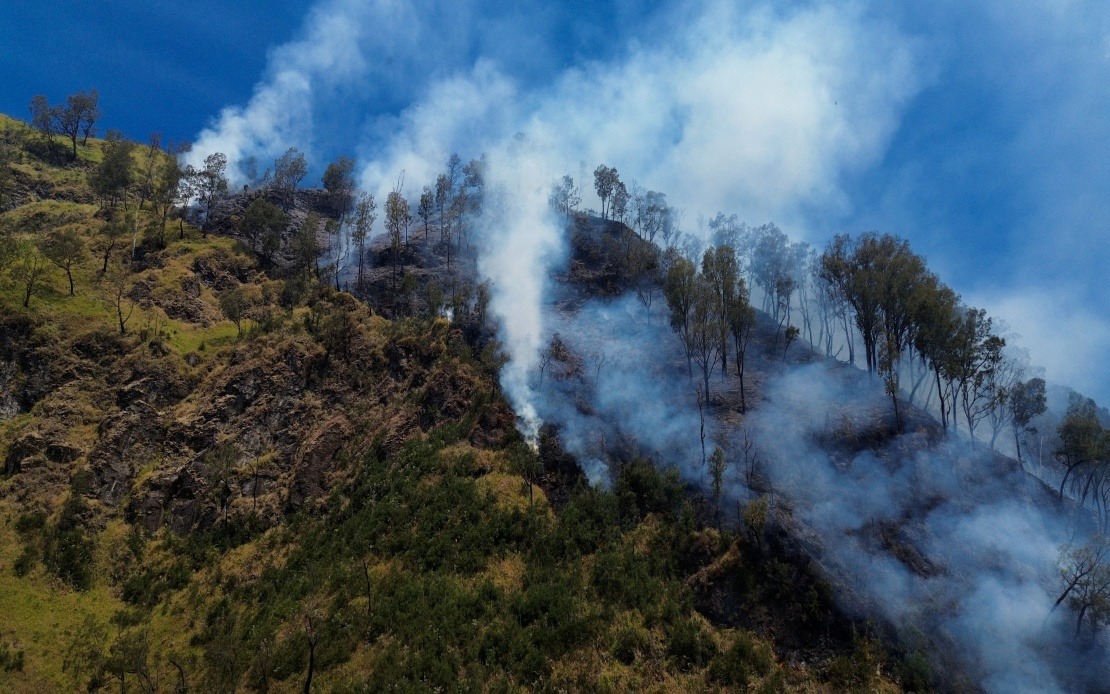
Indonesia has suspended all access to Mount Bromo, one of Southeast Asia's most iconic volcanic destinations, in response to an escalating forest fire that continues to ravage the East Java landscape. The decision marks a significant disruption to regional tourism, affecting thousands of visitors who typically flock to the Bromo Tengger Semeru National Park throughout the year. The blanket closure, which took effect Saturday night, underscores the severity of the situation facing authorities as they battle flames spreading across multiple regencies in the region.
The park authority implemented the closure across all five major entry points to ensure visitor safety and create operational space for firefighting teams. The restricted access includes the Cemorolawang entrance in Probolinggo Regency, Wonokitri in Pasuruan, and multiple gateways in Malang Regency including Jemplang and Coban Trisula, as well as the Senduro access point in Lumajang Regency. This comprehensive lockdown reflects the management's determination to prevent injuries and allow emergency personnel to focus entirely on suppressing the flames without the complication of managing tourist movements through affected zones.
According to the National Disaster Management Agency, the fire has consumed approximately 176.20 hectares across Probolinggo and Malang regencies since igniting on Monday. The destruction spans a significant area within the caldera, one of Indonesia's most geologically active regions. Smoke emissions continued late into Saturday evening, suggesting the blaze had not yet reached its containment phase. The persistence of hotspots indicates that firefighters face a prolonged engagement with flames fueled by dry vegetation and challenging terrain typical of volcanic mountain environments.
The meteorological situation compounds the firefighting challenge. Moderate winds blowing across the affected areas carry flames unpredictably and intensify the spread of fire across the densely vegetated slopes. These wind patterns, combined with the high altitude and rugged topography of Mount Bromo, create operational difficulties for ground crews attempting to establish firebreaks and contain the perimeter. The atmospheric conditions that make the mountain spectacular for visitors simultaneously frustrate emergency response efforts.
Indonesian authorities have mobilized significant aerial resources to combat the spreading flames. Two helicopters, each capable of carrying 1,000 liters of water, have been deployed to conduct water-dropping operations from above. These aircraft represent a critical tactical asset in a landscape where ground access remains limited and dangerous. Helicopter operations provide the capacity to deliver water directly to locations inaccessible by land, though such missions depend on favorable weather and fuel availability. The deployment of this equipment demonstrates the commitment of national disaster management bodies to intensive firefighting strategies.
Tourists who had booked visits during the closure period now face logistical considerations. The park authority has established procedures allowing ticket holders to either reschedule their visits for future dates or request financial refunds. This accommodation reflects recognition of the economic impact on individual travelers, though the disruption to the tourism sector remains substantial. Mount Bromo attracts considerable international visitation, particularly during peak seasons, and prolonged closures affect local hospitality businesses, tour operators, and transportation providers throughout the region.
The situation extends beyond Mount Bromo itself. A separate fire broke out simultaneously in the Sembalun Resort area of Mount Rinjani National Park on the nearby island of Lombok. This blaze, affecting approximately 30 hectares, was brought under control by early Saturday morning after starting Friday evening. The near-simultaneous occurrence of major fires across two prominent national parks in adjacent provinces suggests a broader environmental challenge, potentially linked to regional weather patterns or land management practices that create conditions favoring fire spread.
Investigations into the origins of both fires remain incomplete. Officials have not yet determined whether the Mount Bromo fire resulted from human negligence, natural causes such as spontaneous combustion, or deliberate arson. The absence of preliminary findings underscores the complexity of investigating fire origins in remote mountainous terrain where evidence collection proves difficult. Understanding causation remains important for developing preventive strategies and implementing appropriate consequences, yet such determinations require careful forensic analysis that extends beyond immediate crisis response.
The closure of Mount Bromo carries broader implications for Indonesia's tourism sector and regional economy. Mount Bromo stands as a cornerstone attraction for East Java tourism, drawing visitors from across the world to witness sunrise over the distinctive volcanic caldera. Lengthy closures risk damaging the destination's reputation and creating financial pressures on communities dependent on visitor spending. However, the prioritization of safety over economic considerations reflects appropriate emergency management principles that prevent larger humanitarian crises.
For Malaysian travelers and tourism operators, the Mount Bromo closure affects regional travel itineraries significantly. Many Malaysian tourists include Mount Bromo within broader Southeast Asian visits, and extended closures force recalibration of travel plans. Tour operators who specialize in cross-border packages must communicate changes to customers and restructure offerings to maintain competitiveness while respecting safety restrictions imposed by Indonesian authorities.
The incident highlights the increasing frequency of forest fires across Indonesia, a pattern linked to climate change impacts and land-use pressures that create fire-prone conditions during dry seasons. Both Mount Bromo and Mount Rinjani sit within protected areas intended to preserve ecological integrity, yet fire threatens these conservation objectives and the biodiversity they shelter. The need for comprehensive forest management strategies that reduce fire risk while maintaining ecological health remains urgent across the region.
As firefighting efforts continue and officials work to establish containment, tourism stakeholders await updates on closure duration. The park authority has committed to communicating developments as the situation evolves, though no specific timeline for reopening has been announced. Visitors currently contemplating Mount Bromo trips should consult official park channels before finalizing arrangements, as conditions remain fluid and safety remains the governing priority for all decisions affecting access to this nationally significant natural landmark.

