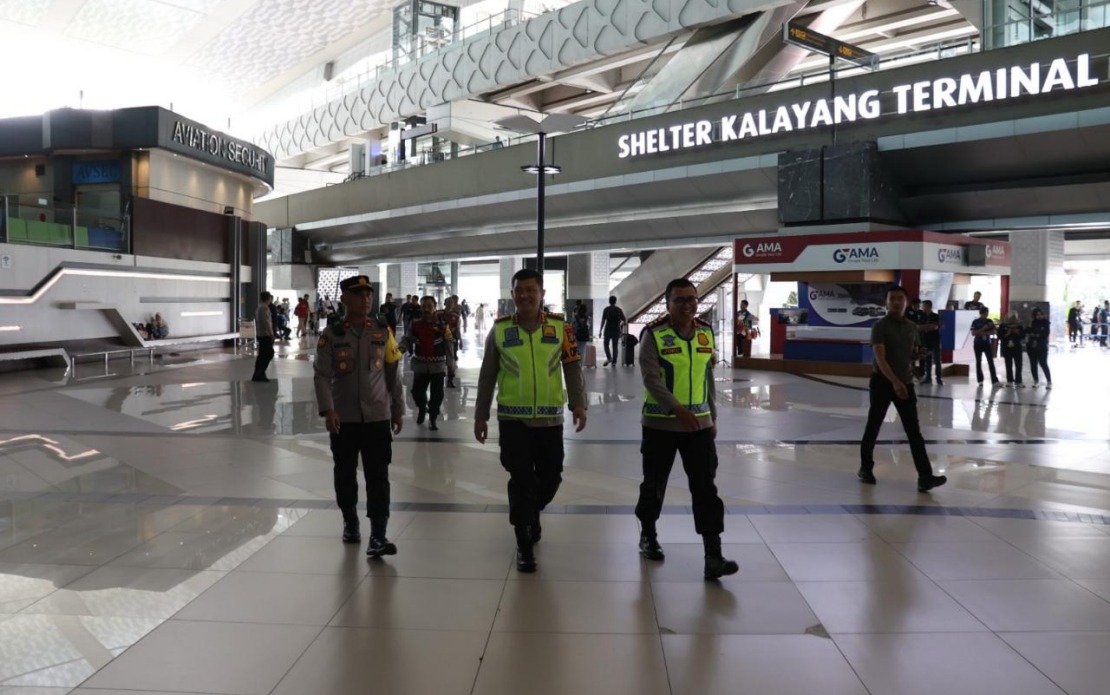
Indonesia's customs and excise authorities have announced sweeping security enhancements at Soekarno-Hatta International Airport in the wake of a significant drug smuggling case involving a Malaysian airline pilot. The tightened measures represent a direct response to an incident that exposed vulnerabilities in the existing crew baggage handling procedures at the country's busiest aviation gateway.
The security review was triggered by the arrest of a 39-year-old Malaysian pilot on July 29, who stands accused of attempting to bring approximately 25 kilogrammes of ecstasy into Indonesia. The narcotics, valued at around Rp60 billion or roughly RM13.51 million, represented one of the more substantial drug seizures at the airport in recent times. According to Hengky Tomuan Parlindungan Aritonang, Head of Soekarno-Hatta's Main Customs and Excise Office, the arrest prompted a comprehensive reassessment of how crew members traverse the airport's security infrastructure.
Under the enhanced protocol, customs officials will conduct substantially more frequent random inspections targeting pilots and cabin crew members from both international and domestic carriers. While Indonesian authorities have determined to maintain the dedicated crew baggage lane—an established operational convenience for aviation personnel—they will now deploy enhanced scrutiny within that system. The revision acknowledges that the expedited processing arrangement, which exists as a standard courtesy in international aviation, inadvertently created an enforcement blind spot that smugglers exploited.
The suspect in this case allegedly manipulated the crew baggage system by concealing the contraband beneath clothing within a suitcase that bore a legitimate crew claim tag. This method of concealment demonstrates how familiarity with airport procedures can be weaponised by those attempting to move illicit substances. The investigation also revealed that the pilot had tested positive for MDMA, methamphetamine, and cocaine, suggesting a pattern of substance abuse that may have coincided with involvement in trafficking operations. Authorities further determined that the individual had allegedly engaged in prior narcotics smuggling activities into Indonesia.
The financial motivation behind the scheme appears modest compared to the cargo's street value. The pilot was allegedly promised RM50,000—approximately Rp220 million—for facilitating the shipment. This compensation structure suggests the individual occupied a lower tier within the smuggling hierarchy, a detail that has prompted ongoing investigations to identify the network's leadership. Law enforcement agencies are actively pursuing what they believe to be the orchestrating mastermind of the syndicate, recognizing that the arrested pilot likely served as an operational facilitator rather than an enterprise decision-maker.
For Malaysian aviation personnel and their respective employers, this development carries implications that extend beyond Jakarta's airport perimeter. The case underscores the vulnerability of crew privileges to misuse and raises questions about pre-employment screening, ongoing compliance monitoring, and information-sharing protocols between Malaysia and Indonesia regarding suspect individuals in aviation. Airlines operating services between the two countries will likely face heightened accountability regarding the vetting and supervision of their staff.
Indonesian authorities have deliberately focused their enhanced procedures on baggage screening rather than introducing mandatory drug testing for crew members, a decision that reflects both practical constraints and diplomatic considerations. Implementing pharmaceutical testing regimes could create friction with international carriers and their home governments, whereas baggage inspection protocols remain within established customs jurisdictions. This measured approach preserves the operational flow of aviation while addressing the specific vulnerability that was exploited.
The incident also highlights the persistent challenge facing Southeast Asia's major aviation hubs in balancing efficiency with security. Jakarta's position as a regional transportation nexus means that tightened procedures could have ripple effects across connecting flights and passenger processing. However, authorities appear confident that targeted random inspections will prove sufficiently disruptive to smuggling logistics without creating systemic delays.
For Malaysian readers and businesses with aviation interests, the broader takeaway involves the increasing sophistication of transnational drug networks and their willingness to recruit personnel from regulated industries. The alleged RM50,000 payment, while substantial to an individual crew member, remains trivial against the cargo's value, suggesting that recruiters exploit personal financial pressures or existing substance dependencies to secure cooperation. The case reinforces how enforcement requires not only airport-level interventions but also upstream disruption of the recruitment and supply chain networks that enable such operations.
Indonesia's response also reflects evolving security consciousness across ASEAN region aviation authorities, which have collectively grappled with narcotics trafficking through air transport. The incident at Soekarno-Hatta will likely inform discussions at regional aviation forums and may prompt similar security reviews at other major airports in Malaysia, Singapore, and Thailand. The willingness of Indonesian customs to publicise the enhanced measures serves both as a deterrent to potential smugglers and as a signal to international partners regarding Jakarta's commitment to rigorous enforcement.
Looking forward, the effectiveness of Indonesia's revised procedures will depend on consistent implementation and adequate staffing of customs personnel capable of conducting thorough yet efficient random inspections. The security enhancement also underscores the necessity of sophisticated intelligence-sharing mechanisms between nations, particularly regarding individuals with aviation access who engage in substance abuse or prior smuggling activity.

